


Neonicotinoids in excretion product of phloem-feeding insects kill beneficial insects
- PMID: 31383752
- PMCID: PMC6708310
- DOI: 10.1073/pnas.1904298116
Neonicotinoids in excretion product of phloem-feeding insects kill beneficial insects
Abstract
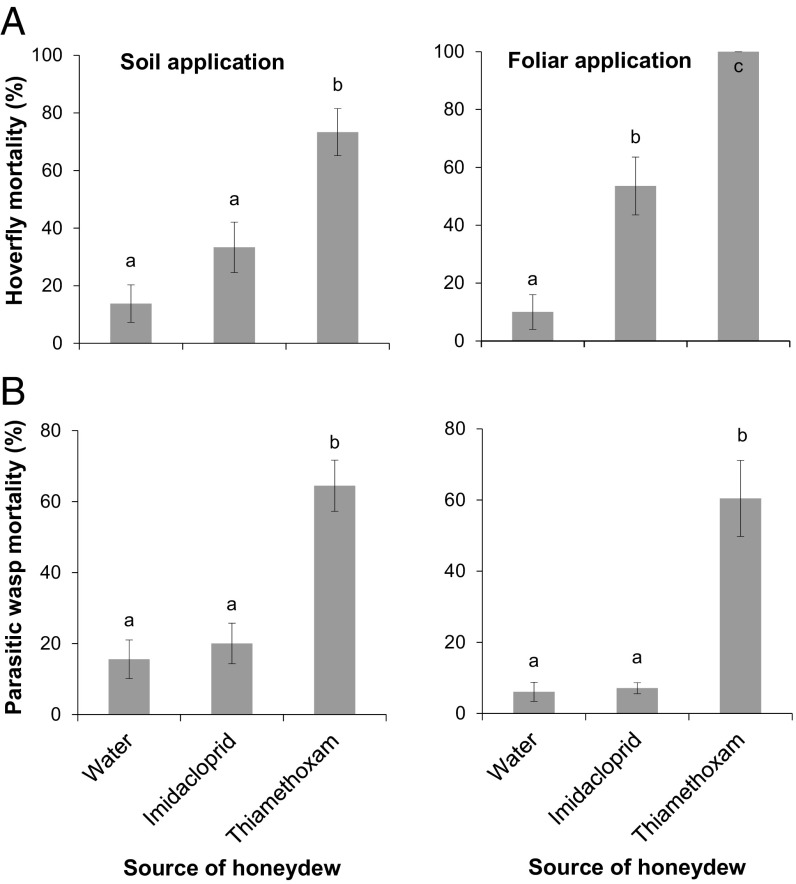
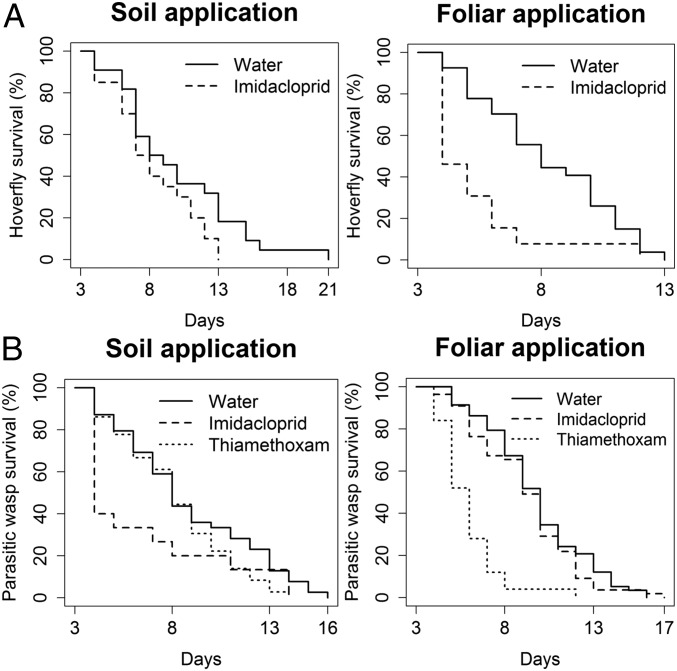
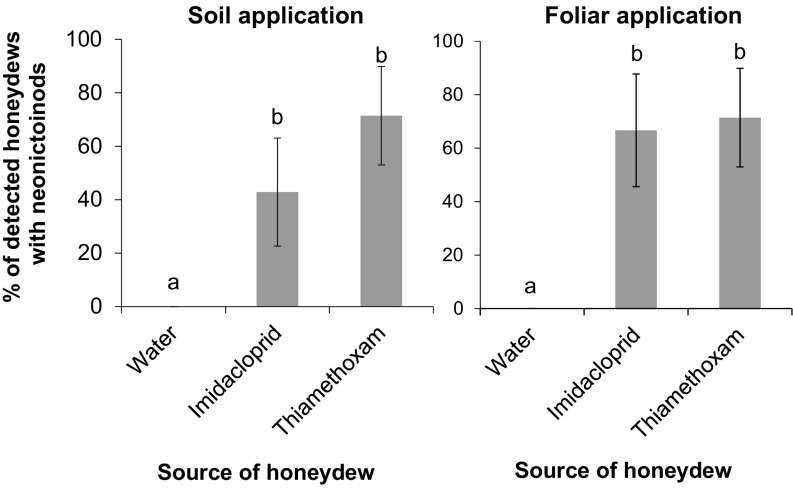
Pest control in agriculture is mainly based on the application of insecticides, which may impact nontarget beneficial organisms leading to undesirable ecological effects. Neonicotinoids are among the most widely used insecticides. However, they have important negative side effects, especially for pollinators and other beneficial insects feeding on nectar. Here, we identify a more accessible exposure route: Neonicotinoids reach and kill beneficial insects that feed on the most abundant carbohydrate source for insects in agroecosystems, honeydew. Honeydew is the excretion product of phloem-feeding hemipteran insects such as aphids, mealybugs, whiteflies, and psyllids. We allowed parasitic wasps and pollinating hoverflies to feed on honeydew from hemipterans feeding on trees treated with thiamethoxam or imidacloprid, the most commonly used neonicotinoids. LC-MS/MS analyses demonstrated that both neonicotinoids were present in honeydew. Honeydew with thiamethoxam was highly toxic to both species of beneficial insects, and honeydew with imidacloprid was moderately toxic to hoverflies. Collectively, our data provide strong evidence for honeydew as a route of insecticide exposure that may cause acute or chronic deleterious effects on nontarget organisms. This route should be considered in future environmental risk assessments of neonicotinoid applications.
Keywords: biological control agents; environmental risk assessment; honeydew; pollinators; thiamethoxam.
Copyright © 2019 the Author(s). Published by PNAS.
Conflict of interest statement
The authors declare no conflict of interest.
Figures
References
-
- Goulson D., Lye G. C., Darvill B., Decline and conservation of bumble bees. Annu. Rev. Entomol. 53, 191–208 (2008). - PubMed
-
- Potts S. G., et al. , Global pollinator declines: Trends, impacts and drivers. Trends Ecol. Evol. 25, 345–353 (2010). - PubMed
-
- Ollerton J., Erenler H., Edwards M., Crockett R., Pollinator declines. Extinctions of aculeate pollinators in Britain and the role of large-scale agricultural changes. Science 346, 1360–1362 (2014). - PubMed
-
- Thomas J. A., et al. , Comparative losses of British butterflies, birds, and plants and the global extinction crisis. Science 303, 1879–1881 (2004). - PubMed
Publication types
MeSH terms
Substances
LinkOut - more resources
Full Text Sources
