


Screening questions for the diagnosis of restless legs syndrome in hemodialysis
- PMID: 31384449
- PMCID: PMC6671522
- DOI: 10.1093/ckj/sfy129
Screening questions for the diagnosis of restless legs syndrome in hemodialysis
Abstract
Background: Restless legs syndrome (RLS) is common in end-stage renal disease and is associated with reduced health-related quality of life. Simple and accurate screening instruments are needed since RLS is underdiagnosed and treatable. We examined the operating characteristics of screening questions and a disease-specific measurement tool for the diagnosis of RLS in hemodialysis.
Methods: We conducted a cohort study of prevalent adult hemodialysis patients in Hamilton, Canada. The diagnosis of RLS was made using the 2012 Revised International Restless Legs Syndrome Study Group (IRLSSG) criteria. All participants received three screening instruments: (i) a single screening question for RLS derived from a nondialysis population; (ii) a single question from the Edmonton Symptom Assessment System (ESAS); and (iii) the IRLSSG Rating Scale (IRLS). All instruments were compared with the reference standard using logistic regression from which receiver operating characteristics curves were generated. Cutoffs associated with maximum performance were identified.
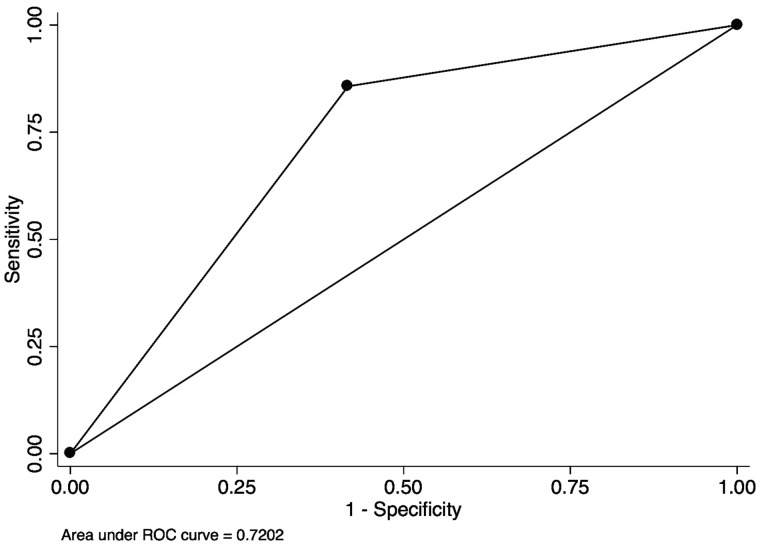
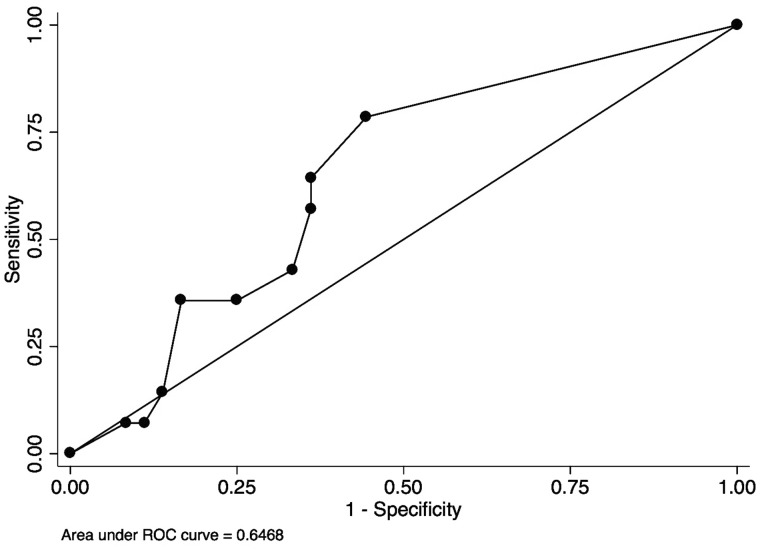
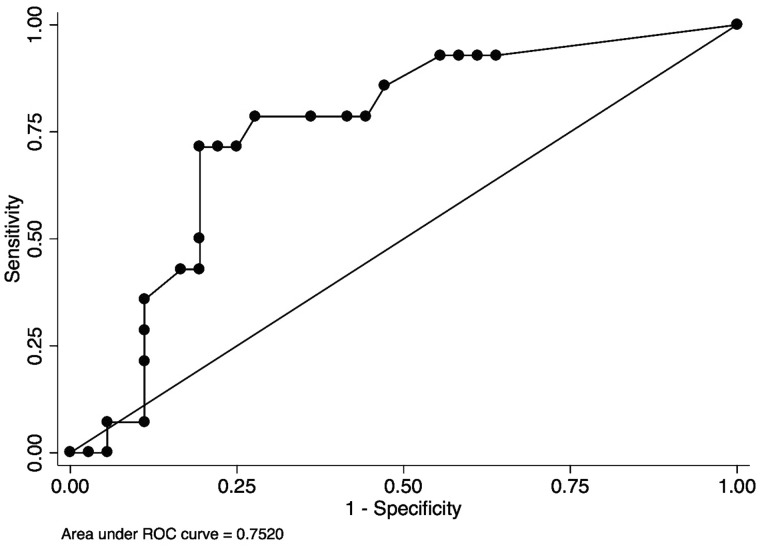
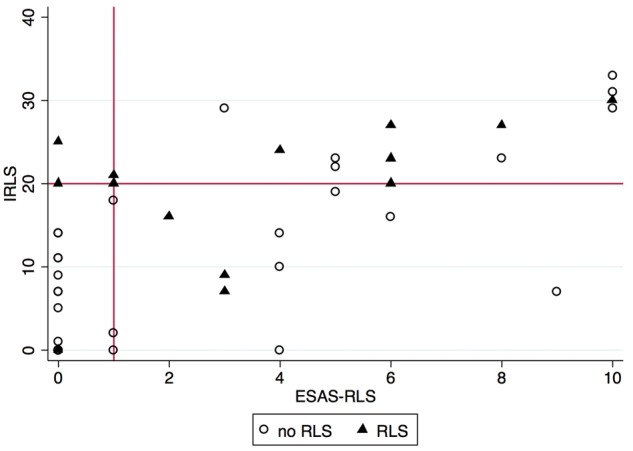
Results: We recruited 50 participants with a mean (SD) age of 64 (12.4) years, of whom 52% were male and 92% were on three times weekly hemodialysis. Using the reference standard, 14 (28%) had a diagnosis of RLS. The single screening question for RLS had an area under the receiver operating curve (AUROC) of 0.72 with a sensitivity of 85.7% and specificity of 58.3%. An ESAS cutoff of ≥1 had the highest AUROC at 0.65 with a sensitivity of 79% and specificity of 56%. An IRLS cutoff of ≥20 had the highest AUROC at 0.75 with a sensitivity of 71% and specificity of 81%.
Conclusion: IRLS had better specificity than the single question or ESAS for the diagnosis of RLS.
Keywords: patient-reported outcome measures; restless legs syndrome; screening.
Figures
References
-
- Murtagh FE, Addington-Hall J, Higginson IJ.. The prevalence of symptoms in end-stage renal disease: a systematic review. Adv Chronic Kidney Dis 2007; 14: 82–99 - PubMed
-
- Mucsi I, Molnar MZ, Ambrus C. et al. Restless legs syndrome, insomnia and quality of life in patients on maintenance dialysis. Nephrol Dial Transplant 2005; 20: 571–577 - PubMed
-
- Takaki J, Nishi T, Nangaku M. et al. Clinical and psychological aspects of restless legs syndrome in uremic patients on hemodialysis. Am J Kidney Dis 2003; 41: 833–839 - PubMed
-
- Unruh ML, Levey AS, D'Ambrosio C. et al. Restless legs symptoms among incident dialysis patients: association with lower quality of life and shorter survival. Am J Kidney Dis 2004; 43: 900–909 - PubMed
-
- Dikici S, Bahadir A, Baltaci D. et al. Association of anxiety, sleepiness, and sexual dysfunction with restless legs syndrome in hemodialysis patients. Hemodial Int 2014; 18: 809–818 - PubMed
LinkOut - more resources
Full Text Sources
