


Development of precision medicine approaches based on inter-individual variability of BCRP/ ABCG2
- PMID: 31384528
- PMCID: PMC6664102
- DOI: 10.1016/j.apsb.2019.01.007
Development of precision medicine approaches based on inter-individual variability of BCRP/ ABCG2
Abstract
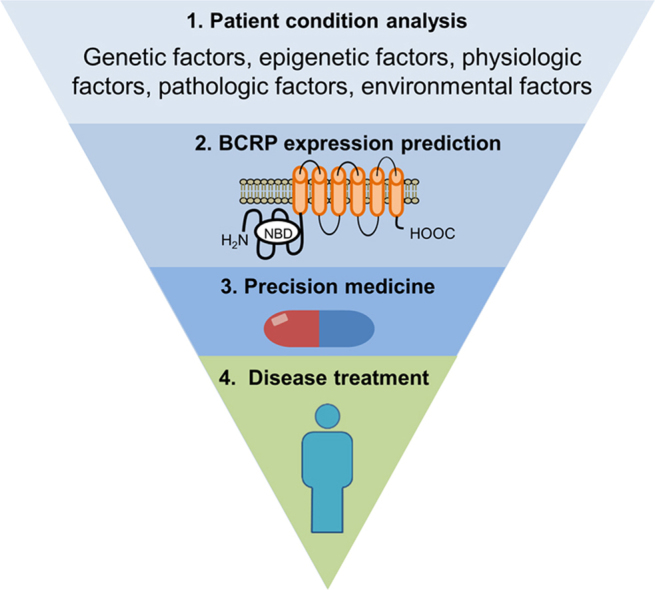
Precision medicine is a rapidly-developing modality of medicine in human healthcare. Based on each patient׳s unique characteristics, more accurate dosages and drug selection can be made to achieve better therapeutic efficacy and less adverse reactions in precision medicine. A patient׳s individual parameters that affect drug transporter action can be used to develop a precision medicine guidance, due to the fact that therapeutic efficacy and adverse reactions of drugs can both be affected by expression and function of drug transporters on the cell membrane surface. The purpose of this review is to summarize unique characteristics of human breast cancer resistant protein (BCRP) and the genetic variability in the BCRP encoded gene ABCG2 in the development of precision medicine. Inter-individual variability of BCRP/ABCG2 can impact choices and outcomes of drug treatment for several diseases, including cancer chemotherapy. Several factors have been implicated in expression and function of BCRP, including genetic, epigenetic, physiologic, pathologic, and environmental factors. Understanding the roles of these factors in controlling expression and function of BCRP is critical for the development of precision medicine based on BCRP-mediated drug transport.
Keywords: 3′-UTR, 3′-untranslated region; 5-aza-C, 5-aza-2′-deoxycytidine; ABCG2, ATP-binding cassette subfamily G member 2; ALL, acute lymphocytic leukemia; AML, acute myeloid leukemia; AUC, area under curve; BCRP; BCRP, breast cancer resistant protein; Epigenetics; FTC, fumitremorgin C; Gene polymorphisms; H3K4me3, histone H3 lysine 4 trimethylation; H3K9me3, histone H3 lysine 9 trimethylation; H3S10P, histone H3 serine 10 phosphorylation; HDAC, histone deacetylase; HIF-1α, hypoxia inducible factor 1 subunit alpha; HIV-1, human immunodeficiency virus type-1; HMG-CoA, β-hydroxy-β-methyl-glutaryl-coenzyme A; MDR, multidrug resistance; MDR1, multidrug resistance 1; NBD, nucleotide binding domain; P-gp, P-glycoprotein; Physiologic factors; Precision medicine; RISC, RNA-induced silencing complex; SNP, Single nucleotide polymorphism; TKI, tyrosine kinase inhibitor; Tat, transactivator protein; miRNA, microRNA; siRNA, small RNA interference.
Figures
References
-
- Petzinger E., Geyer J. Drug transporters in pharmacokinetics. Naunyn Schmiedebergs Arch Pharmacol. 2006;372:465–475. - PubMed
-
- Doyle L., Ross D.D. Multidrug resistance mediated by the breast cancer resistance protein BCRP (ABCG2) Oncogene. 2003;22:7340–7358. - PubMed
-
- Cole S.P., Bhardwaj G., Gerlach J.H., Mackie J.E., Grant C.E., Almquist K.C. Overexpression of a transporter gene in a multidrug-resistant human lung cancer cell line. Science. 1992;258:1650–1654. - PubMed
Publication types
Grants and funding
LinkOut - more resources
Full Text Sources
