


Etiologies of Pediatric Cervical Lymphadenopathy: A Systematic Review of 2687 Subjects
- PMID: 31384630
- PMCID: PMC6661788
- DOI: 10.1177/2333794X19865440
Etiologies of Pediatric Cervical Lymphadenopathy: A Systematic Review of 2687 Subjects
Abstract
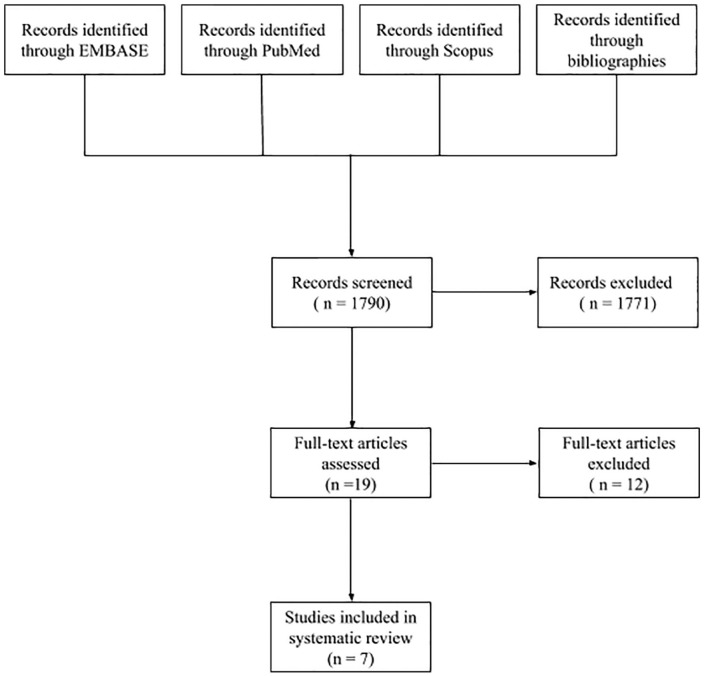
Background. Cervical lymphadenopathy in children is common and its etiologies diverse. No systematic review of the differential diagnosis of pediatric cervical lymphadenopathy has been conducted. Objective. To determine the prevalence rate of specific etiologies of pediatric cervical lymphadenopathy. Data Sources. EMBASE, PubMed, and SCOPUS were searched electronically. Bibliographies of select studies were reviewed as well. Study Selection. (1) Any clinical trial, observational study, or cross-sectional case series with 10 or more subjects that included delineation of etiologies and/or associated conditions with lymphadenopathy; (2) subjects aged 0 to 21 years with enlarged lymphoid tissue on body; (3) lymphadenopathy was confirmed by clinical evaluation; and (4) no specific diagnoses were excluded. Data Extraction. Year and location of publication, definition of lymphadenopathy, percentage of lymphadenopathy that was cervical, total number of subjects, gender distribution of subjects, age range of patients, and specific etiologies. Results. Of the 1790 studies, 7 studies that were combined resulted in 2687 subjects that were selected. Nonspecific benign etiology was the most common diagnosis occurring at a rate of 67.8%. Epstein-Barr virus was the next most prevalent (8.86%), followed by malignancy (4.69%) and granulomatous disease (4.06%). The most common malignancy etiology was non-Hodgkin's lymphoma (46.0%), and the most common granulomatous disease was tuberculosis (73.4%). Conclusions. This systematic review and meta-analysis provides a rate-based differential diagnosis of pediatric cervical lymphadenopathy. Although the most common causes of pediatric cervical lymphadenopathy are nonspecific, the etiologies are diverse. Rates and credible intervals are provided to enable a probability-based diagnostic approach to palpable cervical lymphadenopathy in this age group.
Keywords: cervical lymphadenopathy; differential diagnosis; pediatrics.
Conflict of interest statement
Declaration of Conflicting Interests: The author(s) declared no potential conflicts of interest with respect to the research, authorship, and/or publication of this article.
Figures
References
-
- Larsson L, Bentzon M, Kelly KB, et al. Palpable lymph nodes of the neck in Swedish schoolchildren. Acta Paediatr. 1994;83:1091-1094. - PubMed
-
- Bozlak S, Varkal MA, Yildiz I, et al. Cervical lymphadenopathies in children: a prospective clinical cohort study. Int J Pediatr Otorhinolaryngol. 2016;82:81-87. - PubMed
Publication types
LinkOut - more resources
Full Text Sources
