


Effects of physically active video gaming on cognition and activities of daily living in childhood brain tumor survivors: a randomized pilot study
- PMID: 31385977
- PMCID: PMC6655361
- DOI: 10.1093/nop/npw020
Effects of physically active video gaming on cognition and activities of daily living in childhood brain tumor survivors: a randomized pilot study
Abstract
Background: Physical activity can enhance cognitive functions in both animals and humans. We hypothesized that physically active video gaming could: i) improve cognitive functions and ii) improve the execution of activities of daily living among survivors of childhood brain tumors.
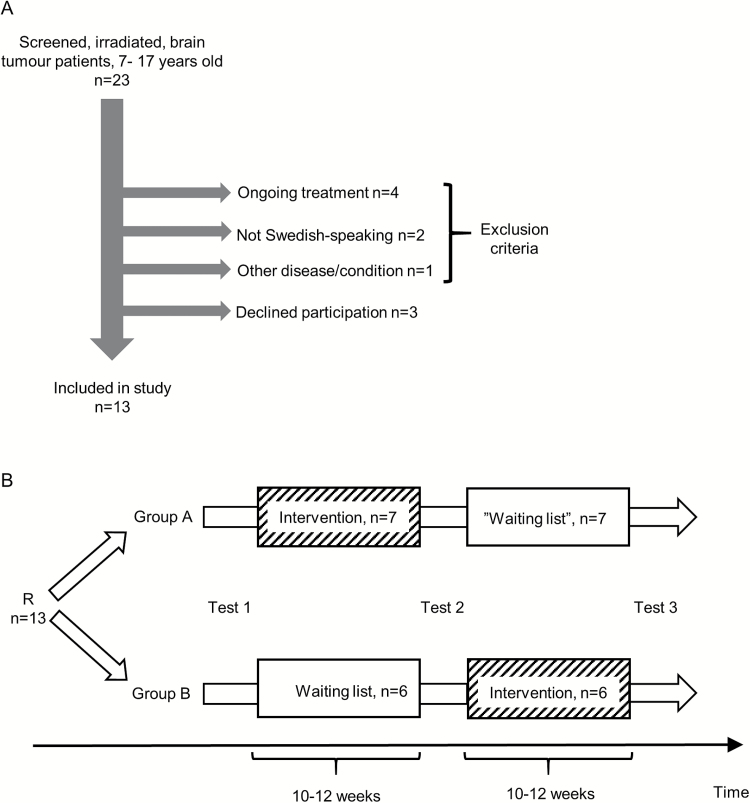
Methods: Children 7 to 17 years old who completed treatment, including radiotherapy, for a brain tumor 1 to 5 years earlier were randomized to either intervention or waiting list. After 10 to 12 weeks the groups crossed over. The intervention consisted of active video gaming, using a motion-controlled video console (Nintendo Wii), for a minimum of 30 minutes a day, 5 days a week and weekly Internet-based coaching sessions. Evaluations before and after each period included tests of the execution of activities of daily living, using the Assessment of Motor and Process Skills (AMPS) and cognitive tests. Test scores before and after the intervention were compared. A parallel group comparison was performed as a sensitivity analysis.
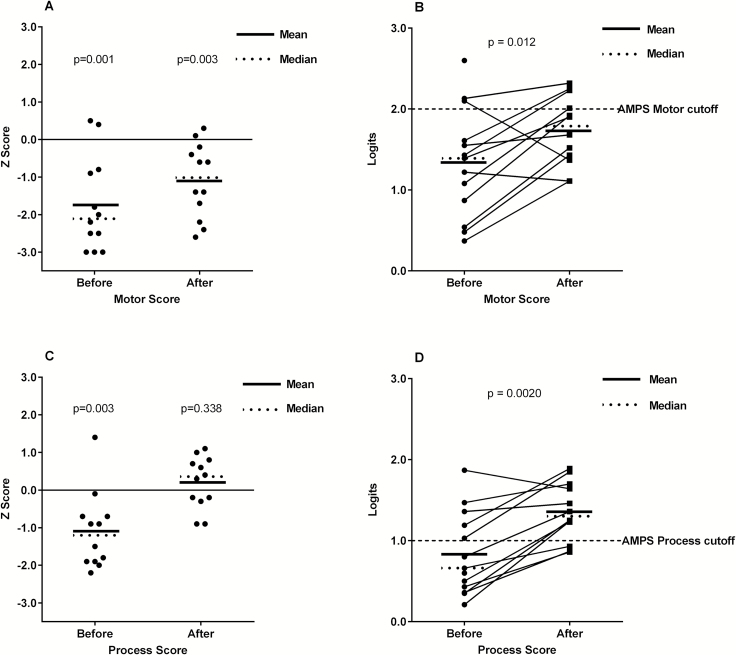
Results: All 13 children enrolled completed the program. Compared to baseline, the motor (P= .012) and process (P=.002) parts of AMPS improved significantly after active video gaming. In the parallel group analysis the improvement in the process part of AMPS remained statistically significant (P= .029), but not the change in AMPS motor score (P= .059). No significant change was found in cognitive tests although there were trends for improvement in sustained attention (P = .090) and selective attention (P = .078).
Conclusion: In this pilot study, active video gaming used as a home-based intervention for childhood brain tumor survivors improved motor and process skills in activities of daily living.
Keywords: activities of daily living; brain tumor; cognition; exercise therapy; video games..
Figures
References
-
- Duffner PK, Cohen ME, Thomas PR, Lansky SB. The long-term effects of cranial irradiation on the central nervous system. Cancer. 1985;56(7 Suppl):1841–1846. - PubMed
-
- Lannering B, Marky I, Lundberg A, Olsson E. Long-term sequelae after pediatric brain tumors: their effect on disability and quality of life. Med Pediatr Oncol. 1990;18(4):304–310. - PubMed
-
- Monje ML, Vogel H, Masek M, Ligon KL, Fisher PG, Palmer TD. Impaired human hippocampal neurogenesis after treatment for central nervous system malignancies. Ann Neurol. 2007;62(5):515–520. - PubMed
-
- Huo K, Sun Y, Li H, et al. Lithium reduced neural progenitor apoptosis in the hippocampus and ameliorated functional deficits after irradiation to the immature mouse brain. Mol Cell Neurosci. 2012;51(1–2):32–42. - PubMed
