


Prophylactic anticonvulsants for gliomas: a seven-year retrospective analysis
- PMID: 31386083
- PMCID: PMC6664612
- DOI: 10.1093/nop/npv018
Prophylactic anticonvulsants for gliomas: a seven-year retrospective analysis
Abstract
Background: The American Academy of Neurology (AAN) does not recommend routine use of prophylactic antiepileptic drugs (pAEDs) in patients with newly diagnosed brain tumors. If used in the perioperative setting, discontinuation is suggested after the first postoperative week. It is unclear whether such recommendations are followed. Our objective was to compare our perioperative and long-term pAED use in glioma patients with AAN practice parameters.
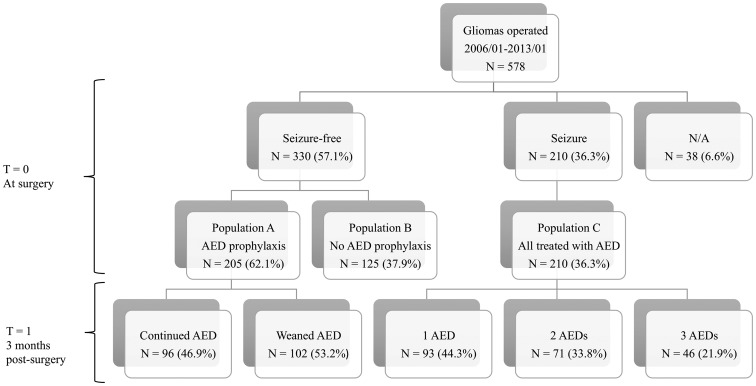
Methods: Retrospective chart review was performed on 578 glioma patients from 2006 to 2013. Seizures and AED use were assessed at surgery, 3 months postoperatively and death, last visit or 16 months postoperatively. Patients were divided into three groups at surgery: seizure-free with pAED, seizure-free without pAED, and seizure patients. Long-term pAED use was defined as continued use at 3 months postsurgery without seizures. pAEDs efficacy, factors influencing its use, and survival were examined.
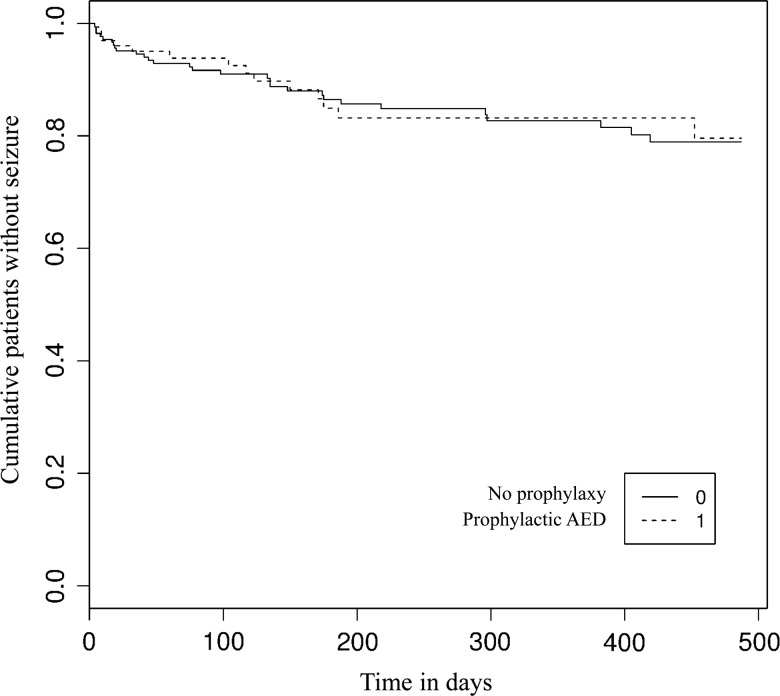
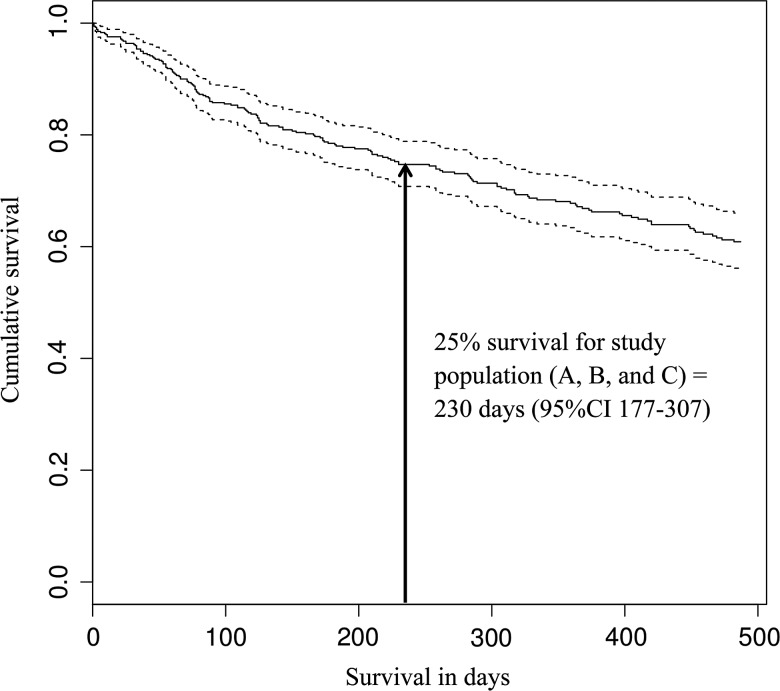
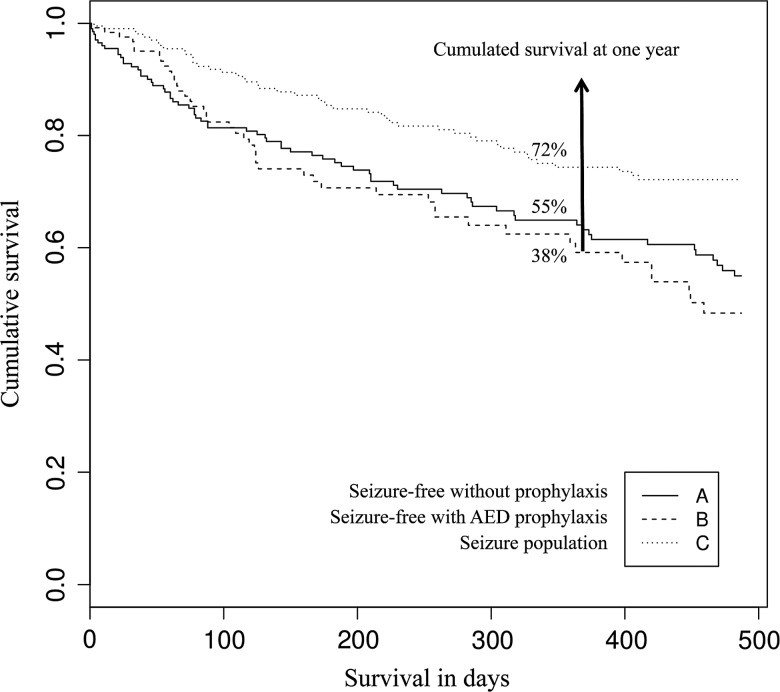
Results: Out of 578 patients identified, 330 (57.1%) were seizure-naïve preoperatively. There were no significant differences in age, histology, tumor location or resection status between seizure-free populations with and without prophylaxis. Of 330 seizure-naïve patients, 205 (62.1%) received pAEDs at surgery. Ninety-six (46.9%) of those patients were still on pAEDs 3 months postsurgery (median use = 58 days). Rate of long-term prophylaxis use decreased by 13.5% over 6 years (70.3% in 2006; 56.8% in 2012). Phenytoin was preferred in 2006 (98.2%) with increasing use of levetiracetam over 6 years (44.6% in 2012). The only predictive factor for pAED use was complete resection (P = .0069). First seizure prevalence was similar in both seizure-free populations (P = .91). The seizure population had more men (P = .007), younger patients (P < .0001), lower-grade gliomas (P = .0003) and survived longer (P = .001) compared with seizure-free populations.
Conclusions: In our center, long-term prophylactic AED use is high, deviating from current AAN Guidelines. Corrective measures are warranted.
Keywords: Glioma; antiepileptic drug; primary brain tumor; prophylaxis; seizures.
Figures
References
-
- Glantz MJ, Cole BF, Forsyth PA et al. Practice parameter: anticonvulsant prophylaxis in patients with newly diagnosed brain tumors. Report of the Quality Standards Subcommittee of the American Academy of Neurology. Neurology. 2000;54(10):1886–1893. - PubMed
-
- Yin AA, Cai S, Dong Y et al. A meta-analysis of temozolomide versus radiotherapy in elderly glioblastoma patients. J Neurooncol. 2014;116(2):315–324. - PubMed
Publication types
LinkOut - more resources
Full Text Sources
Other Literature Sources
