


Parenting Stress Undermines Mother-Child Brain-to-Brain Synchrony: A Hyperscanning Study
- PMID: 31388049
- PMCID: PMC6684640
- DOI: 10.1038/s41598-019-47810-4
Parenting Stress Undermines Mother-Child Brain-to-Brain Synchrony: A Hyperscanning Study
Abstract
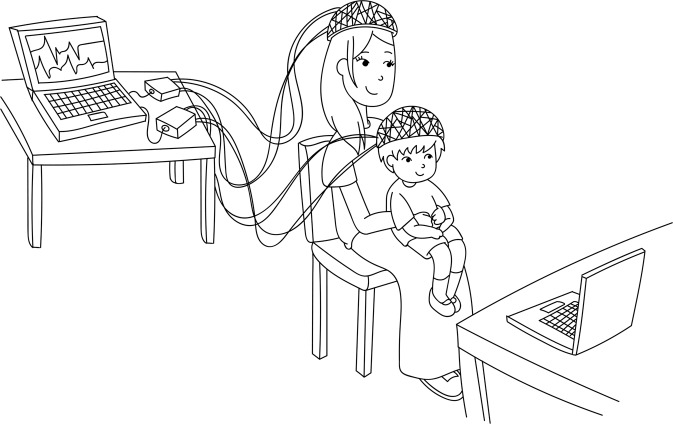
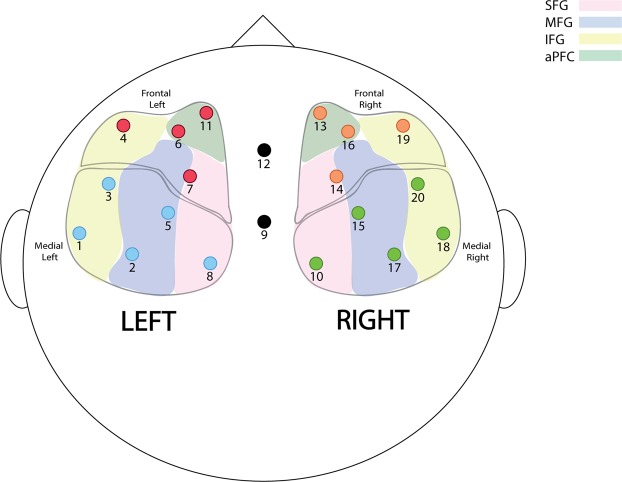
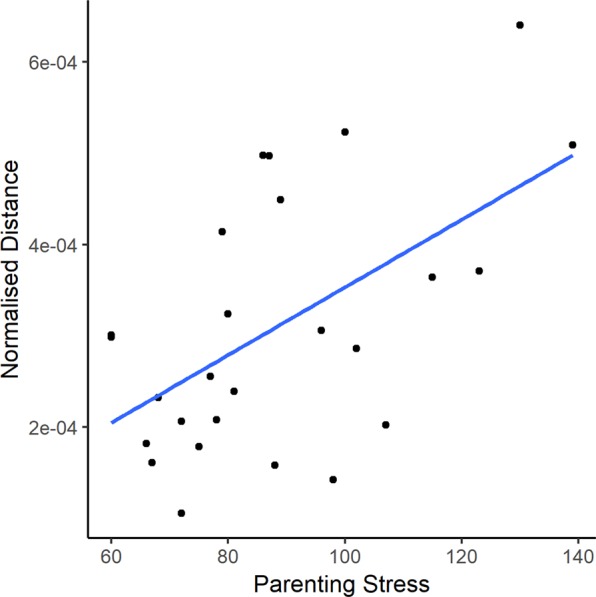
Synchrony refers to the coordinated interplay of behavioural and physiological signals that reflect the bi-directional attunement of one partner to the other's psychophysiological, cognitive, emotional, and behavioral state. In mother-child relationships, a synchronous pattern of interaction indicates parental sensitivity. Parenting stress has been shown to undermine mother-child behavioural synchrony. However, it has yet to be discerned whether parenting stress affects brain-to-brain synchrony during everyday joint activities. Here, we show that greater parenting stress is associated with less brain-to-brain synchrony in the medial left cluster of the prefrontal cortex when mother and child engage in a typical dyadic task of watching animation videos together. This brain region overlaps with the inferior frontal gyrus, the frontal eye field, and the dorsolateral prefrontal cortex, which are implicated in inference of mental states and social cognition. Our result demonstrates the adverse effect of parenting stress on mother-child attunement that is evident at a brain-to-brain level. Mother-child brain-to-brain asynchrony may underlie the robust association between parenting stress and poor dyadic co-regulation. We anticipate our study to form the foundation for future investigations into mechanisms by which parenting stress impairs the mother-child relationship.
Conflict of interest statement
The authors declare no competing interests.
Figures

References
-
- Nelson-Coffey, S. K., Katherine Nelson-Coffey, S. & Stewart, D. Well-Being in parenting (2019).
-
- Deater-Deckard K, Scarr S. Parenting stress among dual-earner mothers and fathers: Are there gender differences? J. Fam. Psychol. 1996;10:45. doi: 10.1037/0893-3200.10.1.45. - DOI
-
- Deater-Deckard K. Parenting Stress. New Haven, CT: Yale University Press; 2004.
-
- Pereira Jessica, Vickers Kristin, Atkinson Leslie, Gonzalez Andrea, Wekerle Christine, Levitan Robert. Parenting stress mediates between maternal maltreatment history and maternal sensitivity in a community sample. Child Abuse & Neglect. 2012;36(5):433–437. doi: 10.1016/j.chiabu.2012.01.006. - DOI - PubMed
Publication types
MeSH terms
LinkOut - more resources
Full Text Sources
Medical
