


Multilevel analysis of BMI growth trajectories of US school children: Features and risk factors
- PMID: 31388552
- PMCID: PMC6675951
- DOI: 10.1016/j.ssmph.2019.100455
Multilevel analysis of BMI growth trajectories of US school children: Features and risk factors
Erratum in
-
Erratum regarding missing Declaration of Competing Interest statements in previously published articles.SSM Popul Health. 2020 Dec 10;12:100710. doi: 10.1016/j.ssmph.2020.100710. eCollection 2020 Dec. SSM Popul Health. 2020. PMID: 33381633 Free PMC article.
Abstract
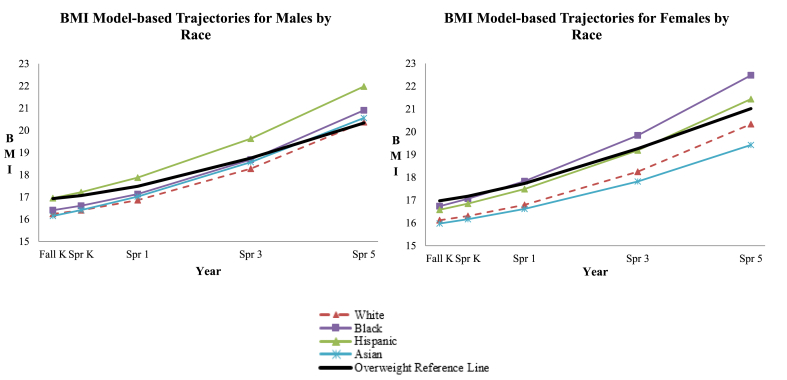
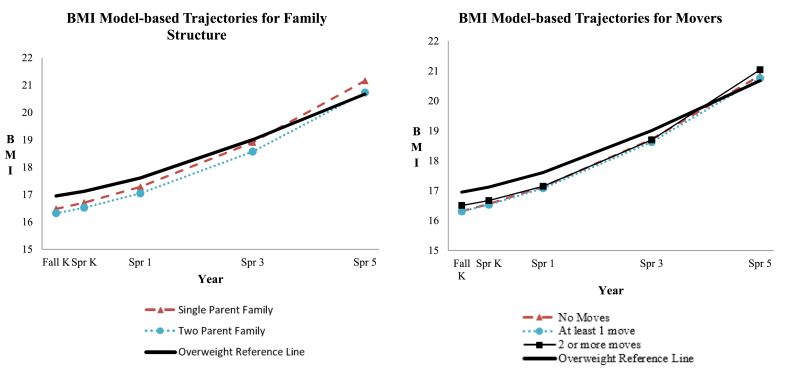
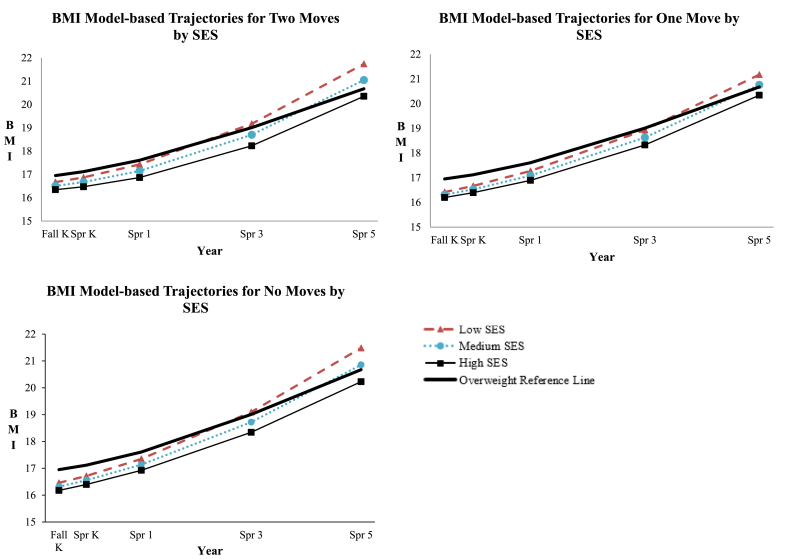
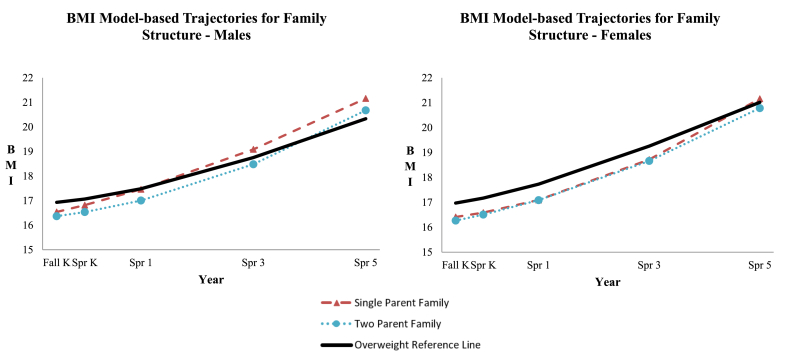
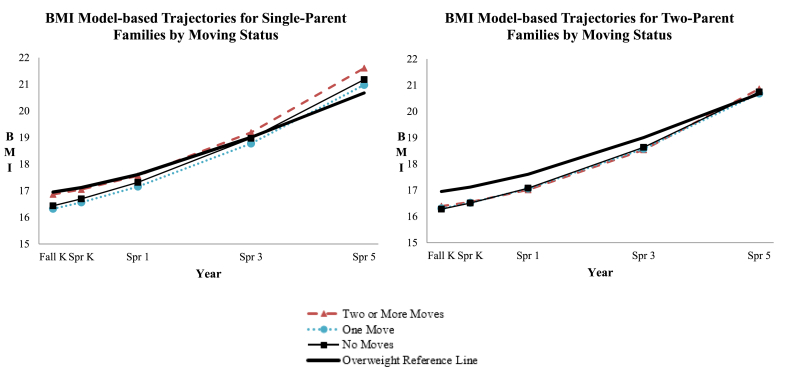
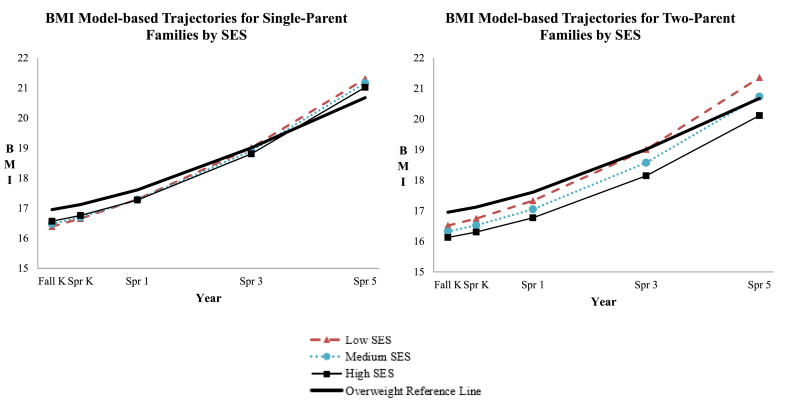
Childhood obesity continues to be a major focus of public health efforts in the United States, where nearly 17% of children are obese. In this study, we focused on two significant features that characterize U.S. society-school mobility and a single-parent family structure-and how they relate to childhood obesity/overweight. Using a nationally representative sample from the Early Childhood Longitudinal Study-Kindergarten (ECLS-K) class of 1998, we examined the body mass index (BMI) growth trajectories of children to determine how these two key features interacted with demographic characteristics of gender, race/ethnicity, and socio-economic status (SES), which are known to be associated with BMI. We analyzed five waves of data from kindergarten through fifth grade of 9041 students applying a two-level hierarchical linear model (HLM). Results indicated that children who changed schools more than two times from kindergarten to fifth grade had higher BMI growth trajectories compared to children who changed only once or did not change schools. To our knowledge, no prior studies have examined this association. Results also indicated children in single-parent families were more likely to have higher BMI growth trajectories compared to children in two-parent families. Although both school mobility and family structure had an impact on children's BMI, we found that family structure had a larger impact than school mobility. Being in a two-parent family was a protective factor for children; that is, even if children in two-parent families moved schools twice or more, they still maintained a healthy BMI on average. For children in single-parent families, however, moving schools tended to have a greater, negative impact on their BMI statuses.
Keywords: Childhood obesity; Family structure; Longitudinal study; School mobility.
Figures
References
-
- Bagley S., Salmon J.O., Crawford D. Family structure and children's television viewing and physical activity. Medicine & Science in Sports & Exercise. 2006;38(5):910–918. - PubMed
-
- Burkam D., Lee V., Dwyer J. Paper presented at the workshop on the impact of mobility and change on the lives of young children, schools, and neighborhoods. National Academies; Washington, DC: 2009, June. School mobility in the early elementary grades: Frequency and impact from nationally representative data.
-
- Carlson M.J. Family structure, father involvement, and adolescent behavioral outcomes. Journal of Marriage and Family. 2006;68(1):137–154.
-
- Center for Disease Control and Prevention [CDC] Percentile data files with LMS values. 2009. https://www.cdc.gov/growthcharts/percentile_data_files.htm
LinkOut - more resources
Full Text Sources
