


FAM19A4/miR124-2 methylation in invasive cervical cancer: A retrospective cross-sectional worldwide study
- PMID: 31390052
- PMCID: PMC7383900
- DOI: 10.1002/ijc.32614
FAM19A4/miR124-2 methylation in invasive cervical cancer: A retrospective cross-sectional worldwide study
Abstract
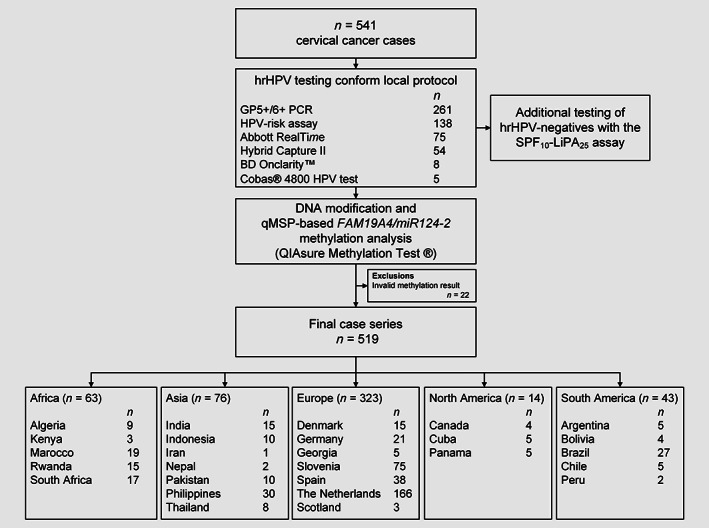
Widespread adoption of primary human papillomavirus (HPV)-based screening has encouraged the search for a triage test which retains high sensitivity for the detection of cervical cancer and precancer, but increases specificity to avoid overtreatment. Methylation analysis of FAM19A4 and miR124-2 genes has shown promise for the triage of high-risk (hr) HPV-positive women. In our study, we assessed the consistency of FAM19A4/miR124-2 methylation analysis in the detection of cervical cancer in a series of 519 invasive cervical carcinomas (n = 314 cervical scrapes, n = 205 tissue specimens) from over 25 countries, using a quantitative methylation-specific PCR (qMSP)-based assay (QIAsure Methylation Test®). Positivity rates stratified per histotype, FIGO stage, hrHPV status, hrHPV genotype, sample type and geographical region were calculated. In total, 510 of the 519 cervical carcinomas (98.3%; 95% CI: 96.7-99.2) tested FAM19A4/miR124-2 methylation-positive. Test positivity was consistent across the different subgroups based on cervical cancer histotype, FIGO stage, hrHPV status, hrHPV genotype, sample type and geographical region. In conclusion, FAM19A4/miR124-2 methylation analysis detects nearly all cervical carcinomas, including rare histotypes and hrHPV-negative carcinomas. These results indicate that a negative FAM19A4/miR124-2 methylation assay result is likely to rule out the presence of cervical cancer.
Keywords: DNA hypermethylation; biomarker; cervical carcinoma; cervical screening; human genome methylation; human papillomavirus.
© 2019 The Authors. International Journal of Cancer published by John Wiley & Sons Ltd on behalf of UICC.
Figures
References
-
- Arbyn M, Raifu AO, Weiderpass E, et al. Trends of cervical cancer mortality in the member states of the European Union. Eur J Cancer 2009;45:2640–8. - PubMed
-
- Bray F, Ferlay J, Soerjomataram I, et al. Global cancer statistics 2018: GLOBOCAN estimates of incidence and mortality worldwide for 36 cancers in 185 countries. CA Cancer J Clin 2018;68:394–424. - PubMed
-
- Cuschieri K, Ronco G, Lorincz A, et al. Eurogin roadmap 2017: triage strategies for the management of HPV‐positive women in cervical screening programs. Int J Cancer 2018;143:735–45. - PubMed
-
- Ronco G, Dillner J, Elfstrom KM, et al. Efficacy of HPV‐based screening for prevention of invasive cervical cancer: follow‐up of four European randomised controlled trials. Lancet 2014;383:524–32. - PubMed
-
- Arbyn M, Ronco G, Anttila A, et al. Evidence regarding human papillomavirus testing in secondary prevention of cervical cancer. Vaccine 2012;30(Suppl 5):F88–99. - PubMed
