


Unexplained Variance in Hydration Study
- PMID: 31394869
- PMCID: PMC6722508
- DOI: 10.3390/nu11081828
Unexplained Variance in Hydration Study
Abstract
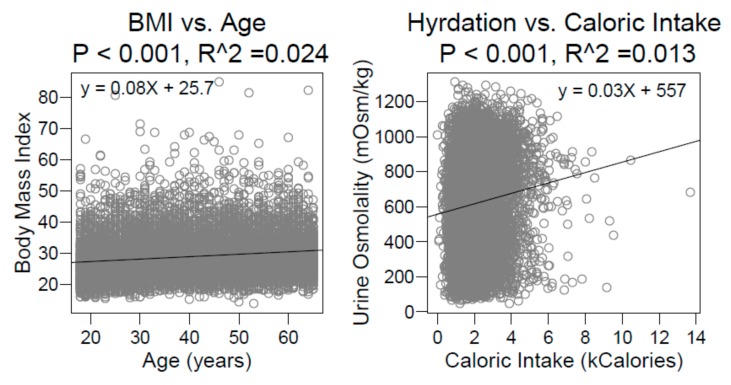
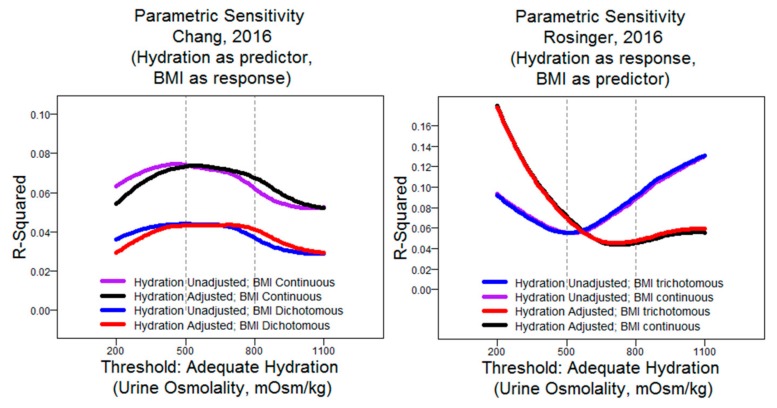
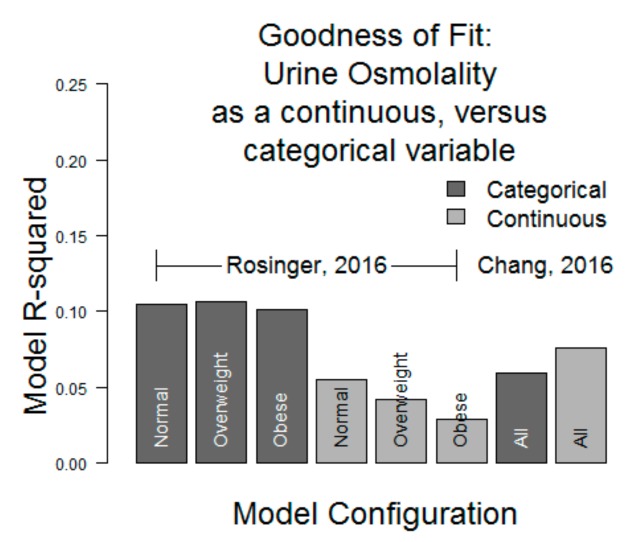
With the collection of water-intake data, the National Health and Nutrition Examination Survey (NHANES) is becoming an increasingly popular resource for large-scale inquiry into human hydration. However, are we leveraging this resource properly? We sought to identify the opportunities and limitations inherent in hydration-related inquiry within a commonly studied database of hydration and nutrition. We also sought to critically review models published from this dataset. We reproduced two models published from the NHANES dataset, assessing the goodness of fit through conventional means (proportion of variance, R2). We also assessed model sensitivity to parameter configuration. Models published from the NHANES dataset typically yielded a very low goodness of fit R2 < 0.15. A reconfiguration of variables did not substantially improve model fit, and the goodness of fit of models published from the NHANES dataset may be low. Database-driven inquiry into human hydration requires the complete reporting of model diagnostics in order to fully contextualize findings. There are several emergent opportunities to potentially increase the proportion of explained variance in the NHANES dataset, including novel biomarkers, capturing situational variables (meteorology, for example), and consensus practices for adjustment of co-variates.
Keywords: NHANES; big data; chronic disease; database; hydration; modeling; obesity; water intake.
Conflict of interest statement
The authors have no personal, professional, or financial relationships that might influence this work.
Figures
References
-
- Taveau C., Chollet C., Waeckel L., Desposito D., Bichet D.G., Arthus M.F., Magnan C., Philippe E., Paradis V., Foufelle F., et al. Vasopressin and hydration play a major role in the development of glucose intolerance and hepatic steatosis in obese rats. Diabetologia. 2015;58:1081–1090. doi: 10.1007/s00125-015-3496-9. - DOI - PubMed
-
- Tasevska I., Enhorning S., Christensson A., Persson M., Nilsson P.M., Melander O. Increased Levels of Copeptin, a Surrogate Marker of Arginine Vasopressin, Are Associated with an Increased Risk of Chronic Kidney Disease in a General Population. Am. J. Nephrol. 2016;44:22–28. doi: 10.1159/000447522. - DOI - PubMed
MeSH terms
LinkOut - more resources
Full Text Sources
