


Low-Cost Fetal Magnetocardiography: A Comparison of Superconducting Quantum Interference Device and Optically Pumped Magnetometers
- PMID: 31394997
- PMCID: PMC6759914
- DOI: 10.1161/JAHA.119.013436
Low-Cost Fetal Magnetocardiography: A Comparison of Superconducting Quantum Interference Device and Optically Pumped Magnetometers
Abstract
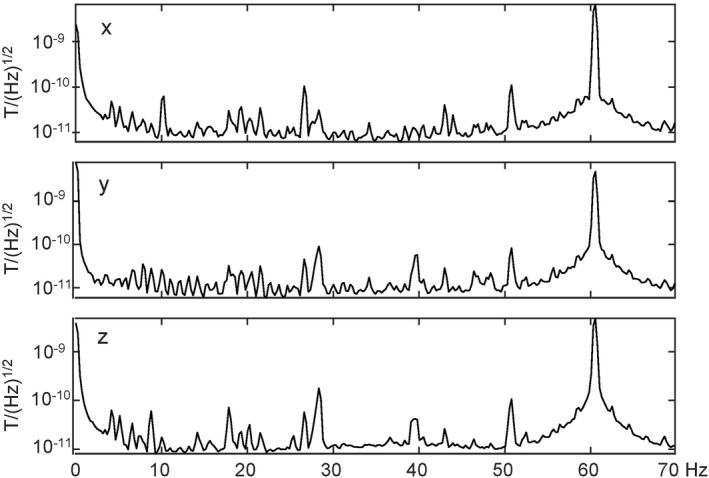
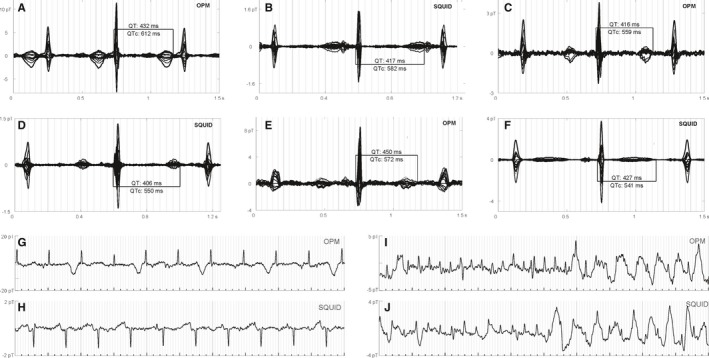
Background Fetal magnetocardiography (fMCG) is a highly effective technique for evaluation of fetuses with life-threatening arrhythmia, but its dissemination has been constrained by the high cost and complexity of Superconducting Quantum Interference Device (SQUID) instrumentation. Optically pumped magnetometers (OPMs) are a promising new technology that can replace SQUIDs for many applications. This study compares the performance of an fMCG system, utilizing OPMs operating in a person-sized magnetic shield, to that of a conventional fMCG system, utilizing SQUID magnetometers operating in a magnetically shielded room. Methods and Results fMCG recordings were made in 24 subjects using the SQUID system with the mother lying supine in a magnetically shielded room and the OPM system with the mother lying prone in a person-sized, cylindrical shield. Signal-to-noise ratios of the OPM and SQUID recordings were not statistically different and were adequate for diagnostic purposes with both technologies. Although the environmental noise was higher using the small open-ended shield, this was offset by the higher signal amplitude achieved with prone positioning, which reduced the distance between the fetus and sensors and improved patient comfort. In several subjects, fMCG provided a differential diagnosis that was more precise and/or definitive than was possible with echocardiography alone. Conclusions The OPM-based system was portable, improved patient comfort, and performed as well as the SQUID-based system at a small fraction of the cost. Electrophysiological assessment of fetal rhythm is now practical and will have a major impact on management of fetuses with long QT syndrome and other life-threatening arrhythmias.
Keywords: arrhythmia; electrophysiology; fetal heart; long QT syndrome; magnetocardiography.
Figures



References
-
- Donofrio MT, Moon‐Grady AJ, Hornberger LK, Copel JA, Sklansky MS, Abuhamad A, Cuneo BF, Huhta JC, Jonas RA, Krishnan A, Lacey S, Lee W, Michelfelder EC Sr, Rempel GR, Silverman NH, Spray TL, Strasburger JF, Tworetzky W, Rychik J; American Heart Association Adults With Congenital Heart Disease Joint Committee of the Council on Cardiovascular Disease in the Young and Council on Clinical Cardiology, Council on Cardiovascular Surgery and Anesthesia, and Council on Cardiovascular and Stroke Nursing. Diagnosis and treatment of fetal cardiac disease: a scientific statement from the American Heart Association. Circulation. 2014;129:2183–2242. - PubMed
Publication types
MeSH terms
Grants and funding
LinkOut - more resources
Full Text Sources
Other Literature Sources
Medical
