. 2019 Jul 23:6:242.
doi: 10.3389/fvets.2019.00242. eCollection 2019.

PPR Control in a Sahelian Setting: What Vaccination Strategy for Mauritania?

Affiliations

PPR Control in a Sahelian Setting: What Vaccination Strategy for Mauritania?

Ahmed Salem ElArbi et al. Front Vet Sci. .

Abstract

Peste des Petits Ruminants (PPR) is a viral disease affecting domestic and small wild ruminants. Endemic in large parts of the world, PPR causes severe damages to animal production and household economies. In 2015, FAO and OIE launched a global eradication program (GCSE) based on vaccination campaigns. The success of GCSE shall depend on the implementation of vaccination campaigns, accounting for husbandry practices, mobility and the periodicity of small ruminants' population renewal. In Mauritania, PPR outbreaks occur annually despite ongoing annual vaccination campaigns since 2008. Here, we developed a mathematical model to assess the impact of four vaccination strategies (including the GSCE one), the importance of their timing of implementation and the usefulness of individual animal identification on the reduction of PPR burden. The model was calibrated on data collected through ad-hoc surveys about demographic dynamics, disease impact, and national seroprevalence using Monte Carlo Markov Chain procedure. Numerical simulations were used to estimate the number of averted deaths over the next 12 years. The model results showed that the GSCE strategy prevented the largest number of deaths (9.2 million vs. 6.2 for random strategy) and provided one of the highest economic returns among all strategies (Benefit-Cost Ratio around 16 vs. 7 for random strategy). According to its current cost, identification would be a viable investment that could reduce the number of vaccine doses to distribute by 20-60%. Whilst the implementation of the identification system is crucial for PPR control, its success depends also on a coordinated approach at the regional level.

Keywords: PPR; West Africa; cost-benefit analysis; global strategy for control and eradication (GSCE); mathematical modeling; vaccination.


Figures
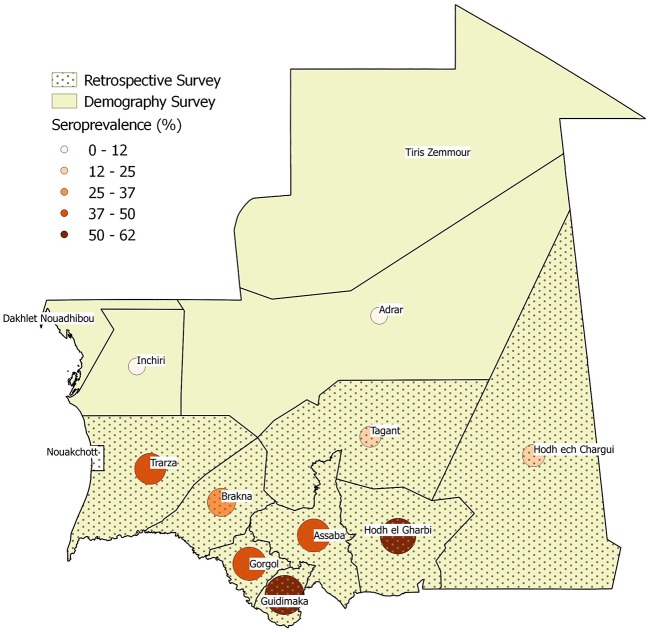
Figure 1
Figure 1
Wilayas included in the demographic (color), impact (dotted pattern) and seroprevalence (circles of darker color and increasing size by positive percentage) surveys.
Figure 2
Figure 2
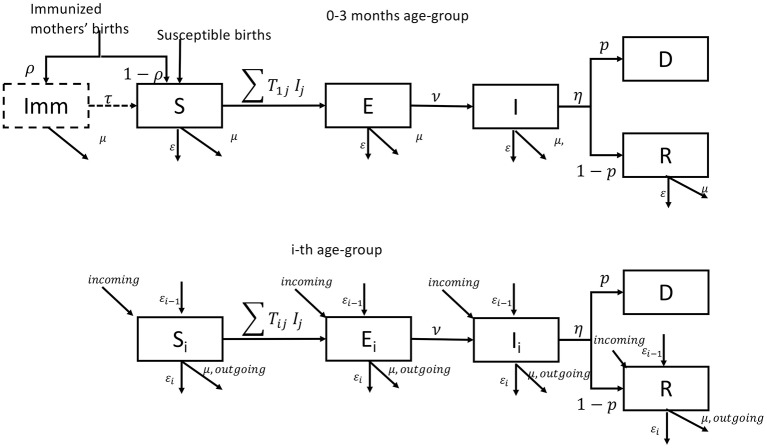
Pictorial representation of the epidemiological model for the first and i-th age group.
Figure 3
Figure 3
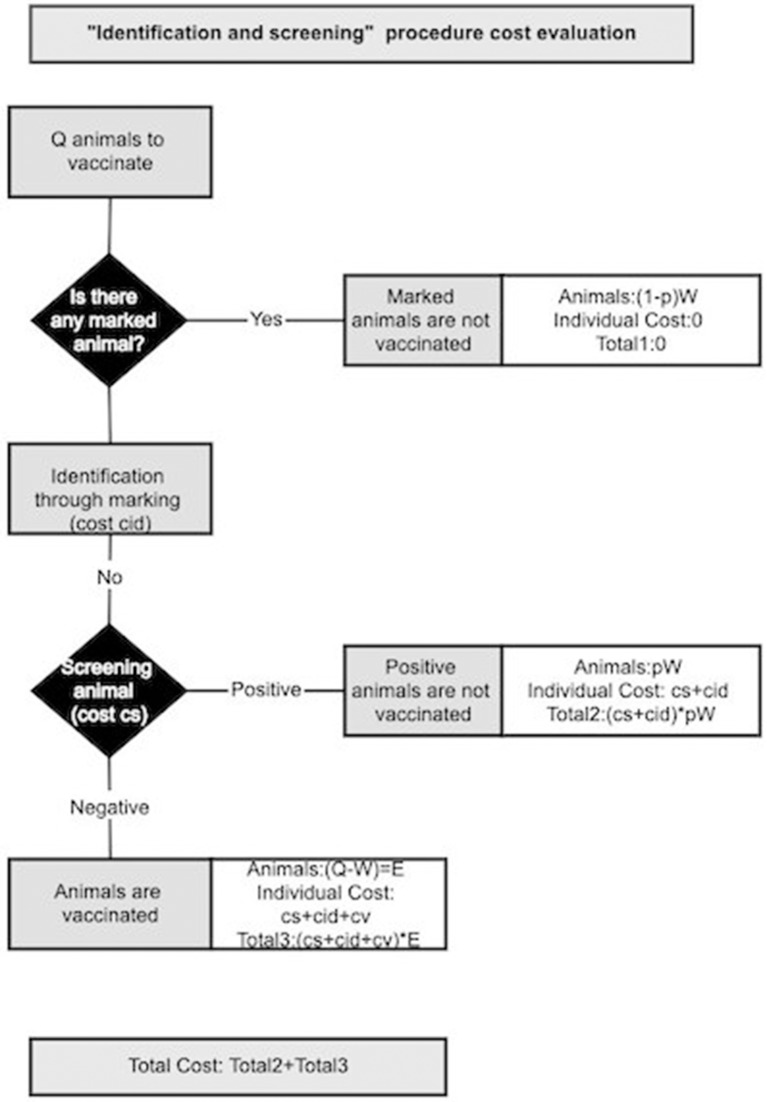
Schematic representation of the cost evaluation for “identification and screening” procedure.
Figure 4
Figure 4
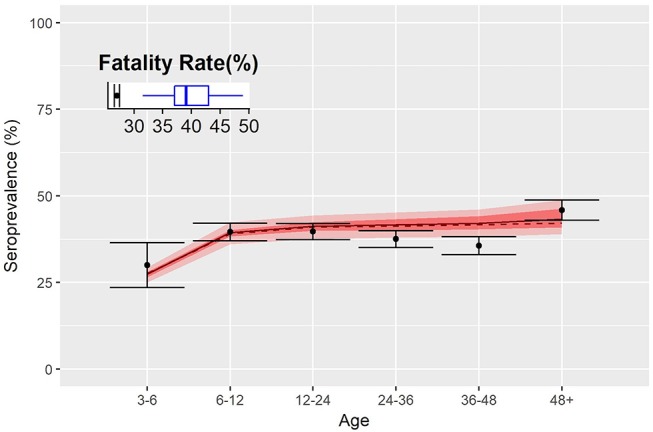
Fatality rates and seroprevalence estimated over the calibration of the transmission model. Dots represent the percentage of seropositive by age group, and shaded red area indicates 50 and 95% confidence interval of simulations. Inset shows the fatality rate estimate of the disease as from data (dots) and model (blue boxplot).
Figure 5
Figure 5
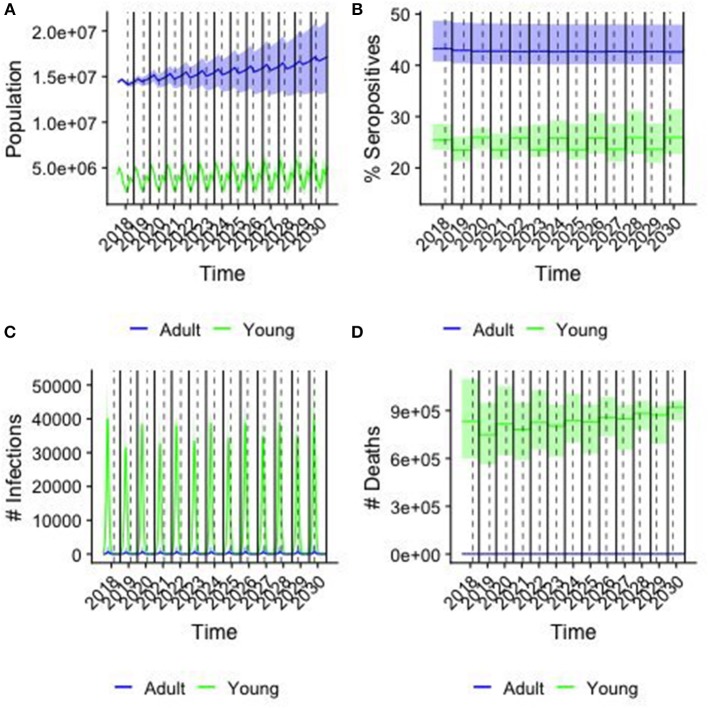
Results from the baseline case. colors correspond to young (<1 year old) and adults (>1 year old), solid line corresponding of the median and shaded area the 95% confidence interval of the simulations over a sample of 250 parameter values. Solid lines indicate the end/beginning of the year, while dashed line indicates Tabaski date. (A) The population in each age group by day (B) the percentage of seropositive animals in each group (C) the number of new infections by day (D) the cumulative number of PPR-related deaths by year.
Figure 6
Figure 6
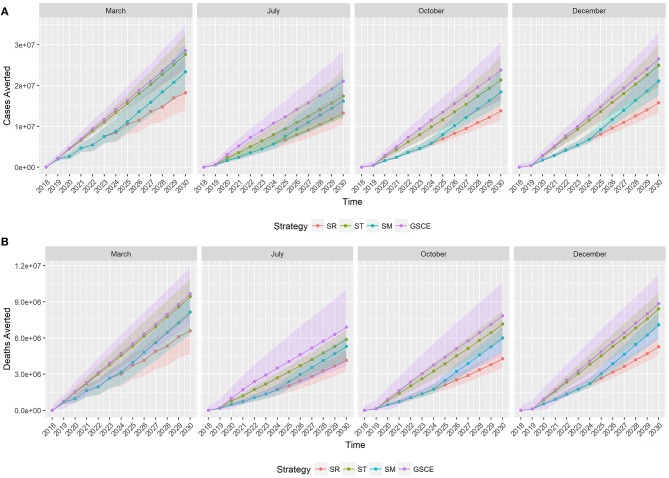
Median cumulative number of cases (A) and deaths (B) averted by vaccination. Colors correspond to the vaccination strategy, while line type to the month of vaccination. SR, National Strategy; ST, Targeted scenario; SM, Mixed scenario (SM) and GSCE, Global Strategy for Control and Eradication.
Figure 7
Figure 7
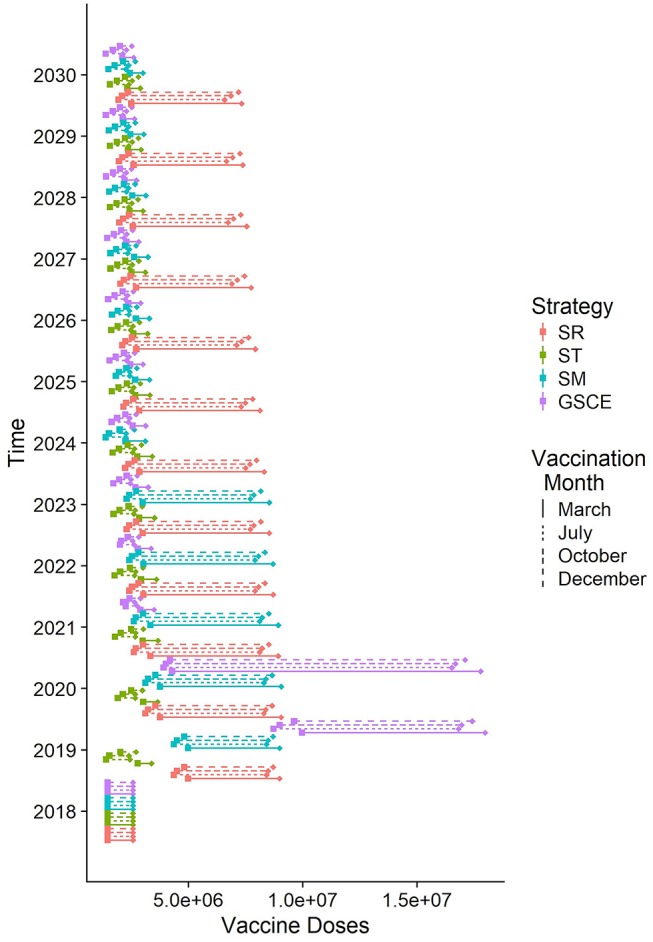
Quantity of vaccine distributed each year according to different strategies (median). For each line, on the right the total number of doses distributed, on the left the effective doses given to susceptible individuals. The length of the rod corresponds to the number of doses wasted because given to already infected individuals.
Figure 8
Figure 8
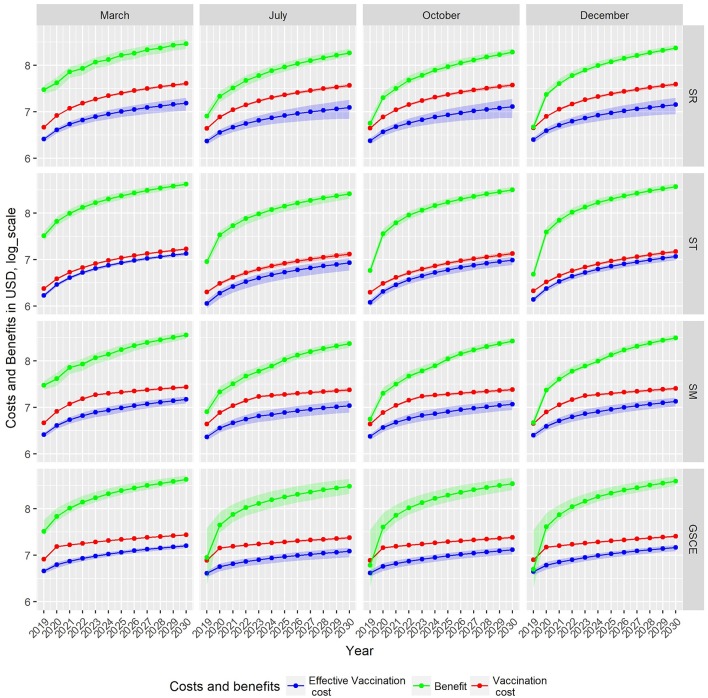
Cumulative cost and benefit for each strategy (row) and month of vaccination. Green indicates benefits from averted mortality, red the vaccination cost, and blue the loss due to wasted vaccination, all expressed in U.S. Dollars. Due to different scales of costs and benefit, estimates are given in Log10.
Figure 9
Figure 9
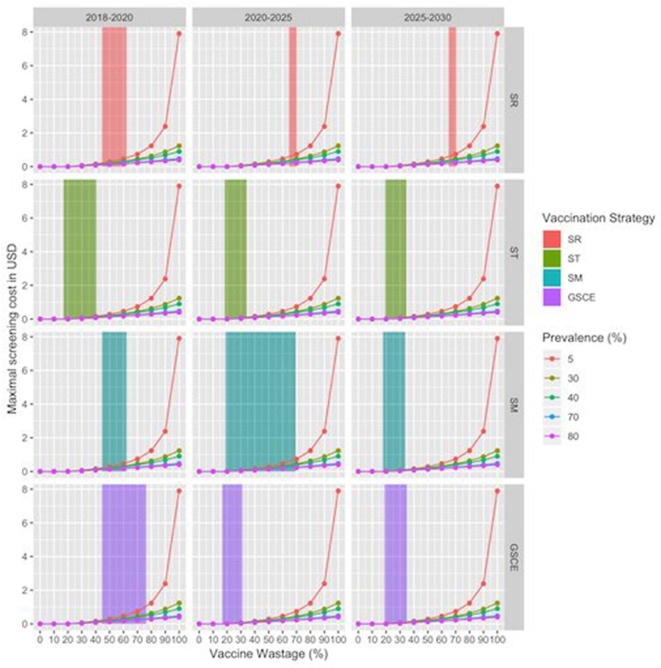
Maximal Screening cost per animal by vaccination strategy and period. X-axes correspond to the vaccine wastage, while y axis corresponds to maximal screening cost, zero value indicating that the procedure is not convenient. Line colors correspond to the evaluation for different sero-prevalence values. Shaded areas correspond to range of vaccination wastage in that period by vaccination strategy.

References

    1. Munir M. Role of wild small ruminants in the epidemiology of peste des petits ruminants. Transbound Emerg Dis. (2014) 61:411–24. 10.1111/tbed.12052 - DOI - PubMed
    1. Kinne J, Kreutzer R, Kreutzer M, Wernery U, Wohlsein P. Peste des petits ruminants in Arabian wildlife. Epidemiol Infect. (2010) 138: 1211–4. 10.1017/S0950268809991592 - DOI - PubMed
    1. Abraham G, Sintayehu A, Libeau G, Albina E, Roger F, Laekemariam Y, et al. . Antibody seroprevalences against peste des petits ruminants (PPR) virus in camels, cattle, goats and sheep in Ethiopia. Prev Vet Med. (2005) 70:51–7. 10.1016/j.prevetmed.2005.02.011 - DOI - PubMed
    1. Khalafalla AI, Saeed IK, Ali YH, Abdurrahman MB, Kwiatek O, Libeau G, et al. . An outbreak of peste des petits ruminants (PPR) in camels in the Sudan. Acta Trop. (2010) 116:161–5. 10.1016/j.actatropica.2010.08.002 - DOI - PubMed
    1. Roger F, Yigezu LM, Hurard C, Libeau G, Mebratu GY, Diallo A, et al. Investigation of a new pathological condition of camels in Ethiopia. J Camel Pract Res. (2000) 7:163–5.

LinkOut - more resources