


Generation of recombinant MVA-norovirus: a comparison study of bacterial artificial chromosome- and marker-based systems
- PMID: 31399106
- PMCID: PMC6688233
- DOI: 10.1186/s12985-019-1212-y
Generation of recombinant MVA-norovirus: a comparison study of bacterial artificial chromosome- and marker-based systems
Abstract
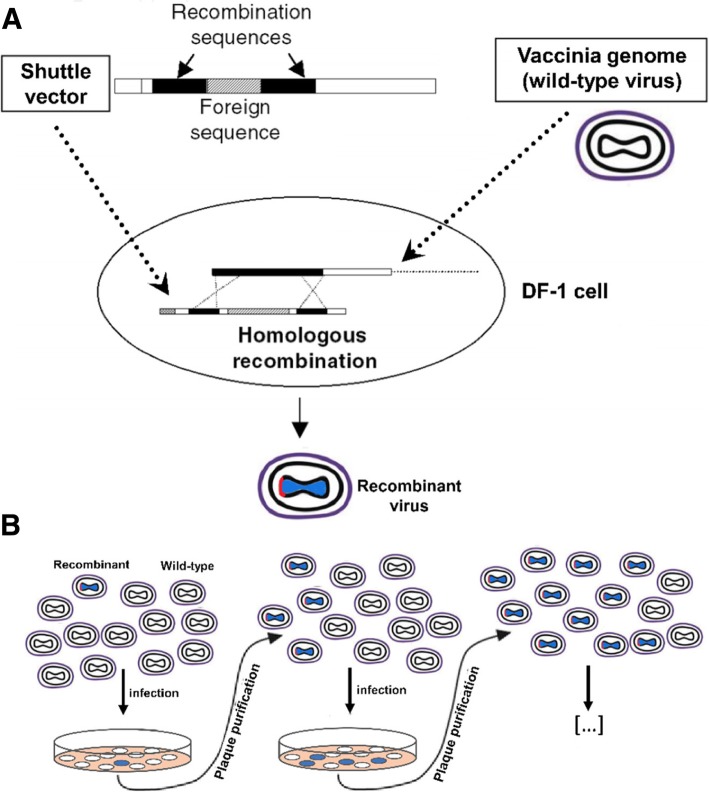
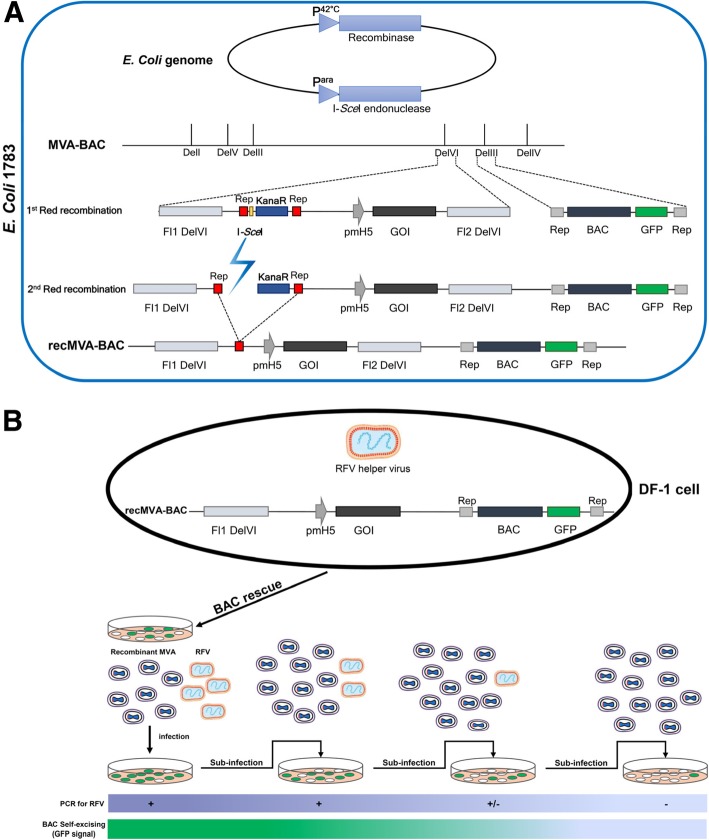
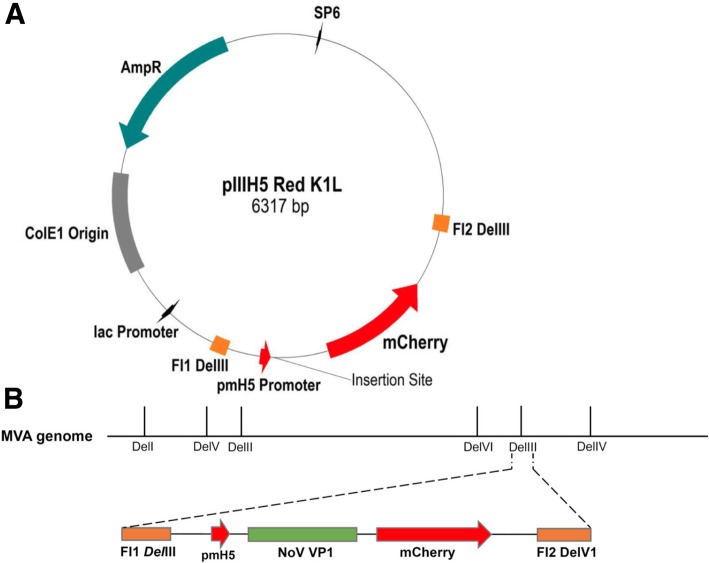
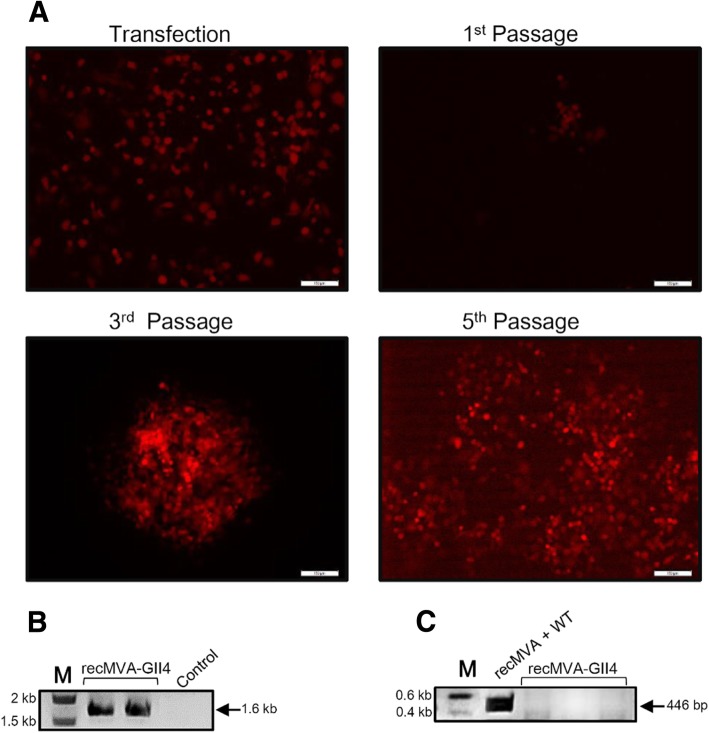
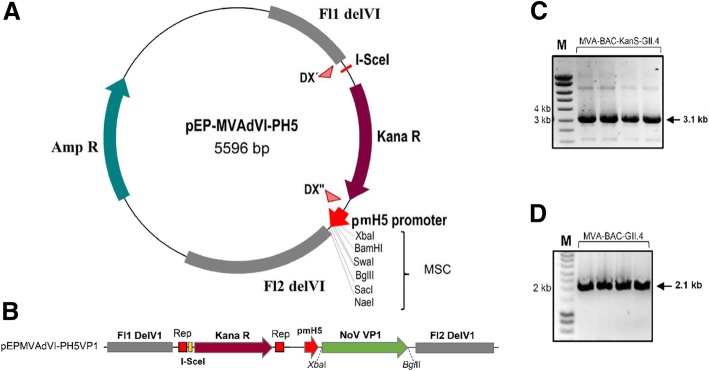
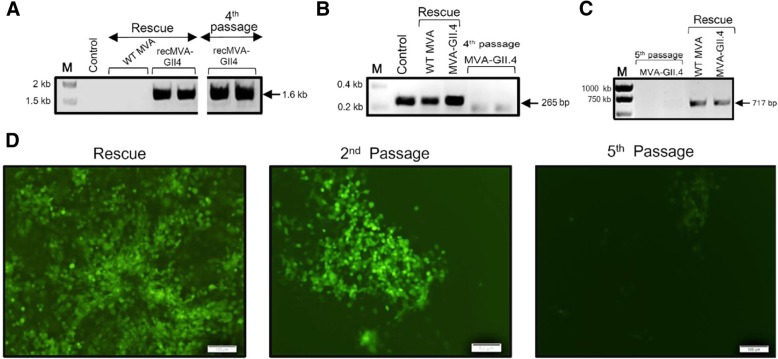
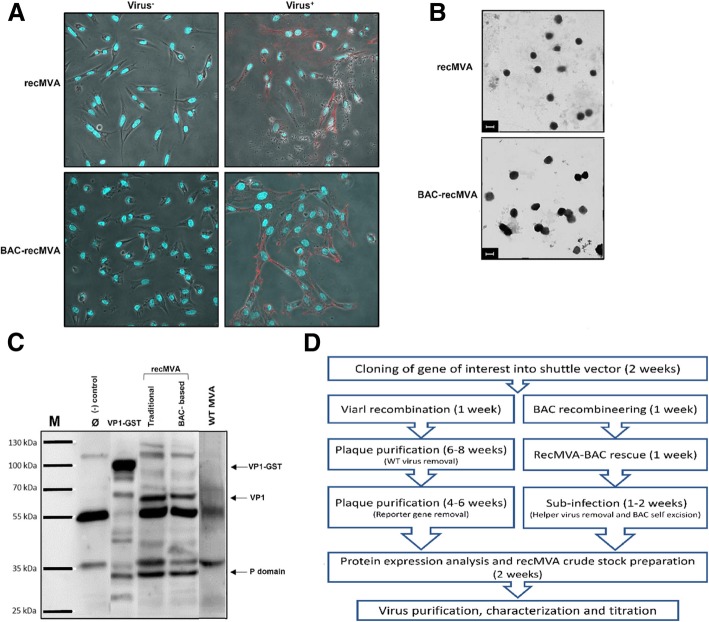
Background: Recombinant Modified Vaccinia Virus Ankara has been employed as a safe and potent viral vector vaccine against infectious diseases and cancer. We generated recMVAs encoding norovirus GII.4 genotype capsid protein by using a marker-based approach and a BAC-based system. In the marker-based approach, the capsid gene together with a reporter gene was introduced into the MVA genome in DF-1 cells. Several rounds of plaque purification were carried out to get rid of the WT-MVA. In the BAC-based approach, recMVA-BAC was produced by en passant recombineering in E. coli. Subsequently, the recMVAs were rescued in DF-1 cells using a helper rabbit fibroma virus. The BAC backbone and the helper virus were eliminated by passaging in DF-1 cells. Biochemical characteristics of the recMVAs were studied.
Results: We found the purification of the rare spontaneous recombinants time-consuming in the marker-based system. In contrast, the BAC-based system rapidly inserted the gene of interest in E. coli by en passant recombineering before virion production in DF-1 cells. The elimination of the reporter gene was found to be faster and more efficient in the BAC-based approach. With Western blotting and electron microscopy, we could prove successful capsid protein expression and proper virus-assembly, respectively. The MVA-BAC produced higher recombinant virus titers and infected DF-1 cells more efficiently.
Conclusions: Comparing both methods, we conclude that, in contrast to the tedious and time-consuming traditional method, the MVA-BAC system allows us to quickly generate high titer recMVAs.
Keywords: Bacterial artificial chromosome; Norovirus; Recombinant MVA; Self-excising.
Conflict of interest statement
The authors declare that they have no competing interests.
Figures
References
-
- Hasing ME, Lee BE, Preiksaitis JK, Tellier R, Honish L, et al. Emergence of a new norovirus GII. 4 variant and changes in the historical biennial pattern of norovirus outbreak activity in Alberta, Canada, from 2008 to 2013. J Clin Microbiol. 2013;51:2204–2211. doi: 10.1128/JCM.00663-13. - DOI - PMC - PubMed
Publication types
MeSH terms
Substances
LinkOut - more resources
Full Text Sources
Other Literature Sources
Medical
Research Materials
Miscellaneous
