


doi: 10.1053/j.gastro.2019.08.010.
Epub 2019 Aug 8.
How to Advance Research, Education, and Training in the Study of Rare Diseases
Affiliations
- PMID: 31401141
- PMCID: PMC8034804
- DOI: 10.1053/j.gastro.2019.08.010
Item in Clipboard
How to Advance Research, Education, and Training in the Study of Rare Diseases
Gastroenterology.
2019 Oct.
No abstract available
Conflict of interest statement
Conflicts of interest
The authors have made the following disclosures: SCG and RGS have no conflicts to disclose. ESD has received research funding from Adare, Allakos, GSK, Meritage, Miraca, Nutricia, Celgene/Receptos, Regeneron, and Shire; is a consultant for Adare, Alivio, Allakos, AstraZeneca, Banner, Biorasi, Calypso, Celgene/Receptos, Enumeral, EsoCap, Gossamer Bio, GSK, Regeneron, Robarts, Salix, and Shire; and has received educational grants from Allakos, Banner, and Holoclara. SKG is a Consultant for Abbott, Adare, Allakos, Celgene, Gossamer Bio, QOL, and UpToDate; and has received research funding from Shire.
Figures
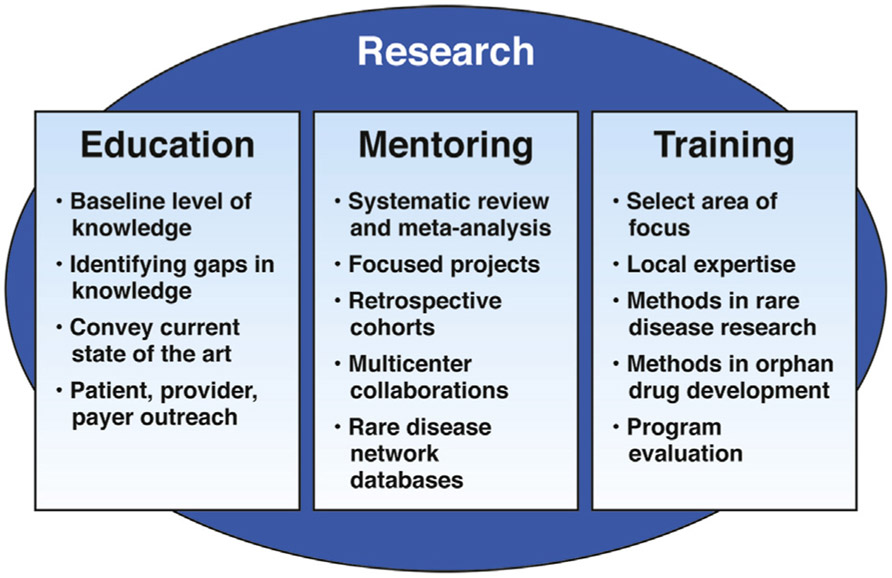
Research can be considered an overarching framework to achieve education, mentoring, and training in rare diseases. Each of these facets can, in turn, help to advance knowledge of rare diseases.
References
-
- Angelis A, Tordrup D, Kanavos P. Socio-economic burden of rare diseases: a systematic review of cost of illness evidence. Health Policy 2015;119:964–979. - PubMed
-
- Picoraro JA, Gupta SK. Rare diseases enrich our field. AGA Perspectives. April 2019. Available from: http://agaperspectives.gastro.org/rare-diseases-enrich-our-field/#.XV70r.... Accessed August 22, 2019.
-
- Consortium of Eosinophilic Gastrointestinal Disease Researchers. Education videos. Available: www.rarediseasesnetwork.org/cms/cegir/Learn-More/Educational-Videos. Accessed August 22, 2019.
Publication types
MeSH terms
Grants and funding
LinkOut - more resources
Full Text Sources
Medical
