. 2019 Sep 26;220(9):1477-1488.
doi: 10.1093/infdis/jiz322.

Candidalysin Is Required for Neutrophil Recruitment and Virulence During Systemic Candida albicans Infection

Affiliations

Candidalysin Is Required for Neutrophil Recruitment and Virulence During Systemic Candida albicans Infection

Marc Swidergall et al. J Infect Dis. .

Abstract

Background: Candidalysin is a cytolytic peptide toxin secreted by Candida albicans hyphae and has significantly advanced our understanding of fungal pathogenesis. Candidalysin is critical for mucosal C albicans infections and is known to activate epithelial cells to induce downstream innate immune responses that are associated with protection or immunopathology during oral or vaginal infections. Furthermore, candidalysin activates the NLRP3 inflammasome and causes cytolysis in mononuclear phagocytes. However, the role of candidalysin in driving systemic infections is unknown.

Methods: In this study, using candidalysin-producing and candidalysin-deficient C albicans strains, we show that candidalysin activates mitogen-activated protein kinase (MAPK) signaling and chemokine secretion in endothelial cells in vitro.

Results: Candidalysin induces immune activation and neutrophil recruitment in vivo, and it promotes mortality in zebrafish and murine models of systemic fungal infection.

Conclusions: The data demonstrate a key role for candidalysin in neutrophil recruitment and fungal virulence during disseminated systemic C albicans infections.

Keywords: Candida albicans; candidalysin; endothelial; fungal; systemic.


Figures

Figure 1.
Figure 1.
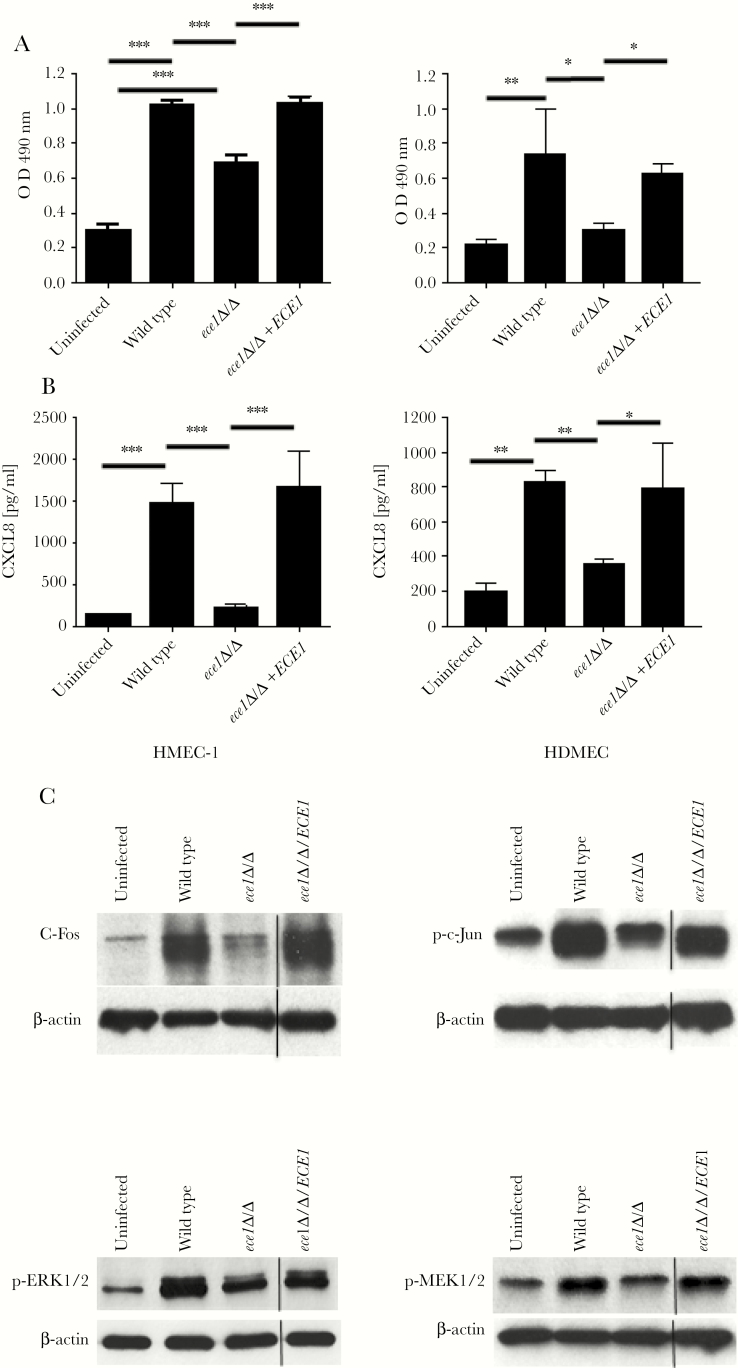
Candidalysin induces cell damage, cytokine release, and intracellular signaling in human endothelial cells. Cell damage (A) and CXCL8 (B) chemokine release quantified by lactate dehydrogenase assay and enzyme-linked immunosorbent assay, respectively, for human microvascular endothelial cell line (HMEC-1) and human adult dermal microvascular endothelial cells (HDMECs) after exposure to wild-type, ece1Δ/Δ , or ece1Δ/Δ+ECE1 Candida albicans (multiplicity of infection [MOI] of 0.1) for 24 hours; medium alone was used as uninfected control. Data are presented as mean ± standard deviation (n = 3); statistical analysis was achieved using one-way analysis of variance with Tukey’s post hoc multiple comparison test. *, P < .05; **, P < .01; and ***, P < .001. (C) Immunoblot analysis of HMEC-1 intracellular signaling responses to wild-type, ece1Δ/Δ, ece1Δ/Δ+ECE1 C albicans (MOI of 10) or control for 2 hours. The HMEC-1 cell lysates (40 μg of total protein) were probed with c-Fos, phospho-c-Jun, phospho-ERK1/2, or phospho-MEK1/2, and β-actin was used as a loading control.
Figure 2.
Figure 2.
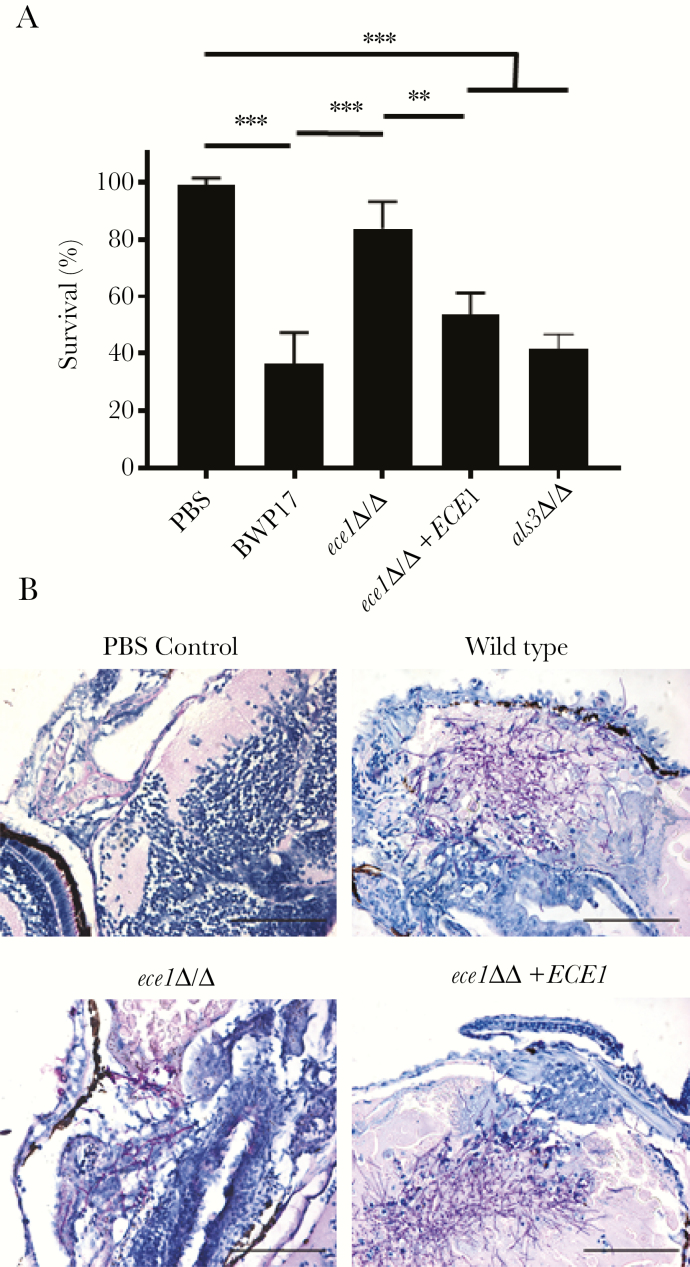
Systemic infection of zebrafish larvae with ECE1-deficient Candida albicans show improved survival compared with wild-type or ece1Δ/Δ+ECE1-infected zebrafish. (A) Zebrafish survival 24 hours after injection of 500 colony-forming unit of wild-type, ece1Δ/Δ, ece1Δ/Δ+ECE1, als3Δ/Δ or phosphate-buffered saline (PBS) as control directly into the cardinal vein. Data are presented as mean ± standard deviation (n = 4 independent experiments with at least 20 zebrafish per treatment group); statistical analysis was achieved using one-way analysis of variance with Tukey’s post hoc multiple comparison test. **, P < .01; and ***, P < .001. (B) Sagittal histological sections of periodic acid-Schiff-stained infected zebrafish showing the hyphal form of C albicans penetrating zebrafish tissue for wild-type, ece1Δ/Δ and ece1Δ/Δ+ECE1 strains compared with PBS-injected controls. Scale bars = 100 μm.
Figure 3.
Figure 3.
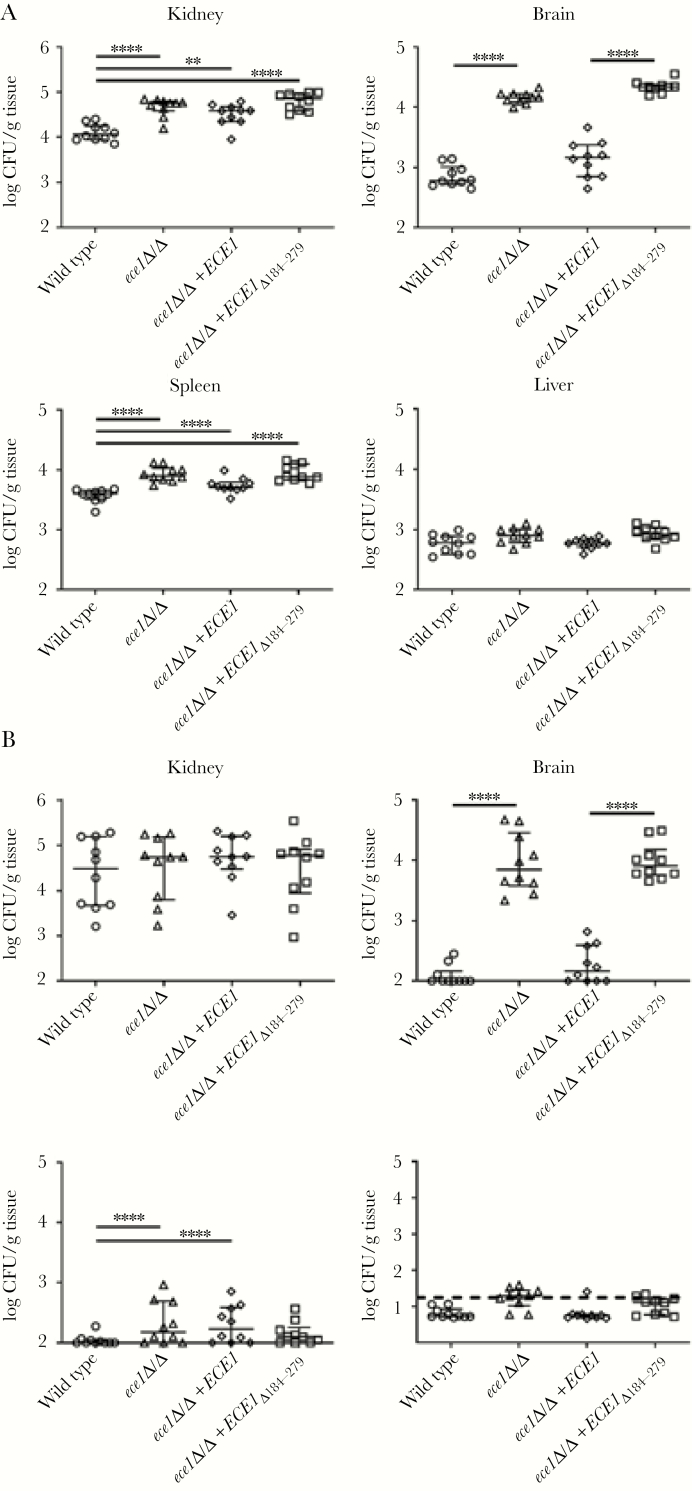
Absence of candidalysin increases organ-specific tropism during hematogenously disseminated candidiasis. Fungal burden of the spleen, brain, kidney, and liver of mice at 1 day (A) and 4 days (B) postinfection after inoculation with 2 × 10⁵Candida albicans cells of the indicated strains. Results are median ± interquartile range of 2 independent experiments with 10 mice per strain at each time point. Statistical significance is indicated by **, P < .01 and ****, P < .0001 (Mann-Whitney test with Bonferroni correction for multiple comparisons). Dashed line indicates limit of detection in the liver. CFU, colony-forming units.
Figure 4.
Figure 4.
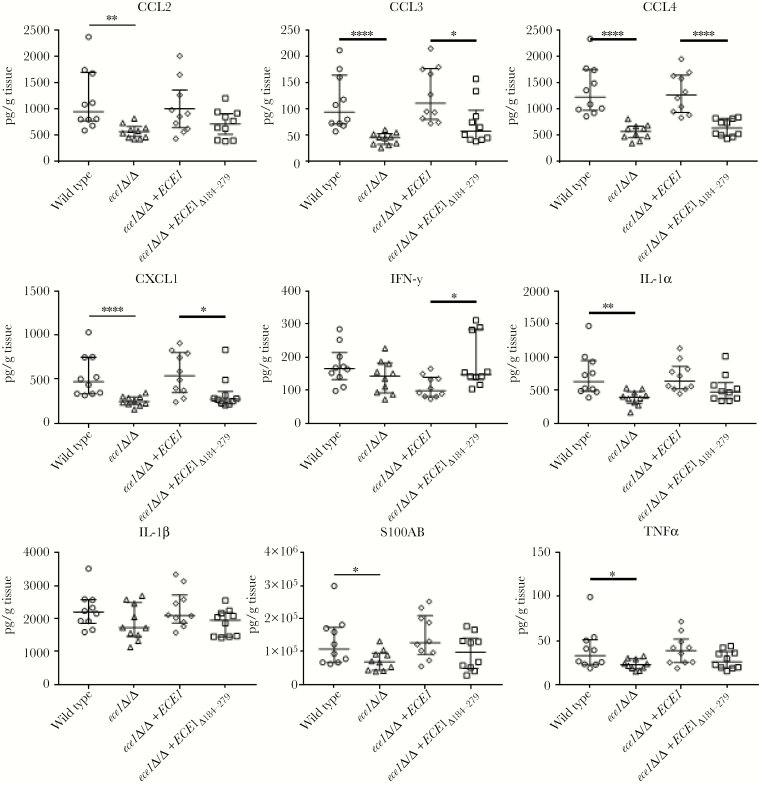
Candidalysin is required to induce an early antifungal immune response in the kidney. Level of chemokines and cytokines in kidney homogenates of immunocompetent mice with hematogenously disseminated candidiasis after 1 day of infection with 2 × 10⁵Candida albicans cells of the indicated strains. Results are median ± interquartile range of 2 independent experiments with 10 mice per strain. Statistical significance is indicated by *, P < .05, **, P < .01, and ****, P < .0001 (Mann-Whitney test with Bonferroni correction for multiple comparisons).
Figure 5.
Figure 5.
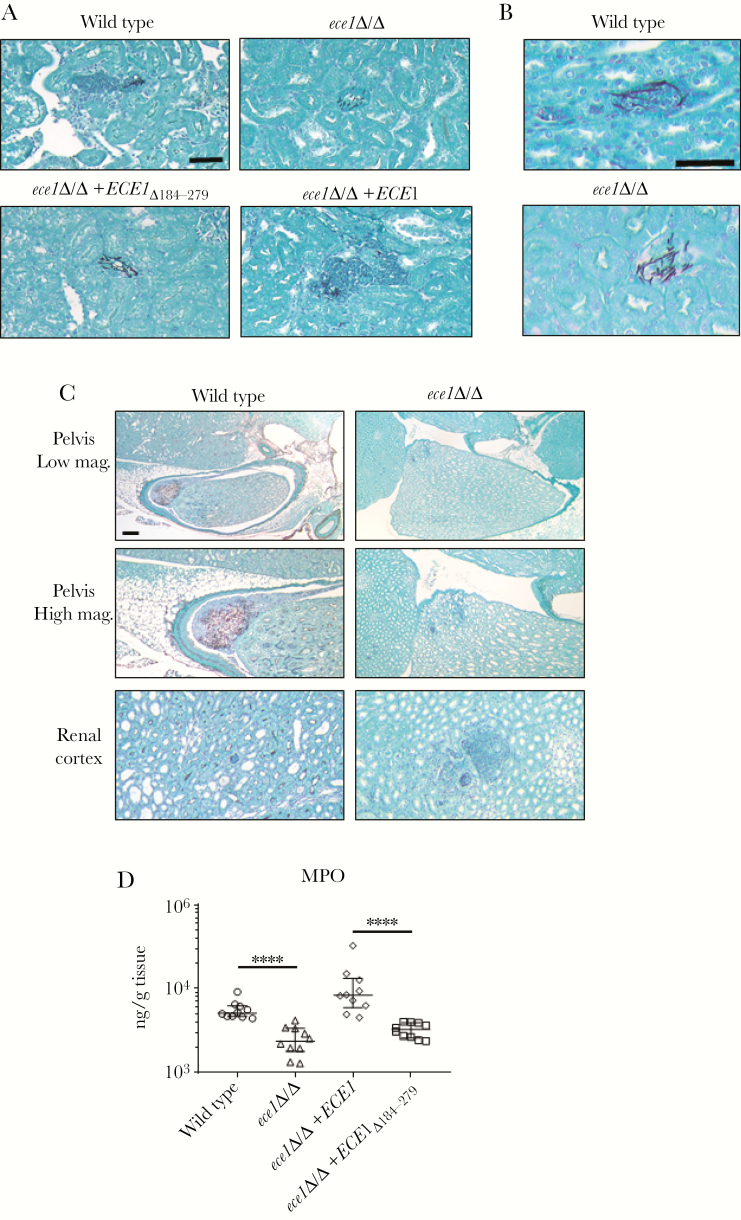
Candidalysin is required for renal neutrophil recruitment and immunopathology. (A and B) Histopathology of the kidney of mice after 1 day of infection with 2 × 10⁵Candida albicans cells of the indicated strains. Sections (A, low magnification; B, high magnification) were stained with Gomori methenamine silver (GMS). Fungal cells are filamentous and stained black, and polymorphonuclear (PMN) cells are round and dark purple. Scale bar = 50 µm. (C) Histopathology of the pelvis region (top and middle) and renal cortex (bottom) of the mouse kidney 4 days postinfection with 2 × 10⁵C albicans cells of the indicated strains. Sections were stained with GMS. Fungal cells are filamentous and stained black, and PMN cells are round and purple surrounding fungal filaments. Only wild-type C albicans invades the pelvis region with local immunopathology, whereas the ece1Δ/Δ remains in the renal cortex. Scale bar = 200 µm. (D) Myeloperoxidase (MPO) expression in kidney homogenates after 1 day of infection with 2 × 10⁵C albicans cells of the indicated strains. Results are median ± interquartile range of 2 independent experiments with 10 mice per strain. Statistical significance is indicated by ****, P < .0001 (Mann-Whitney test with Bonferroni correction for multiple comparisons).
Figure 6.
Figure 6.
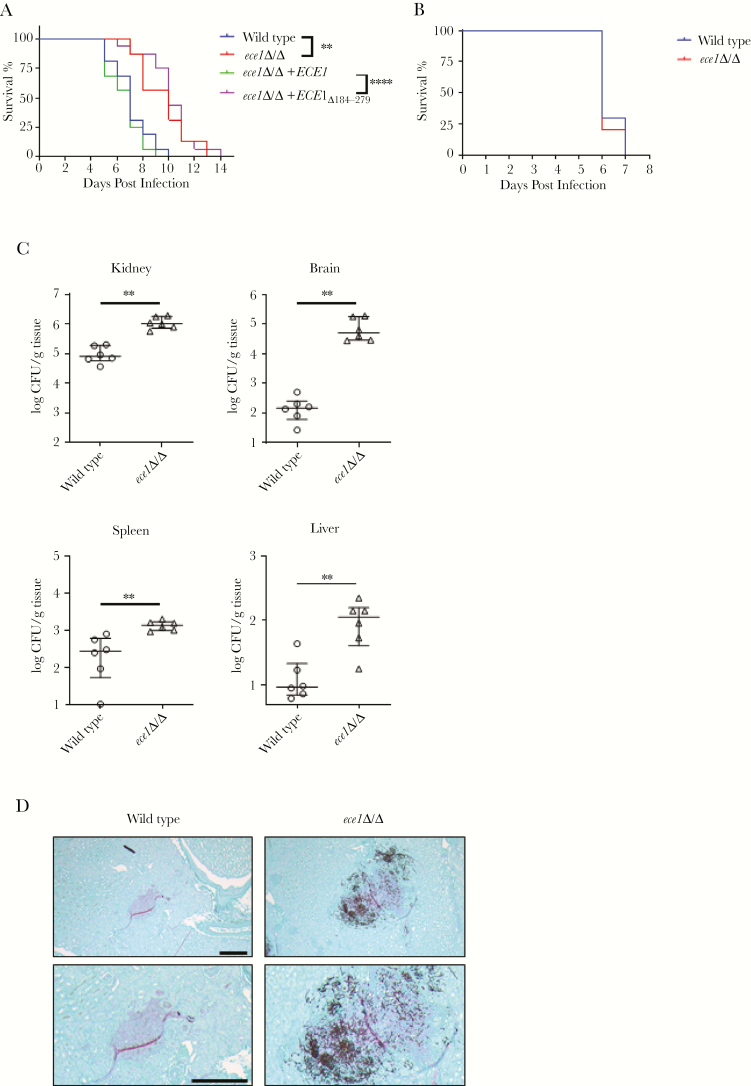
Candidalysin-induced immunopathology is required for virulence during hematogenously disseminated candidiasis. (A) Survival of immunocompetent mice after intravenous inoculation with 2 × 10⁵ yeast phase cells of the indicated strains of Candida albicans (n  = 10). (B) Survival of leukopenic mice infected with 5 × 10⁴ wild-type or ece1Δ/Δ C albicans yeast. Statistical significance is indicated by **, P < .01 (wild-type vs ece1Δ/Δ) and ****, P < .0001 (ece1Δ/Δ+ECE1 vs ece1Δ/Δ+ECE1Δ184–279) (Wilcoxon rank-sum test). (C) Fungal burden of the kidney, brain, spleen, and liver of leukopenic mice at 4 days postinfection after inoculation with 5 × 10⁴ wild-type or ece1Δ/Δ C albicans yeast. Results are median ± interquartile range with 6 mice per strain. Statistical significance is indicated by **, P < .01 (Mann-Whitney test). (D) Histopathology of the pelvis region (top, lower magnification; bottom, higher magnification) of the kidney of leukopenic mice after 4 days of infection with 5 × 10⁴C albicans cells of the indicated strains. Sections were stained with Gomori methenamine silver. Scale bars = 200 µm. CFU, colony-forming units.

References

    1. Brown GD, Denning DW, Gow NA, Levitz SM, Netea MG, White TC. Hidden killers: human fungal infections. Sci Trans Med 2012; 4:165rv13. - PubMed
    1. Brown GD, Denning DW, Levitz SM. Tackling human fungal infections. Science 2012; 336:647. - PubMed
    1. Pappas PG, Lionakis MS, Arendrup MC, Ostrosky-Zeichner L, Kullberg BJ. Invasive candidiasis. Nat Rev Dis Primers 2018; 4:18026. - PubMed
    1. Grubb SE, Murdoch C, Sudbery PE, Saville SP, Lopez-Ribot JL, Thornhill MH. Candida albicans-endothelial cell interactions: a key step in the pathogenesis of systemic candidiasis. Infect Immun 2008; 76:4370–7. - PMC - PubMed
    1. Filler SG, Sheppard DC. Fungal invasion of normally non-phagocytic host cells. PLoS Pathog 2006; 2:e129. - PMC - PubMed

Publication types

MeSH terms