


Trimethoprim/Sulfamethoxazole-Induced Bradycardia, Renal Failure, AV-Node Blockers, Shock and Hyperkalemia Syndrome
- PMID: 31403103
- PMCID: PMC6682249
- DOI: 10.5811/cpcem.2019.5.43118
Trimethoprim/Sulfamethoxazole-Induced Bradycardia, Renal Failure, AV-Node Blockers, Shock and Hyperkalemia Syndrome
Abstract
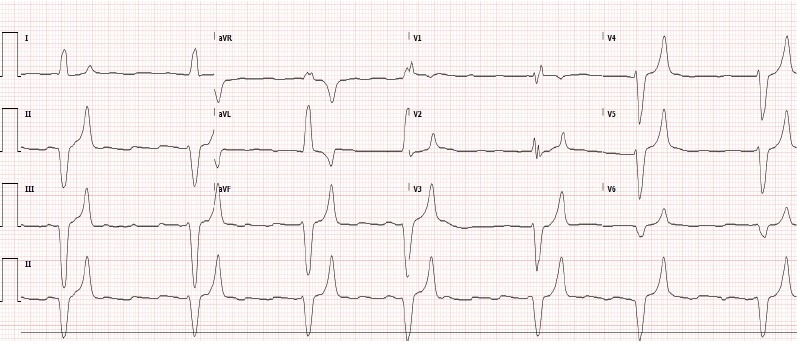
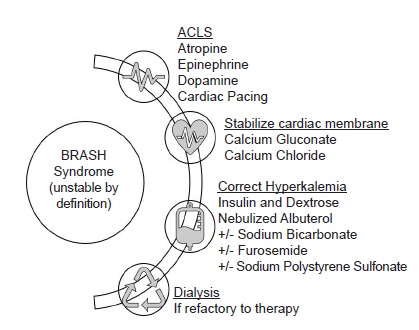
BRASH (bradycardia, renal failure, atrioventricular-node blockers, shock, and hyperkalemia) syndrome is a recently coined term for a condition that describes the severe bradycardia and shock associated with hyperkalemia in patients on atrioventricular (AV)-node blocking agents. The proposed pathophysiology involves a precipitating event that exacerbates renal dysfunction with resulting AV-node blocker and potassium accumulation that act synergistically to precipitate bradycardia and hypotension. This syndrome may be refractory to the usual management of bradycardia. This case describes BRASH syndrome precipitated by trimethoprim/sulfamethoxazole.
Conflict of interest statement
Conflicts of Interest: By the CPC-EM article submission agreement, all authors are required to disclose all affiliations, funding sources and financial or management relationships that could be perceived as potential sources of bias. The authors disclosed none.
Figures
References
-
- Unterman A, Moscavitch SD. The silence of the atria. Isr Med Assoc J. 2008;10(7):556. - PubMed
-
- Farkas J. BRASH syndrome: bradycardia, renal failure, AV blocker, shock, hyperkalemia. [Accessed July 15, 2018]. Available at: https://emcrit.org/pulmcrit/brash-syndrome-bradycardia-renal-failure-av-...
-
- Ahmad NH, Tan TL. Correlation of iatrogenic mild hyperkalaemia and bradyarrhythmia: a problem of polypharmacy in elderly. Med & Health. 2017;12(2):329–34.
-
- Ponce SP, Jennings AE, Madias NE, et al. Drug-induced hyperkalemia. Medicine (Baltimore) 1985;64(6):357–70. - PubMed