


Vancomycin-resistant Staphylococcus aureus isolated from camel meat and slaughterhouse workers in Egypt
- PMID: 31404199
- PMCID: PMC6683426
- DOI: 10.1186/s13756-019-0585-4
Vancomycin-resistant Staphylococcus aureus isolated from camel meat and slaughterhouse workers in Egypt
Abstract
Background: The emergence of vancomycin-resistant Staphylococcus aureus (VRSA) represents a challenge for the treatment of staphylococcal infections in both human and animals worldwide. Although VRSA has been detected in several animal species worldwide, data on the bacterial prevalence in dromedary camels and workers in camel slaughterhouses are scarce.
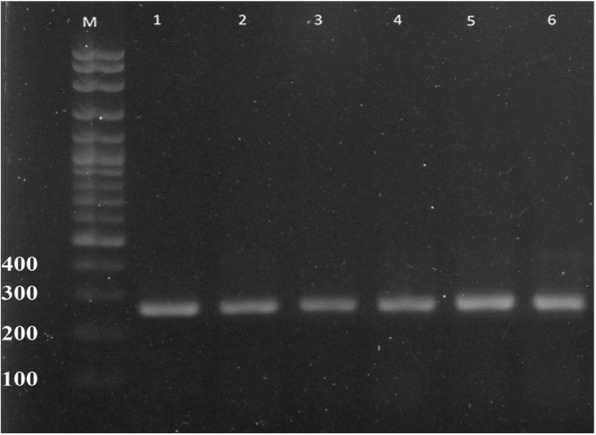
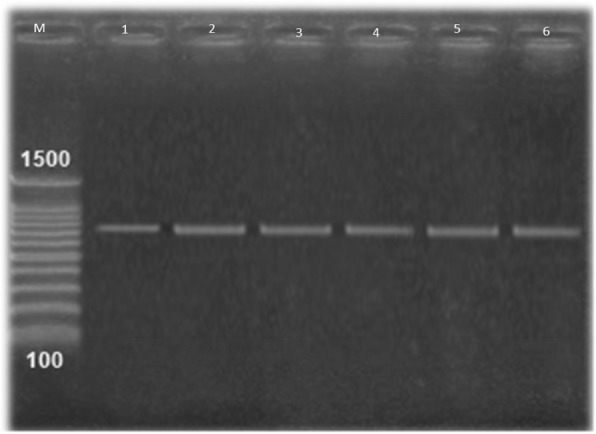
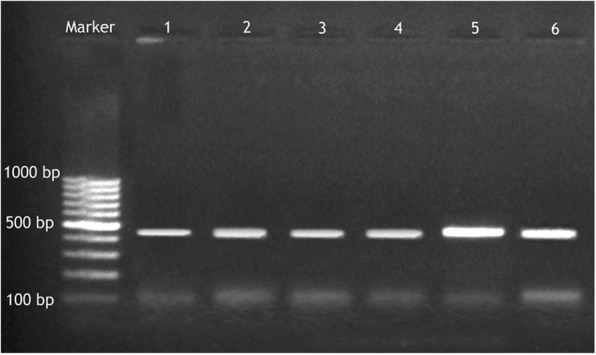
Methods: We investigated meat samples from 200 dromedary camel carcasses from three different abattoirs that were being prepared to be sent to the markets. Twenty hand swabs were voluntarily collected from the workers in the same abattoirs. Isolation and identification of the bacterial specimens from the samples were performed using conventional cultural techniques and biochemical identification and were confirmed by PCR amplification of the nuc gene. Antimicrobial susceptibility against nine antimicrobial agents commonly used in human and camels was tested using the disc diffusion method, and genetic analysis was performed by evaluating the mecA gene in phenotypically oxacillin (OXA)- and cefoxitin (FOX)-resistant isolates. The resistance of S. aureus to vancomycin (VAN) was tested by broth microdilution and confirmed by PCR targeting the vanA and vanB genes. The vanA and vanB genes were sequenced.
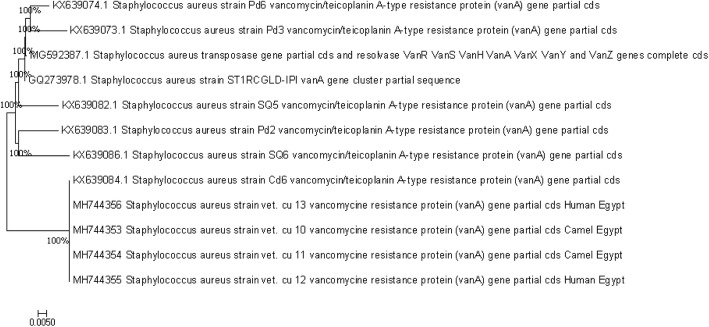
Result: S. aureus was detected in both camel meat (29/200, 14.5%) and in abattoir workers (11/20, 55%). Of the collected samples, 27% (8/29, camel) and 54% (6/11, human) were identified as VRSA.All VRSA isolates carried both the vanA and vanB genes. Additionally, all VRSA isolates were also classified as methicillin-resistant S. aureus (MRSA). The vanA amplicons of the isolates from human and camel meat were homologous and clustered with a Chinese reference isolate sequence.
Conclusion: This study demonstrated that VRSA is present in camel abattoirs in Egypt. Zoonotic transmission between animals and human is probable and reflects both a public health threat and a food safety concern.
Keywords: Abattoir; Dromedary camels; Egypt; Human; S. aureus; VRSA.
Conflict of interest statement
Competing interestsThe authors declare that they have no competing interests.
Figures

References
-
- CDC Centers for Disease Control and Prevention Staphylococcus aureus resistant to vancomycin--United States. MMWR Morb Mortal Wkly Rep. 2002;51:565. - PubMed
-
- El Harrak M, Faye B, Bengoumi M. Main pathologies of camels, breeding of camels, constraints, benefits and perspectives. 2011. pp. 1–6.
MeSH terms
Substances
LinkOut - more resources
Full Text Sources
Molecular Biology Databases
Miscellaneous
