


Epidemiological and Treatment Trends of Distal Radius Fractures across Multiple Age Groups
- PMID: 31404224
- PMCID: PMC6685779
- DOI: 10.1055/s-0039-1685205
Epidemiological and Treatment Trends of Distal Radius Fractures across Multiple Age Groups
Abstract
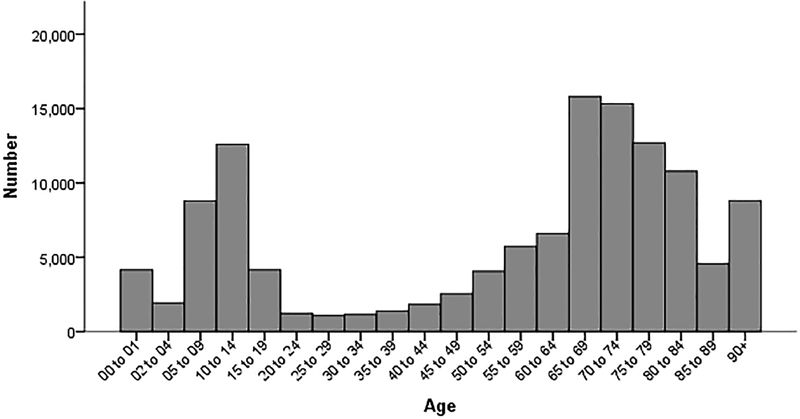
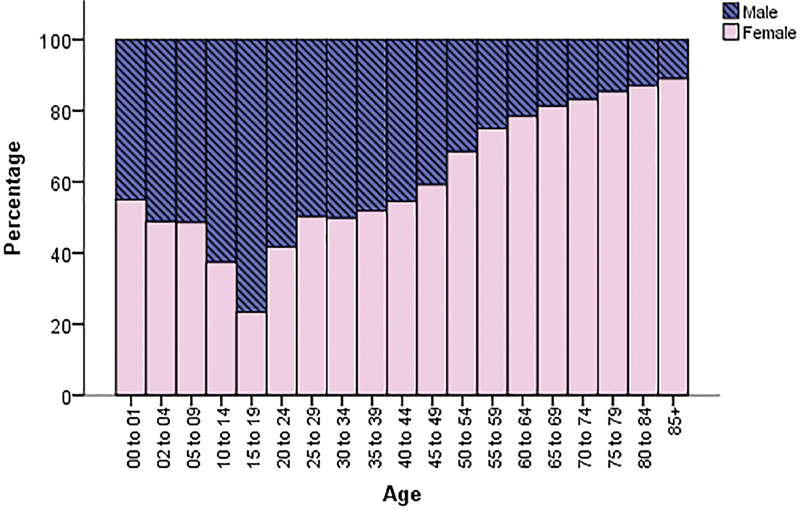
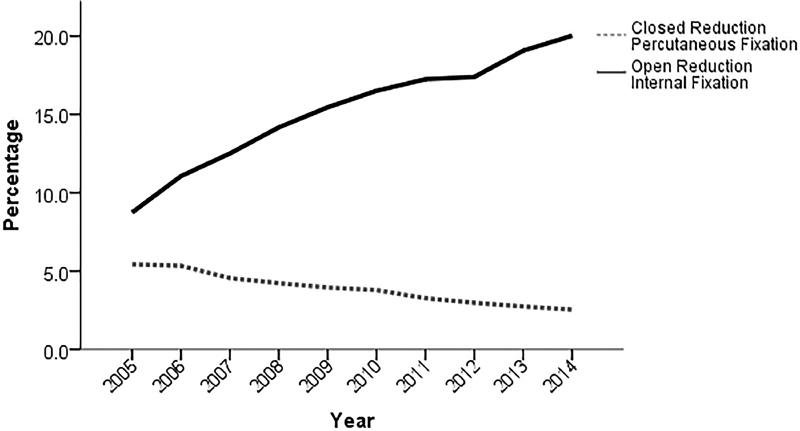
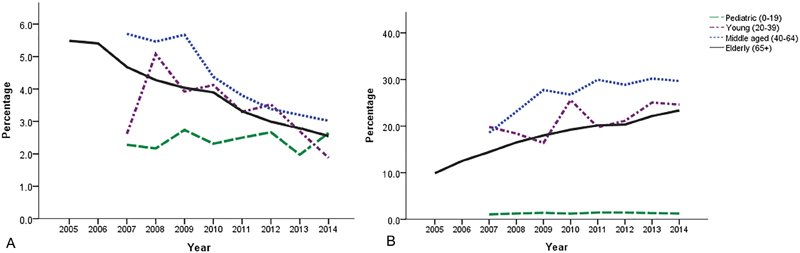
Background The purpose of this study is to assess the epidemiology, population-specific treatment trends, and complications of distal radius fractures in the United States. Methods The PearlDiver database (Humana [2007-2014], Medicare [2005-2014]) was used to access US inpatient and outpatient data for all patients who had undergone operative and nonoperative treatment for a distal radius fracture in the United States. Epidemiologic analysis was performed followed by age-based stratification, to assess prevalence, treatment trends, and rates of complications. Results A total of 1,124,060 distal radius treatment claims were captured. The incidence of distal radius fractures follows a bimodal distribution with distinct peaks in the pediatric and elderly population. Fractures in the pediatric population occurred predominately in males, whereas fractures in the elderly population occurred more frequently in females. The most commonly used modality of treatment was nonoperative; however, the use of internal fixation increased significantly during the study period, from 8.75 to 20.02%, with a corresponding decrease in percutaneous fixation. The overall complication rate was 8.3%, with mechanical symptoms most frequently reported. Conclusions The last decade has seen a significant increase in the use of internal fixation as treatment modality for distal radius fractures. The impetus for this change is likely multifactorial and partly related to recent innovations including volar locking plates and an increasingly active elderly population. The implicated financial cost must be weighed against the productivity cost of maintaining independent living to determine the true burden to the healthcare system.
Keywords: PearlDiver; age stratification; distal radius; elderly; epidemiology; pediatric.
Conflict of interest statement
Figures
References
-
- Chung K C, Spilson S V. The frequency and epidemiology of hand and forearm fractures in the United States. J Hand Surg Am. 2001;26(05):908–915. - PubMed
-
- Larsen C F, Lauritsen J. Epidemiology of acute wrist trauma. Int J Epidemiol. 1993;22(05):911–916. - PubMed
-
- Baron J A, Karagas M, Barrett J et al. Basic epidemiology of fractures of the upper and lower limb among Americans over 65 years of age. Epidemiology. 1996;7(06):612–618. - PubMed
-
- Rennie L, Court-Brown C M, Mok J YQ, Beattie T F. The epidemiology of fractures in children. Injury. 2007;38(08):913–922. - PubMed
-
- Knirk J L, Jupiter J B. Intra-articular fractures of the distal end of the radius in young adults. J Bone Joint Surg Am. 1986;68(05):647–659. - PubMed
LinkOut - more resources
Full Text Sources
Medical
