


Marine Collagen as A Promising Biomaterial for Biomedical Applications
- PMID: 31405173
- PMCID: PMC6723527
- DOI: 10.3390/md17080467
Marine Collagen as A Promising Biomaterial for Biomedical Applications
Abstract
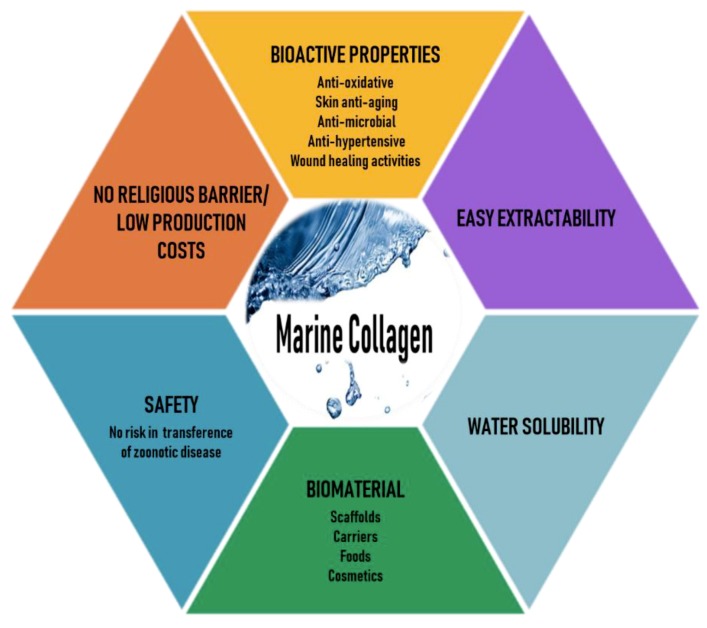
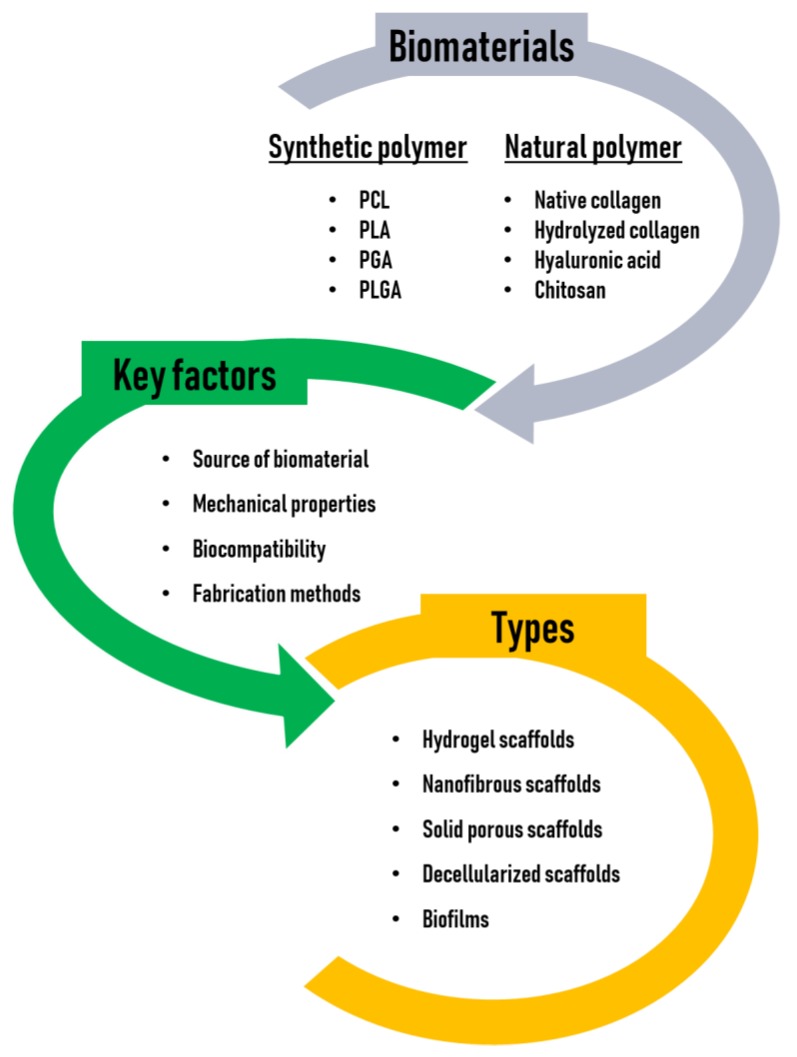
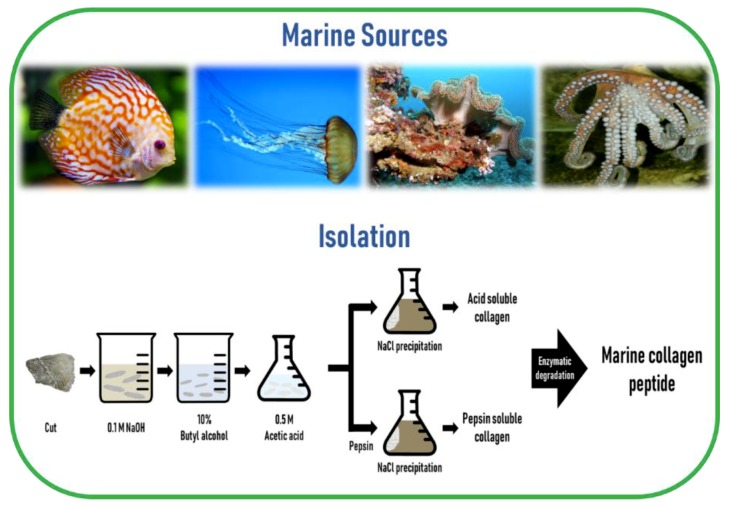
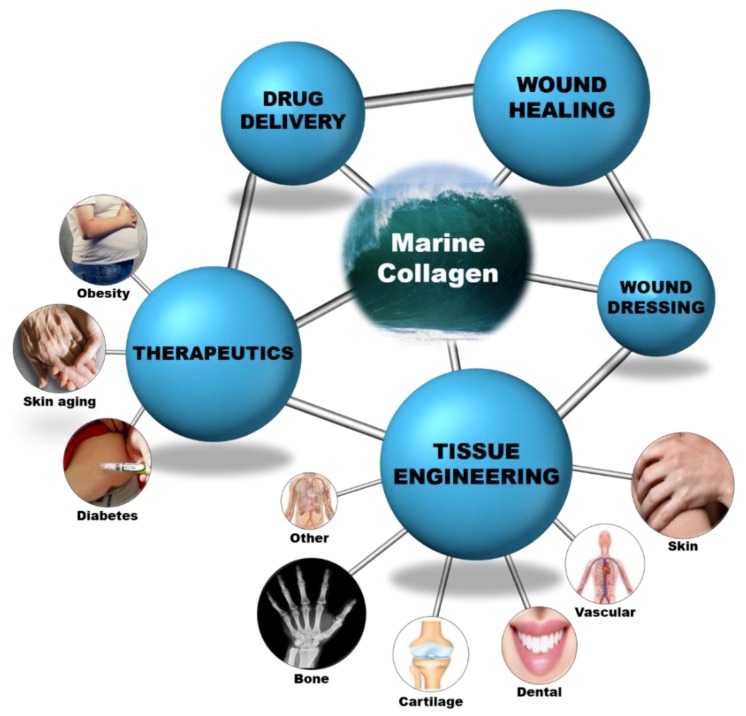
This review focuses on the expanding role of marine collagen (MC)-based scaffolds for biomedical applications. A scaffold-a three-dimensional (3D) structure fabricated from biomaterials-is a key supporting element for cell attachment, growth, and maintenance in 3D cell culture and tissue engineering. The mechanical and biological properties of the scaffolds influence cell morphology, behavior, and function. MC, collagen derived from marine organisms, offers advantages over mammalian collagen due to its biocompatibility, biodegradability, easy extractability, water solubility, safety, low immunogenicity, and low production costs. In recent years, the use of MC as an increasingly valuable scaffold biomaterial has drawn considerable attention from biomedical researchers. The characteristics, isolation, physical, and biochemical properties of MC are discussed as an understanding of MC in optimizing the subsequent modification and the chemistries behind important tissue engineering applications. The latest technologies behind scaffold processing are assessed and the biomedical applications of MC and MC-based scaffolds, including tissue engineering and regeneration, wound dressing, drug delivery, and therapeutic approach for diseases, especially those associated with metabolic disturbances such as obesity and diabetes, are discussed. Despite all the challenges, MC holds great promise as a biomaterial for developing medical products and therapeutics.
Keywords: 3D cell culture; marine collagen; scaffolds; tissue engineering; tissue regeneration.
Conflict of interest statement
The authors declare no conflict of interest.
Figures
References
-
- Brinckmann J. Collagens at a Glance. Top. Curr. Chem. 2005;247:1–6. doi: 10.1007/b103817. - DOI
-
- Gorgieva S., Kokol V. Biomaterials Applications for Nanomedicine. InTech; London, UK: 2011. pp. 17–52. Chapter 2.
Publication types
MeSH terms
Substances
Grants and funding
LinkOut - more resources
Full Text Sources
