


Isolates from Colonic Spirochetosis in Humans Show High Genomic Divergence and Potential Pathogenic Features but Are Not Detected Using Standard Primers for the Human Microbiota
- PMID: 31405919
- PMCID: PMC6779451
- DOI: 10.1128/JB.00272-19
Isolates from Colonic Spirochetosis in Humans Show High Genomic Divergence and Potential Pathogenic Features but Are Not Detected Using Standard Primers for the Human Microbiota
Abstract
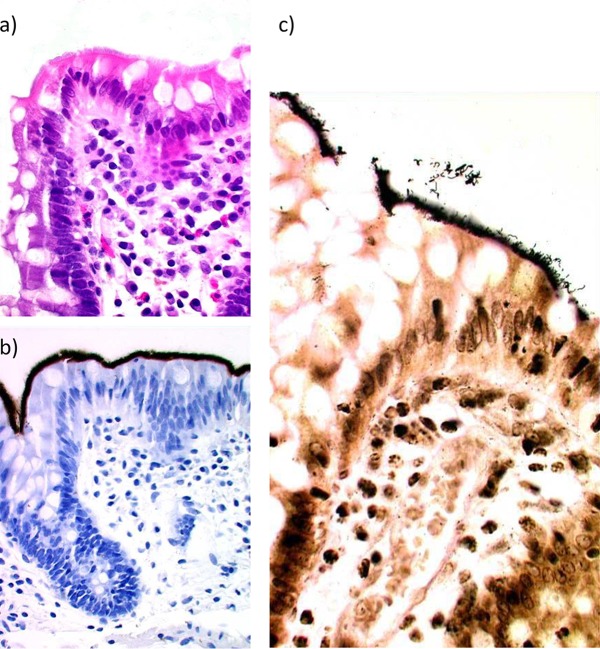
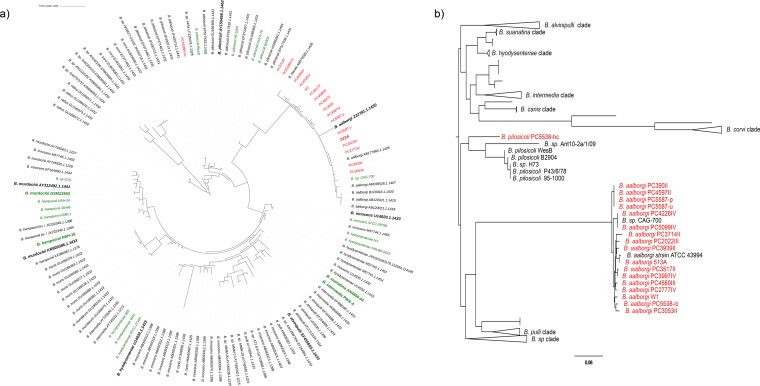
Colonic spirochetosis, diagnosed based on the striking appearance in histological sections, still has an obscure clinical relevance, and only a few bacterial isolates from this condition have been characterized to date. In a randomized, population-based study in Stockholm, Sweden, 745 healthy individuals underwent colonoscopy with biopsy sampling. Of these individuals, 17 (2.3%) had colonic spirochetosis, which was associated with eosinophilic infiltration and a 3-fold-increased risk for irritable bowel syndrome (IBS). We aimed to culture the bacteria and perform whole-genome sequencing of the isolates from this unique representative population sample. From 14 out of 17 individuals with spirochetosis we successfully isolated, cultured, and performed whole-genome sequencing of in total 17 isolates, including the Brachyspira aalborgi type strain, 513A. Also, 16S analysis of the mucosa-associated microbiota was performed in the cases and nonspirochetosis controls. We found one isolate to be of the species Brachyspira pilosicoli; all remaining isolates were of the species Brachyspira aalborgi Besides displaying extensive genetic heterogeneity, the isolates harbored several mucin-degrading enzymes and other virulence-associated genes that could confer a pathogenic potential in the human colon. We also showed that 16S amplicon sequencing using standard primers for human microbiota studies failed to detect Brachyspira due to primer incompatibility.IMPORTANCE This is the first report of whole-genome analysis of clinical isolates from individuals with colonic spirochetosis. This characterization provides new opportunities in understanding the physiology and potentials of these bacteria that densely colonize the gut in the individuals infected. The observation that standard 16S amplicon primers fail to detect colonic spirochetosis may have major implications for studies searching for associations between members of the microbiota and clinical conditions such as irritable bowel syndrome (IBS) and should be taken into consideration in project design and interpretation of gastrointestinal tract microbiota in population-based and clinical settings.
Keywords: Brachyspira; comparative genomics; spirochetosis; whole-genome sequencing.
Copyright © 2019 Thorell et al.
Figures
References
Publication types
MeSH terms
Substances
LinkOut - more resources
Full Text Sources
Molecular Biology Databases
