


Pharmaceutical Drugs of Uncertain Value, Lifecycle Regulation at the US Food and Drug Administration, and Institutional Incumbency
- PMID: 31407412
- PMCID: PMC6739605
- DOI: 10.1111/1468-0009.12413
Pharmaceutical Drugs of Uncertain Value, Lifecycle Regulation at the US Food and Drug Administration, and Institutional Incumbency
Abstract
Policy Points The US Food and Drug Administration (FDA) has in recent years allowed onto the market several drugs with limited evidence of safety and effectiveness, provided that manufacturers agree to carry out additional studies while the drugs are in clinical use. Studies suggest that these postmarketing requirements (PMRs) frequently lack transparency, are subject to delays, and fail to answer the questions of greatest clinical importance. Yet, none of the literature speaks directly to the challenges that the FDA-as a regulatory institution-encounters in enforcing PMRs. Through a series of interviews with FDA leadership, this article analyzes and situates those challenges in the midst of political threats to the FDA's public health mandate.
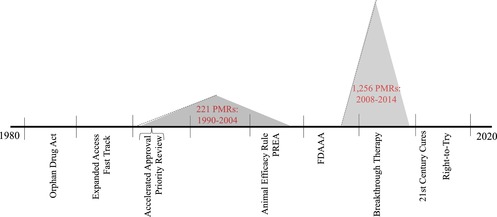
Context: Modern pharmaceutical regulation is premised on a rigorous examination of a drug's safety and effectiveness prior to its lawful sale. However, since the 1990s, the US Food and Drug Administration (FDA) has gradually shifted to a model of "lifecycle" regulation that increasingly relies on postmarketing requirements (PMRs) to encourage studies of drug safety and effectiveness following regulatory approval. This article examines the range of legal, institutional, and political challenges that FDA faces in the context of lifecycle regulation.
Methods: Document-based legal and policy analysis was combined with a set of semistructured interviews of current and former FDA officials (n = 23) in order to explore the implications of the FDA's use of PMRs. The median interview time per official was 61 minutes, with a range of 24 to 227 minutes. All of the officials interviewed occupied positions of leadership and influence within the FDA, such as directors of an FDA center or office, key legal counsel on agency-wide policy initiatives, and the commissioner of the FDA.
Findings: Insufficient resources and coordination within the FDA, inadequate legal authorities, and the political economy of withdrawing an approved indication in the face of opposition from companies and patients all contribute to the observed shortcomings in the FDA's use and enforcement of PMRs. Further, the FDA is fully aware of these challenges, yet is seemingly resigned to and resistant to criticism of its use of PMRs.
Conclusions: This study of the FDA's shift toward lifecycle regulation reveals not simply an agency in transition, but rather an agency on guard against a set of larger political threats to its mandate. This can be characterized as a state of institutional incumbency in which the agency is engaged in an effort to reproduce key features of the regulatory system-in concert with regulated industries and others-while simultaneously sanctioning significant changes to the regulatory standards the FDA has long applied, to the detriment of public health.
Keywords: Food and Drug Administration; pharmaceutical industry; prescription drugs; regulation.
© 2019 The Authors. The Milbank Quarterly published by Wiley Periodicals, Inc. on behalf of The Milbank Memorial Fund.
Figures
References
-
- Merrill RA. The architecture of government regulation of medical products. VA Law Rev. 1996;82(8):1753‐1866.
-
- Carpenter DP. Reputation and Power: Organizational Image and Pharmaceutical Regulation at the FDA. Princeton, NJ: Princeton University Press; 2010.
-
- Richert L. Conservatism, Consumer Choice, and the Food and Drug Administration during the Reagan Era: A Prescription for Scandal. Plymouth, United Kingdom: Lexington Books; 2014.
-
- Davis C, Abraham J. Unhealthy Pharmaceutical Regulation: Innovation, Politics and Promissory Science. London, UK: Palgrave Macmillan; 2013.
-
- US Government Accountability Office , Report to Congressional Requesters Drug Safety: Improvement Needed in FDA's Postmarket Decision‐making and Oversight Process; GAO 06–402. Washington, DC: US Government Accountability Office; 2006. https://www.gao.gov/new.items/d06402.pdf. Published March 2006. Accessed November 30, 2018.
Publication types
MeSH terms
Grants and funding
LinkOut - more resources
Full Text Sources
