


A Meta-analysis Assessing Diarrhea and Pneumonia in HIV-Exposed Uninfected Compared With HIV-Unexposed Uninfected Infants and Children
- PMID: 31408450
- PMCID: PMC8214449
- DOI: 10.1097/QAI.0000000000002097
A Meta-analysis Assessing Diarrhea and Pneumonia in HIV-Exposed Uninfected Compared With HIV-Unexposed Uninfected Infants and Children
Erratum in
-
A Meta-analysis Assessing Diarrhea and Pneumonia in HIV-Exposed Uninfected Compared With HIV-Unexposed Uninfected Infants and Children: Erratum.J Acquir Immune Defic Syndr. 2020 Feb 1;83(2):e13-e14. doi: 10.1097/QAI.0000000000002288. J Acquir Immune Defic Syndr. 2020. PMID: 31929412 No abstract available.
Abstract
Objective: Previous studies have demonstrated that HIV-exposed uninfected (HEU) infants and children experience morbidity and mortality at rates exceeding those of their HIV-unexposed uninfected (HUU) counterparts. We sought to summarize the association between HEU vs. HUU infants and children for the outcomes of diarrhea and pneumonia.
Design: Meta-analysis.
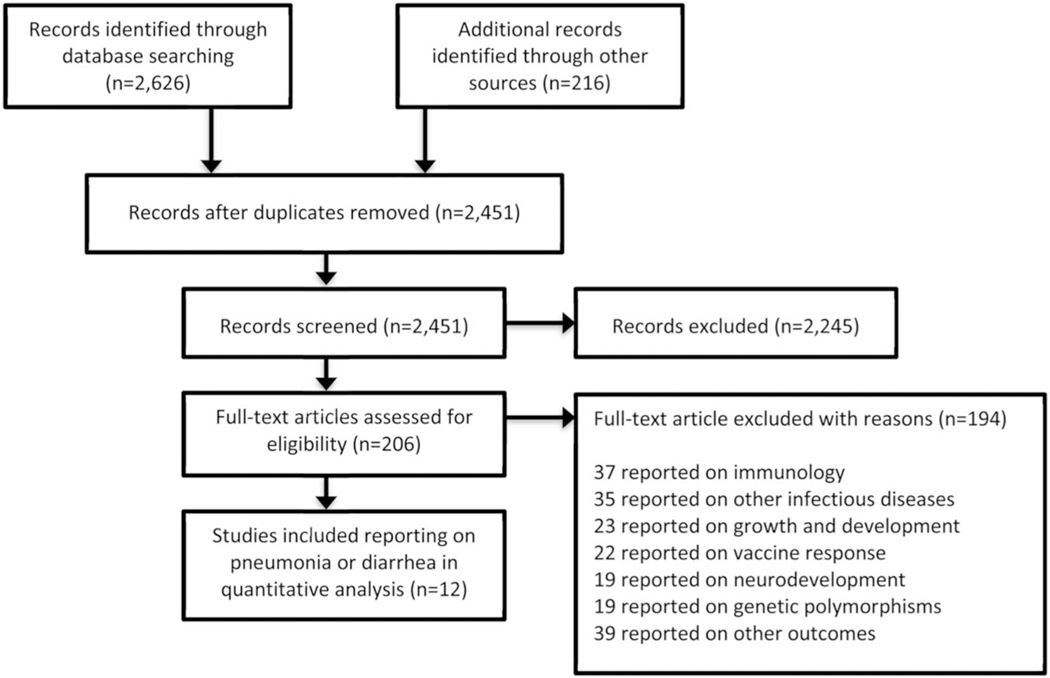
Methods: We reviewed studies comparing infants and children in the 2 groups for these infectious disease outcomes, in any setting, from 1993 to 2018 from 6 databases.
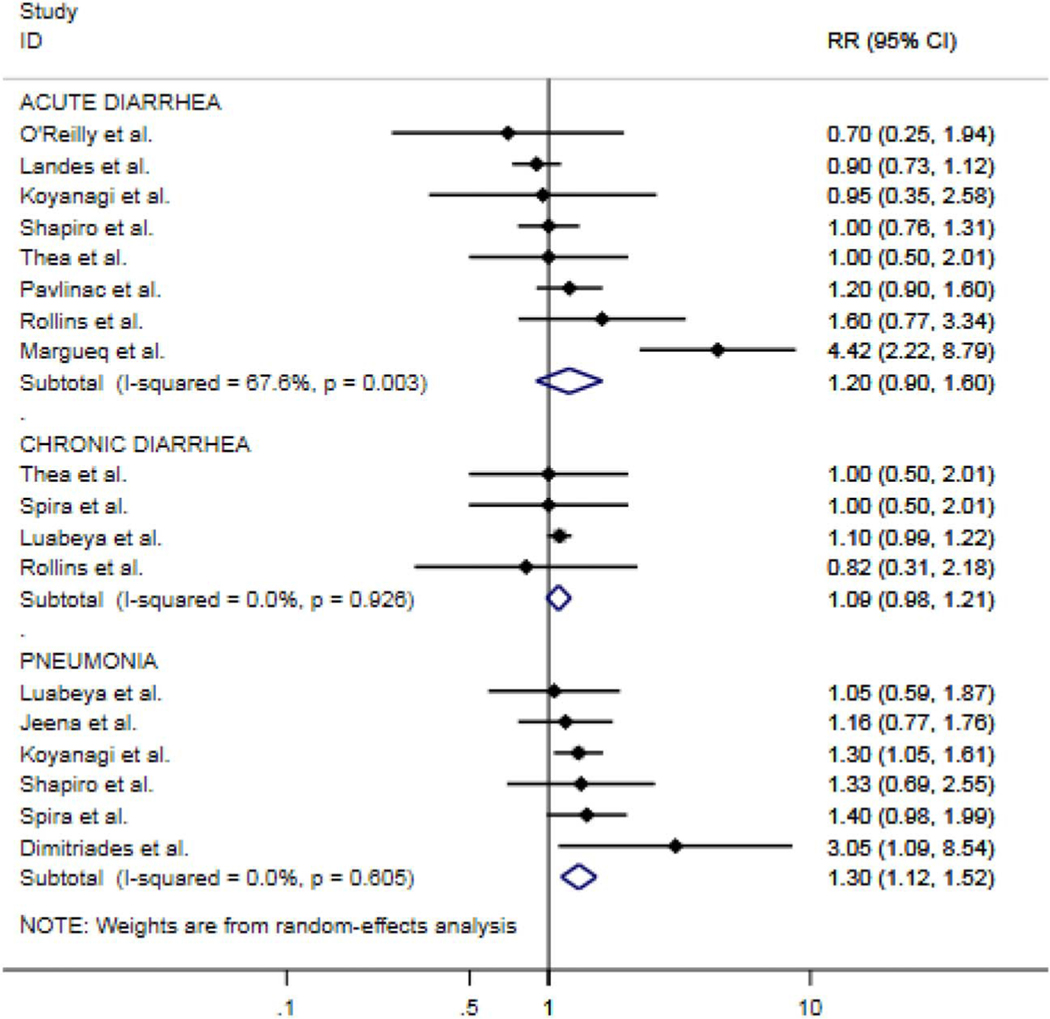
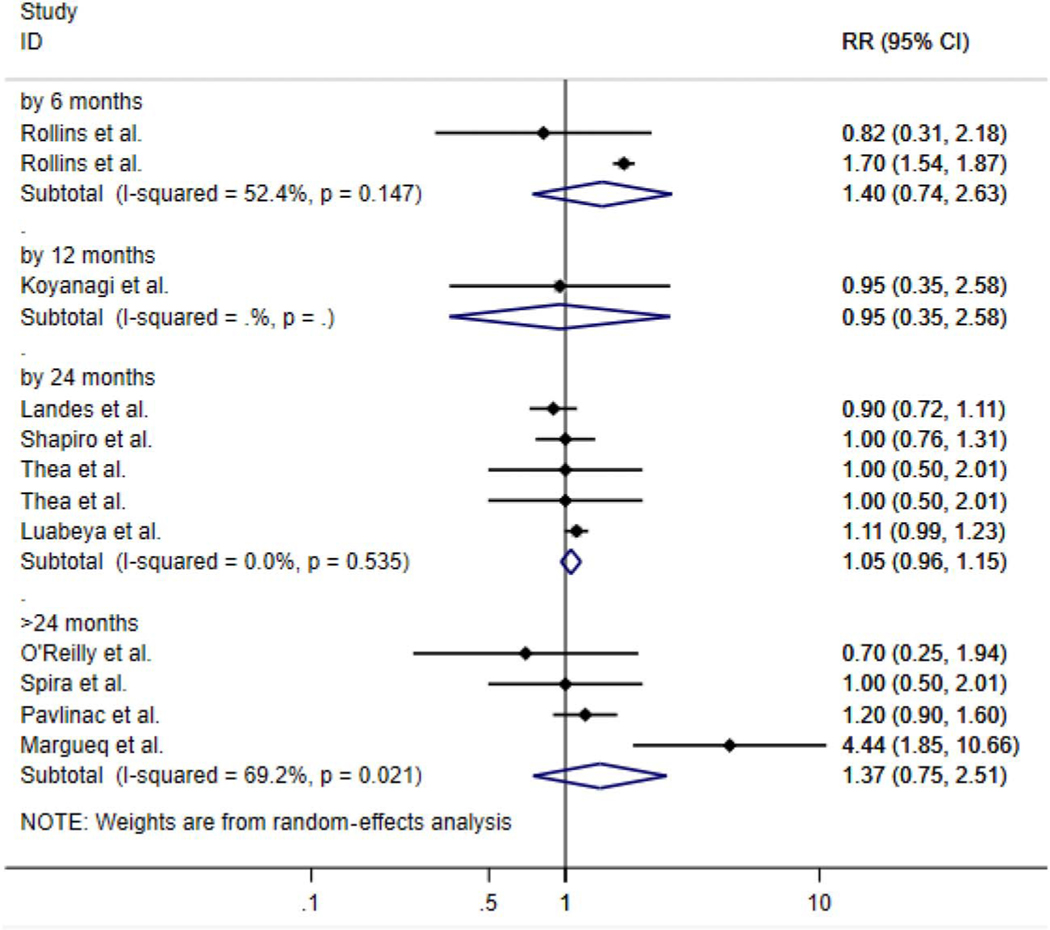
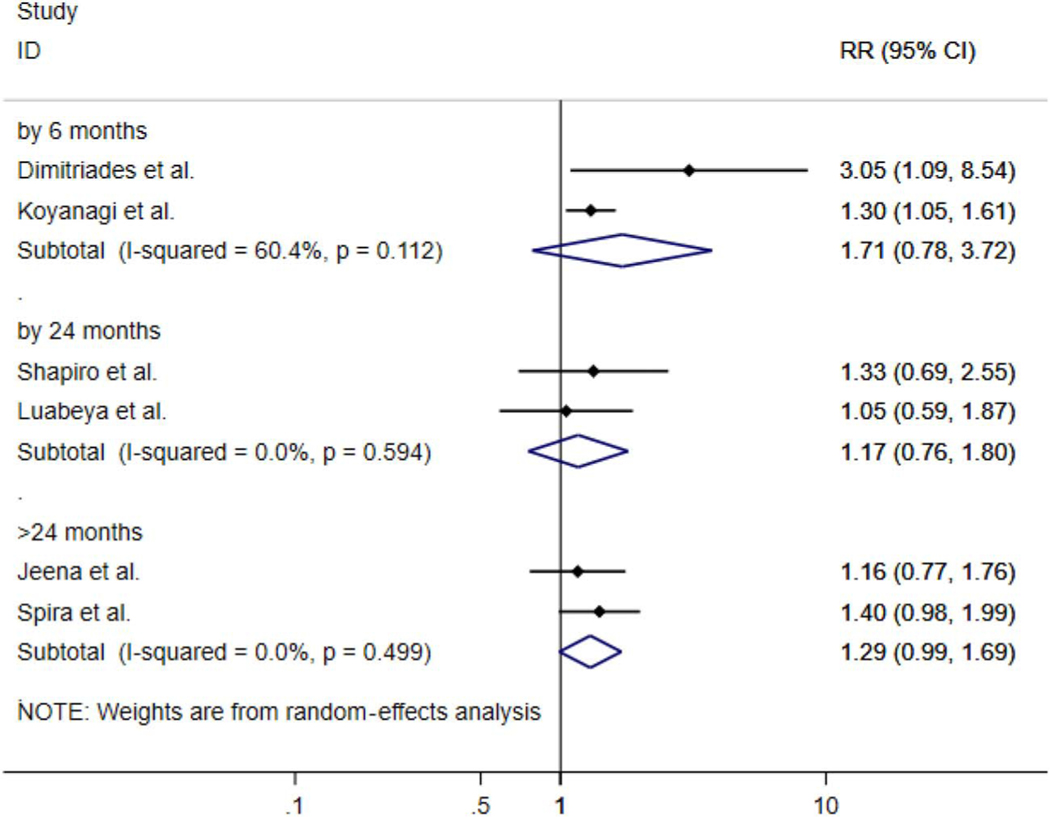
Results: We included 12 studies, and 17,955 subjects total [n = 5074 (28.3%) HEU and n = 12,881 (71.7%) HUU]. Random-effects models showed HEU infants and children had a 20% increase in the relative risk of acute diarrhea and a 30% increase in the relative risk of pneumonia when compared with their HUU counterparts. When stratifying by time since birth, we showed that HEU vs. HUU children had a 50% and 70% increased risk of diarrhea and pneumonia, respectively, in the first 6 months of life.
Conclusions: We show an increased risk of diarrhea and pneumonia for HEU vs. HUU infants and children. Although we acknowledge, and commend, the immense public health success of prevention of mother-to-child transmission, we now have an enlarging population of children that seem to be vulnerable to not only death, but increased morbidity. We need to turn our attention to understanding the underlying mechanism and designing effective public health solutions. Further longitudinal research is needed to elucidate possible underlying immunological and/or sociological mechanisms that explain these differences in morbidity.
Figures
References
-
- UNAIDS. 2017. Globcal HIV Statistics. Available at: http://www.unaids.org/sites/default/files/media_asset/UNAIDS_FactSheet_e.... Accessed September 2018.
-
- UNAIDS. Children and HIV Fact Sheet. Available at: http://www.unaids.org/sites/default/files/media_asset/FactSheet_Children.... Accessed September 2018.
-
- Mandelbrot L, Tubiana R, Le Chenadec J, et al.; ANRS-EPF Study Group. No perinatal HIV-1 transmission from women with effective antiretroviral therapy starting before conception. Clin Infect Dis. 2015; 61:1715–1725. - PubMed
-
- UNAIDS. 2015. Progress Report on the Global Plan: towards the elimination of new HIV infections among children and keeping their mothers alive. Available at: http://www.unaids.org/sites/default/files/media_asset/JC2774_2015Progres.... Accessed September 2018.
Publication types
MeSH terms
Grants and funding
LinkOut - more resources
Full Text Sources
Medical
