


Effects of a cluster randomized controlled kindergarten-based intervention trial on vegetable consumption among Norwegian 3-5-year-olds: the BRA-study
- PMID: 31409342
- PMCID: PMC6692927
- DOI: 10.1186/s12889-019-7436-3
Effects of a cluster randomized controlled kindergarten-based intervention trial on vegetable consumption among Norwegian 3-5-year-olds: the BRA-study
Abstract
Background: Early childhood represents a critical period for the establishment of long-lasting healthy dietary habits. Limited knowledge exists on how to successfully increase vegetable consumption among preschool children. The overall aim of the present study was to improve vegetable intake among preschool children in a kindergarten-based randomized controlled trial.
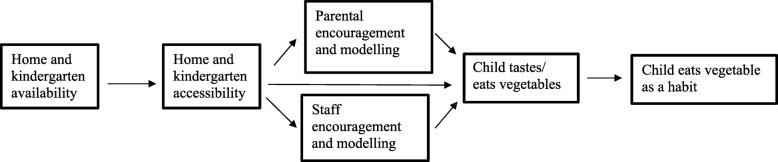
Methods: The target group was preschool children born in 2010 and 2011, attending public or private kindergartens in two counties in Norway. Data about child intake of vegetables were collected by three methods. First, parents filled in a web-based questionnaire of the child's vegetable intake. Second, among a subsample, trained researchers observed children's vegetable intake in the kindergarten. Thirdly, a parental web-based 24-h recall assessing the child's vegetable intake was filled in. For allocation of kindergartens to intervention and control groups, a stratified block randomization was used. Multiple intervention components were implemented from September 2015 to February 2016 and components focused at influencing the four determinants availability, accessibility, encouragement and role modelling. The effect of the intervention from baseline (spring 2015) to follow-up 1 (spring 2016) was assessed by mixed-model analysis taking the clustering effect of kindergartens into account.
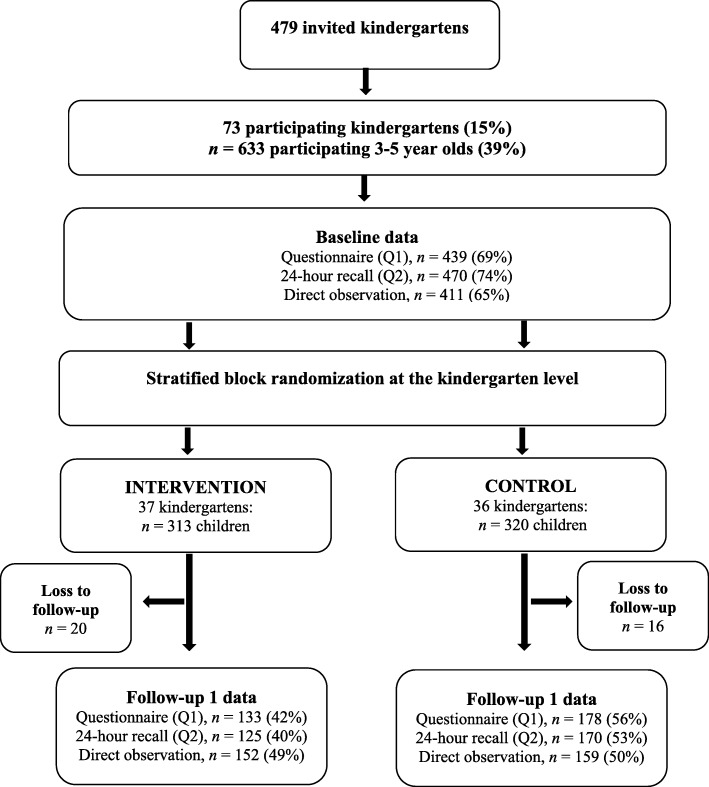
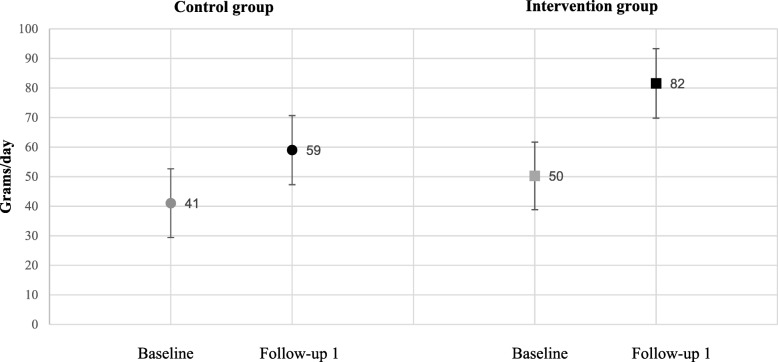
Results: Parental consent was obtained for 38.8% of the children (633 out of 1631 eligible children). Based on the observational data in the kindergarten setting (n 218 in the control group and n 217 in the intervention group), a tendency to a small positive effect was seen as a mean difference of 13.3 g vegetables/day (95% CI: - 0.2, 26.9) (P = 0.054) was observed. No significant overall effects were found for the total daily vegetable intake or for the parental reported frequency or variety in vegetable intake.
Conclusions: Based on the observational data in the kindergarten setting, a tendency to a small positive effect was seen with a mean difference of about 13 g vegetables/day, while no other effects on child vegetable intake were found. Additionally, further research to understand the best strategies to involve parents in dietary interventions studies is warranted.
Trial registration: International Standard Randomised Controlled Trials ISRCTN51962956 . Registered 21 June 2016 (retrospectively registered).
Keywords: Kindergarten-based intervention; Norway; Preschool children; Vegetables.
Conflict of interest statement
The authors declare they have no competing interests.
Figures
References
-
- World Cancer Research Fund. Wholegrains, vegetables and fruit and the risk of cancer.
-
- World Health Organization. Global strategy on diet, physical activity and health - promoting fruit and vegetable consumption around the world [Available from: http://www.who.int/dietphysicalactivity/fruit/en/index2.html. Accessed 23 May 2018.
-
- Micha R, Khatibzadeh S, Shi P, Andrews KG, Engell RE, Mozaffarian D. Global, regional and national consumption of major food groups in 1990 and 2010: a systematic analysis including 266 country-specific nutrition surveys worldwide. BMJ Open. 2015;5(9):e008705. doi: 10.1136/bmjopen-2015-008705. - DOI - PMC - PubMed
Publication types
MeSH terms
Grants and funding
LinkOut - more resources
Full Text Sources
Medical
