The "All of Us" Research Program
- PMID: 31412182
- PMCID: PMC8291101
- DOI: 10.1056/NEJMsr1809937
The "All of Us" Research Program
Abstract
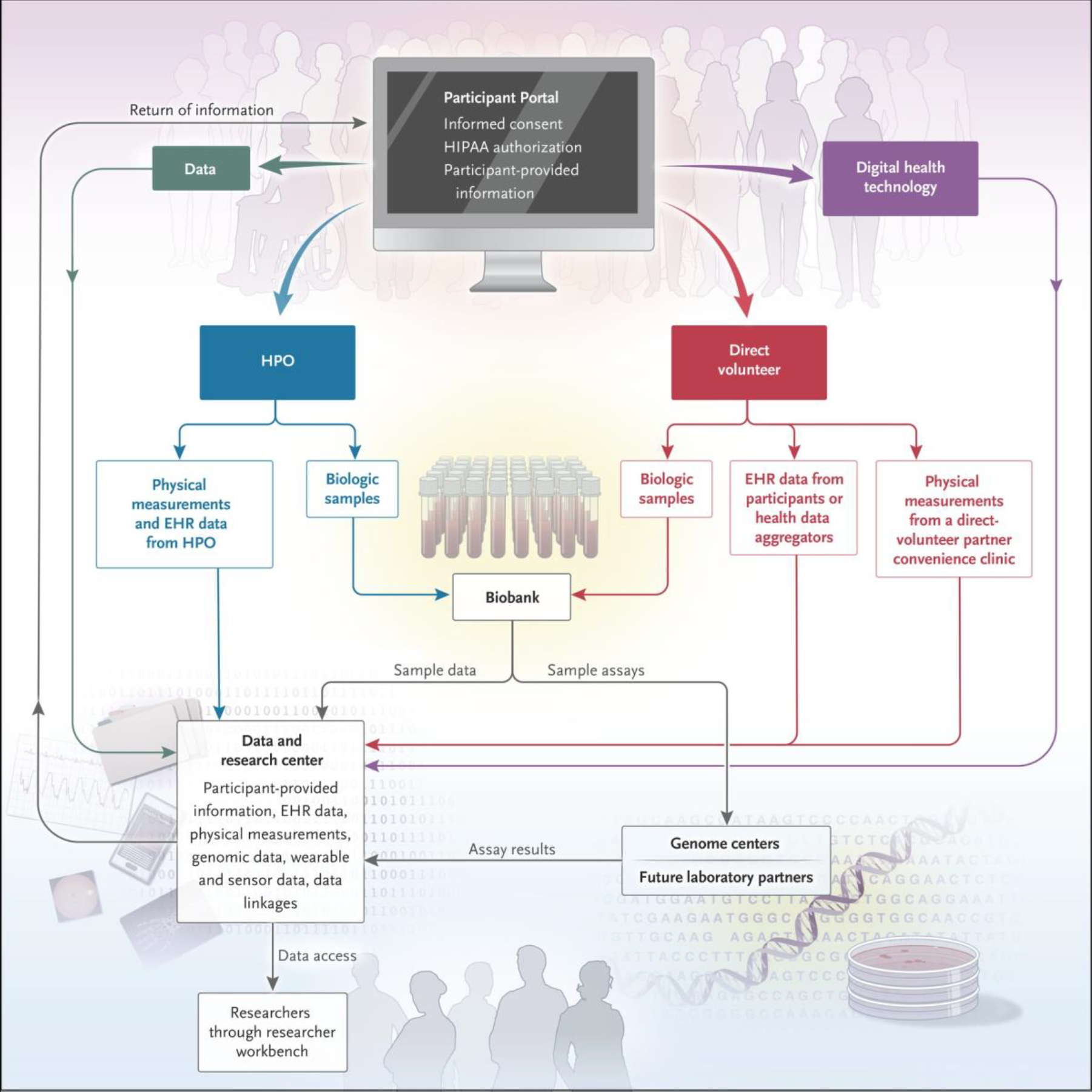
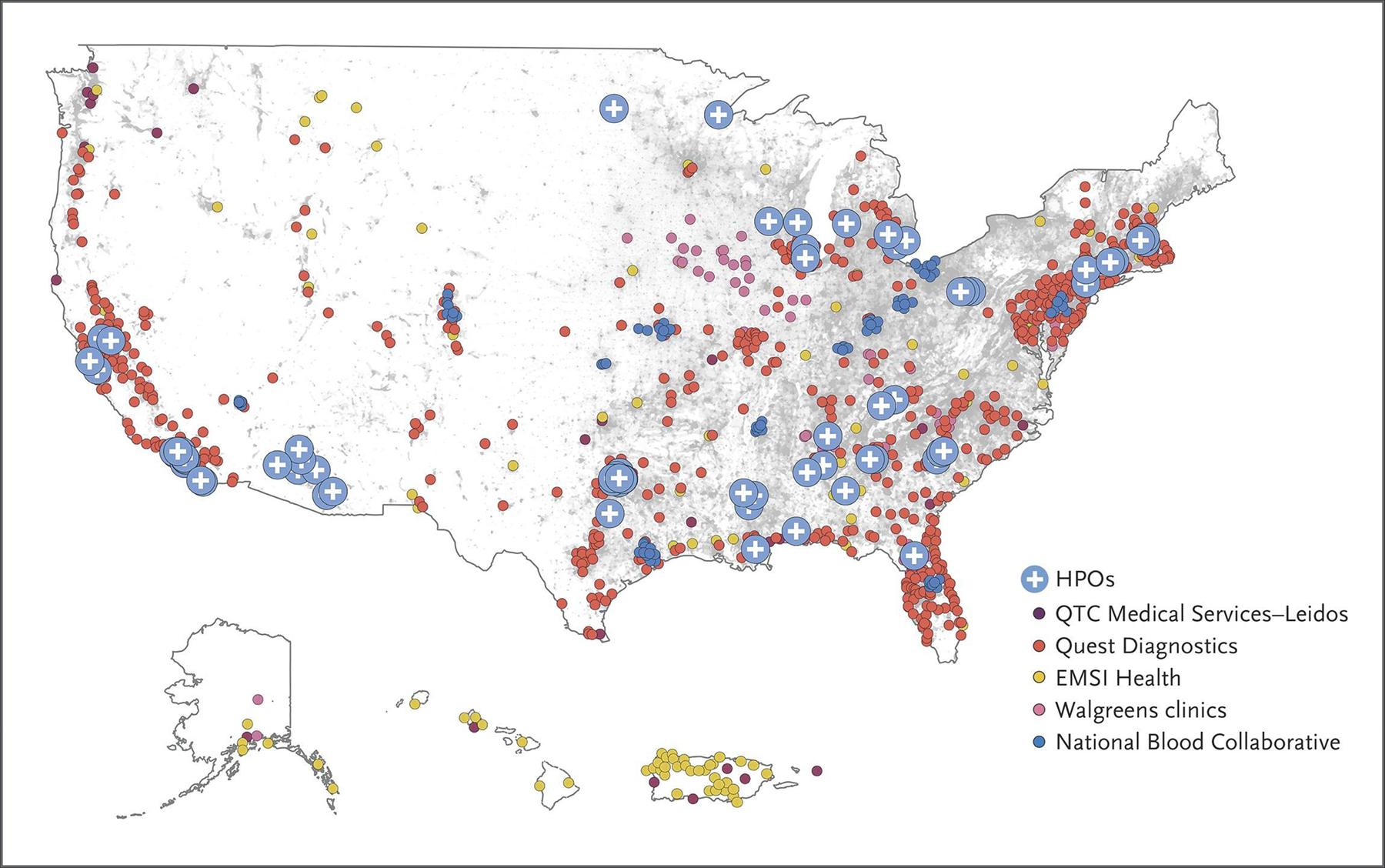
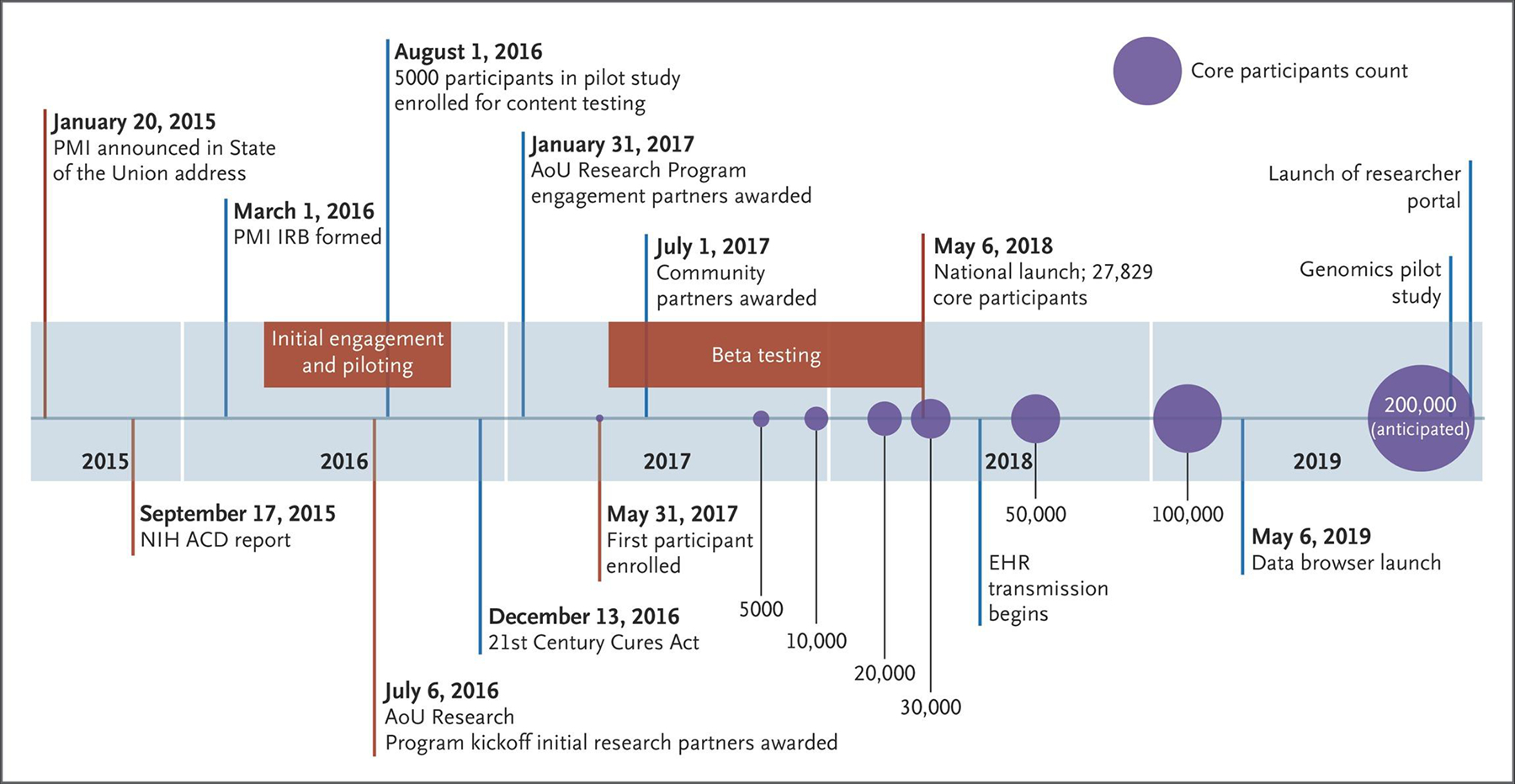
Knowledge gained from observational cohort studies has dramatically advanced the prevention and treatment of diseases. Many of these cohorts, however, are small, lack diversity, or do not provide comprehensive phenotype data. The All of Us Research Program plans to enroll a diverse group of at least 1 million persons in the United States in order to accelerate biomedical research and improve health. The program aims to make the research results accessible to participants, and it is developing new approaches to generate, access, and make data broadly available to approved researchers. All of Us opened for enrollment in May 2018 and currently enrolls participants 18 years of age or older from a network of more than 340 recruitment sites. Elements of the program protocol include health questionnaires, electronic health records (EHRs), physical measurements, the use of digital health technology, and the collection and analysis of biospecimens. As of July 2019, more than 175,000 participants had contributed biospecimens. More than 80% of these participants are from groups that have been historically underrepresented in biomedical research. EHR data on more than 112,000 participants from 34 sites have been collected. The All of Us data repository should permit researchers to take into account individual differences in lifestyle, socioeconomic factors, environment, and biologic characteristics in order to advance precision diagnosis, prevention, and treatment.
Copyright © 2019 Massachusetts Medical Society.
Figures
Comment in
-
The "All of Us" Research Program.N Engl J Med. 2019 Nov 7;381(19):1883-1884. doi: 10.1056/NEJMc1912496. N Engl J Med. 2019. PMID: 31693824 No abstract available.
-
The "All of Us" Research Program.N Engl J Med. 2019 Nov 7;381(19):1884. doi: 10.1056/NEJMc1912496. N Engl J Med. 2019. PMID: 31693825 No abstract available.
References
MeSH terms
Grants and funding
- OT2 OD025285/OD/NIH HHS/United States
- OT2 OD026556/OD/NIH HHS/United States
- U2C OD023196/OD/NIH HHS/United States
- OT2 OD025315/OD/NIH HHS/United States
- OT2 OD026551/OD/NIH HHS/United States
- OT2 OD026552/OD/NIH HHS/United States
- OT2 OD026549/OD/NIH HHS/United States
- OT2 OD025337/OD/NIH HHS/United States
- OT2 OD025277/OD/NIH HHS/United States
- OT2 OD026555/OD/NIH HHS/United States
- OT2 OD026550/OD/NIH HHS/United States
- OT2 OD026553/OD/NIH HHS/United States
- OT2 OD023132/OD/NIH HHS/United States
- OT2 OD025276/OD/NIH HHS/United States
- OT2 OD026557/OD/NIH HHS/United States
- OT2 OD026554/OD/NIH HHS/United States
- U24 OD023163/OD/NIH HHS/United States
- OT2 OD023206/OD/NIH HHS/United States
- U24 OD023176/OD/NIH HHS/United States
- OT2 OD026548/OD/NIH HHS/United States
- U24 OD023121/OD/NIH HHS/United States
- P30 CA013148/CA/NCI NIH HHS/United States
- OT2 OD023205/OD/NIH HHS/United States
- P30 ES027792/ES/NIEHS NIH HHS/United States
LinkOut - more resources
Full Text Sources