


Elimination of activating Fcγ receptors in spontaneous autoimmune peripheral polyneuropathy model protects from neuropathic disease
- PMID: 31415574
- PMCID: PMC6695161
- DOI: 10.1371/journal.pone.0220250
Elimination of activating Fcγ receptors in spontaneous autoimmune peripheral polyneuropathy model protects from neuropathic disease
Abstract
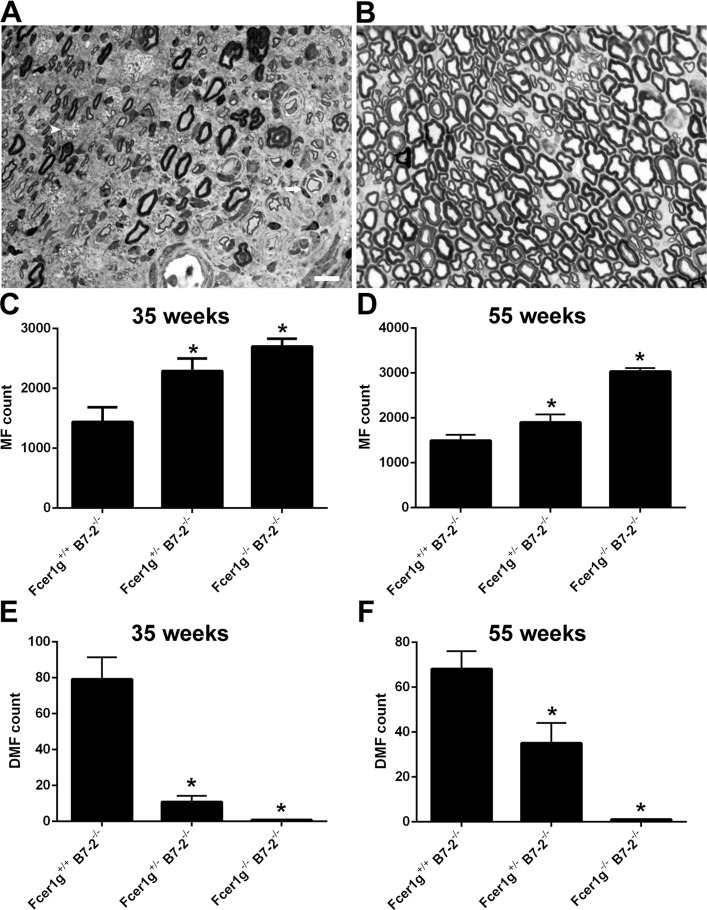
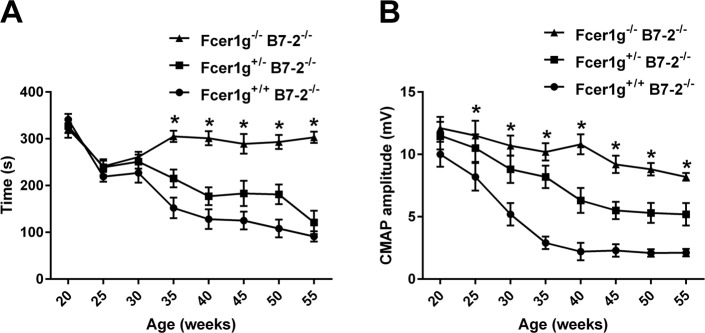
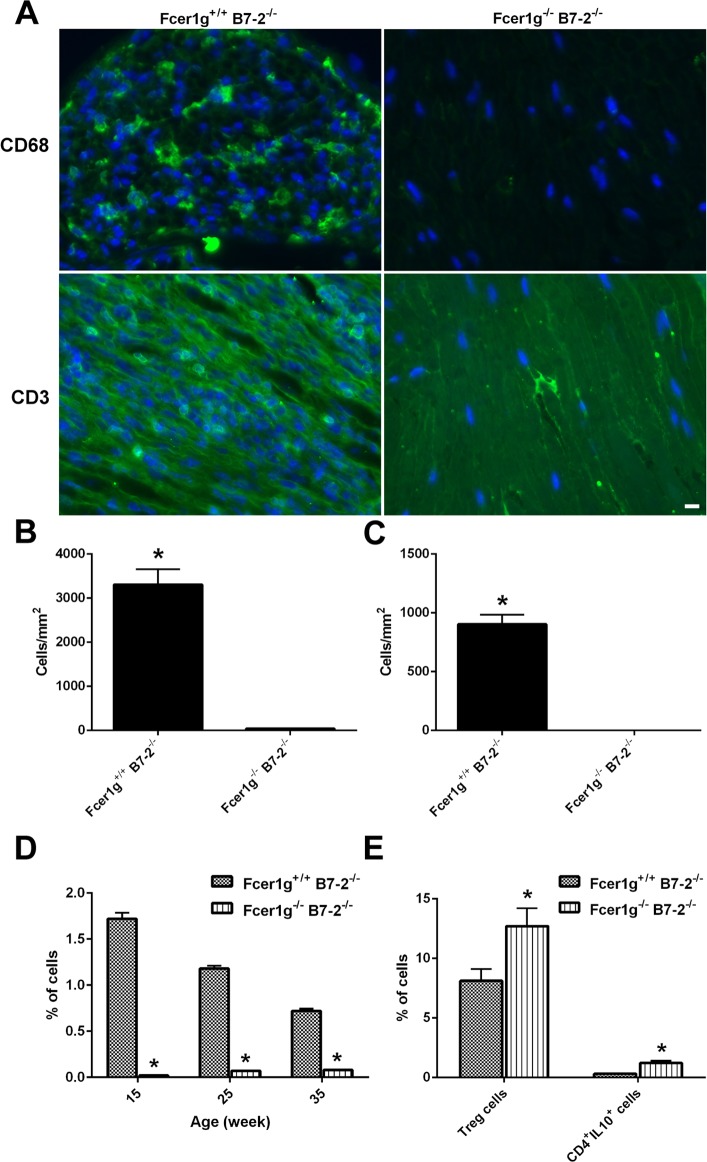
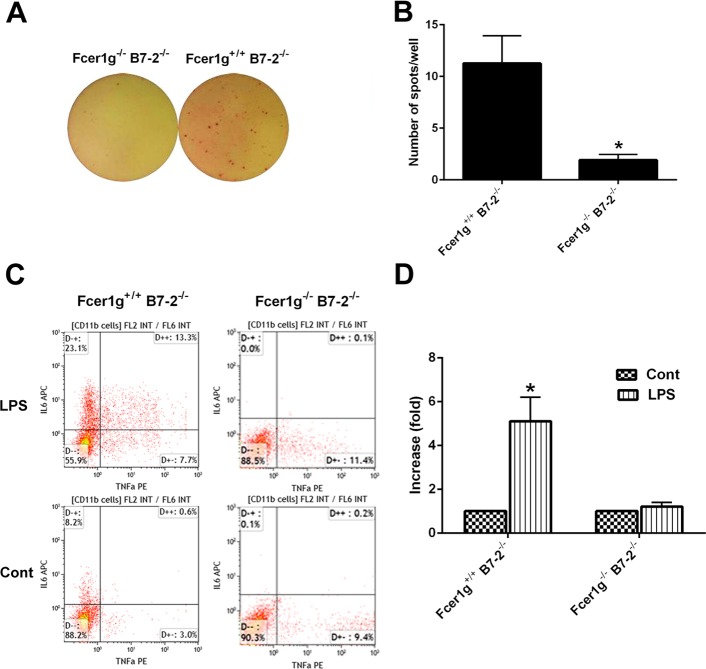
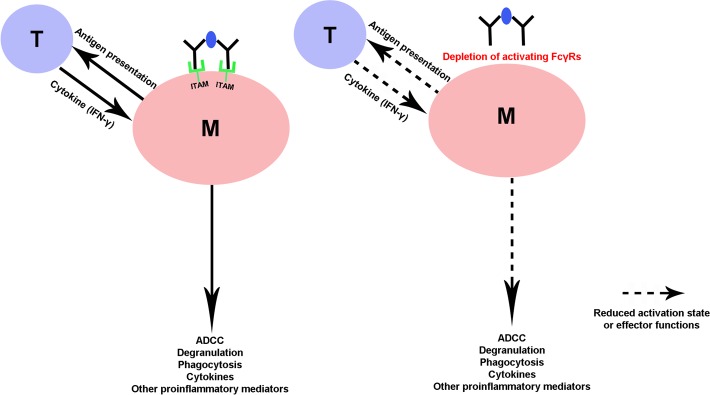
Spontaneous autoimmune peripheral polyneuropathy (SAPP) is a reproducible mouse model of chronic inflammatory peripheral neuropathy in female non-obese diabetic mice deficient in co-stimulatory molecule, B7-2 (also known as CD86). There is evidence that SAPP is an interferon-γ, CD4+ T-cell-mediated disorder, with autoreactive T-cells and autoantibodies directed against myelin protein zero involved in its immunopathogenesis. Precise mechanisms leading to peripheral nerve system inflammation and nerve injury including demyelination in this model are not well defined. We examined the role of activating Fc-gamma receptors (FcγRs) by genetically ablating Fcγ-common chain (Fcer1g) shared by all activating FcγRs in the pathogenesis of this model. We have generated B7-2/ Fcer1g-double null animals for these studies and found that the neuropathic disease is substantially ameliorated in these animals as assessed by behavior, electrophysiology, immunocytochemistry, and morphometry. Our current studies focused on characterizing systemic and endoneurial inflammation in B7-2-null and B7-2/ Fcer1g-double nulls. We found that accumulation of endoneurial inflammatory cells was significantly attenuated in B7-2/ Fcer1g-double nulls compared to B7-2-single nulls. Whereas, systemically the frequency of CD4+ regulatory T cells and expression of immunosuppressive cytokine, IL-10, were significantly enhanced in B7-2/ Fcer1g-double nulls. Overall, these findings suggest that elimination of activating FcγRs modulate nerve injury by altering endoneurial and systemic inflammation. These observations raise the possibility of targeting activating FcγRs as a treatment strategy in acquired inflammatory demyelinating neuropathies.
Conflict of interest statement
The authors have declared that no competing interests exist.
Figures
References
-
- Griffin JW, Li CY, Macko C, Ho TW, Hsieh ST, Xue P, et al. Early nodal changes in the acute motor axonal neuropathy pattern of the Guillain-Barre syndrome. J Neurocytol. 1996;25(1):33–51. Epub 1996/01/01. . - PubMed
-
- Prineas JW. Pathology of the Guillain-Barre syndrome. Ann Neurol. 1981;9 Suppl:6–19. Epub 1981/01/01. . - PubMed
Publication types
MeSH terms
Substances
Grants and funding
LinkOut - more resources
Full Text Sources
Medical
Molecular Biology Databases
Research Materials
Miscellaneous
