


A Z-score based method for comparing the relative sensitivity of behavioral and physiological metrics including cognitive performance, mood, and hormone levels
- PMID: 31415596
- PMCID: PMC6695149
- DOI: 10.1371/journal.pone.0220749
A Z-score based method for comparing the relative sensitivity of behavioral and physiological metrics including cognitive performance, mood, and hormone levels
Abstract
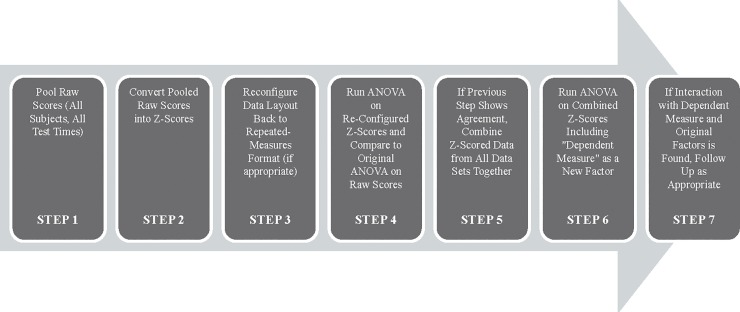
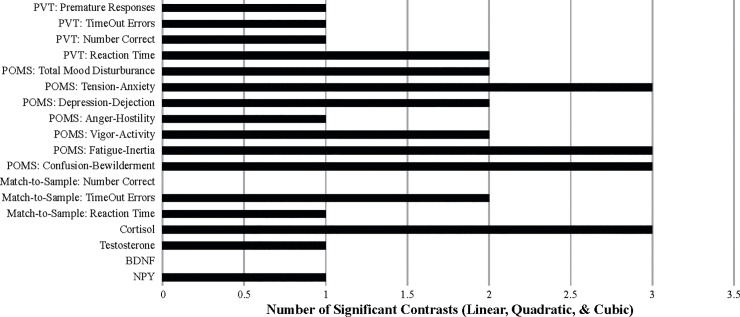
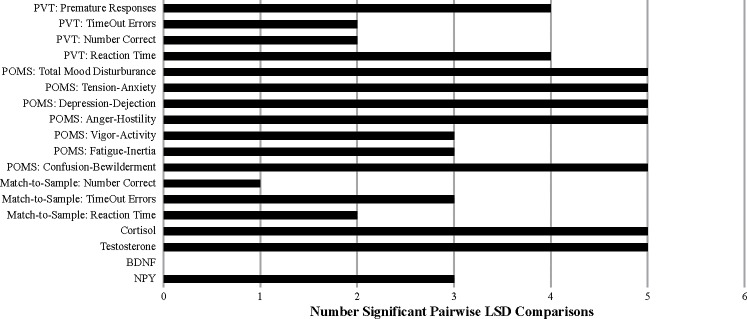
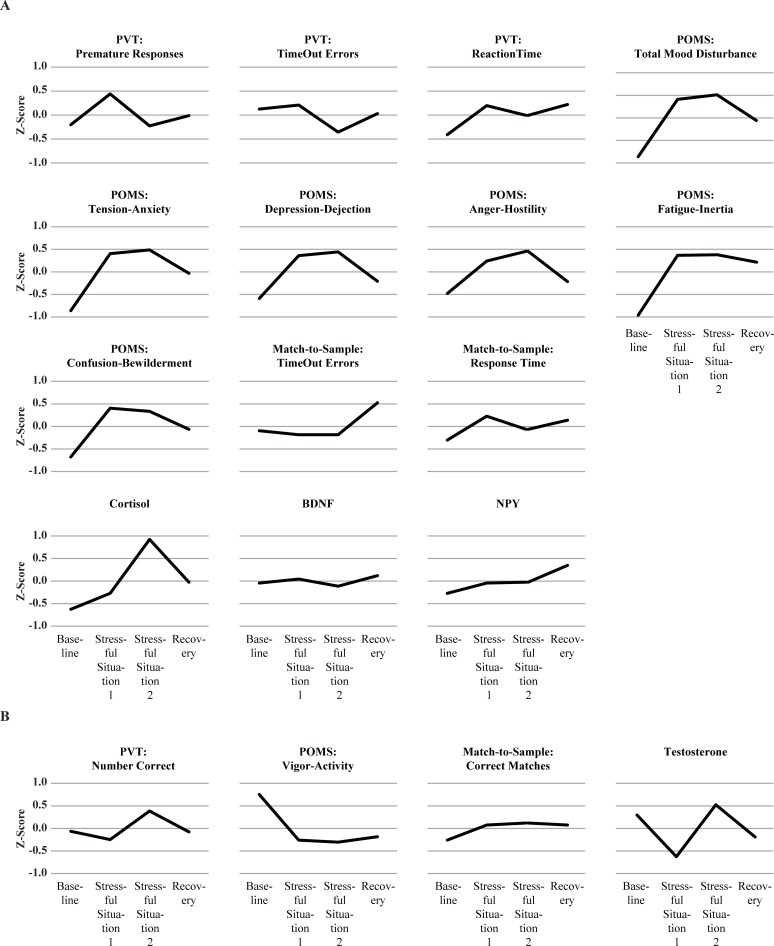
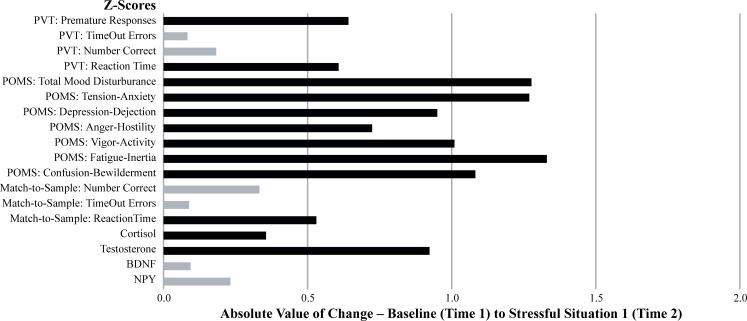
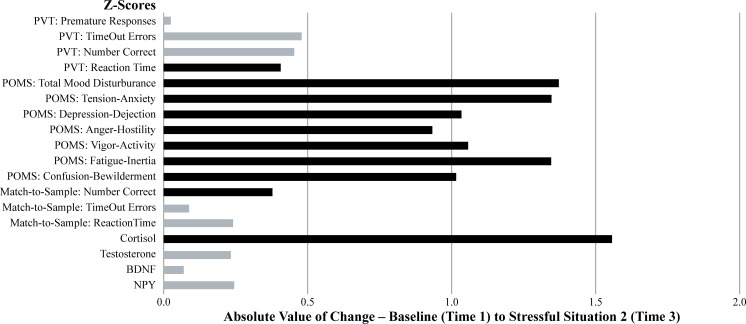
A method for assessing the relative sensitivity of research metrics is proposed and illustrated by comparing 18 outcome measures from a published study of the cognitive, mood, and hormonal effects of four different levels of stress induced by intense military training. Research on the human response to stress often assesses multiple disparate dependent measures. Selecting the most sensitive is difficult as formal methods to compare varied dependent measures have not been developed. The method first converts the outcome measures into standard scores (z-scores) and then compares them using analysis of variance to determine whether there are differences in how they assess the impact of graded levels of exposure to stress. The analysis detected various significant interactions in several measures and suggests self-report mood questionnaires were more sensitive to the stressors present in the study than the cognitive or hormonal measures which were used. These findings support the effectiveness of the z-score based method as a useful procedure for objectively evaluating the differential sensitivity of various metrics. This method could be useful for research on other independent variables when use of multiple assessment strategies is appropriate. It could be used for evaluating studies yielding conflicting results, such as those detecting effects on one parameter but not others. In such instances, cross-metric inconsistencies may be due to differential sensitivity of measurement strategies rather than actual differences in the effects of the independent-variable on the domains under investigation.
Conflict of interest statement
The authors have declared that no competing interests exist.
Figures
References
-
- Nindl BC, Jaffin DP, Dretsch MN, Cheuvront SN, Wesensten NJ, Ken ML, et al. Human Performance Optimization Metrics: Consensus Findings, Gaps, and Recommendations for Future Research. J Strength Cond Res. 2015;29(11): S221–S245. - PubMed
-
- Adeyemi T. The Effective use of Standard Scores for Research in Educational Management. Research Journal of Mathematics and Statistics. 2011;3(3): 91–96.
Publication types
MeSH terms
Substances
LinkOut - more resources
Full Text Sources
Medical
