


Graft glycocalyx degradation in human liver transplantation
- PMID: 31415628
- PMCID: PMC6695121
- DOI: 10.1371/journal.pone.0221010
Graft glycocalyx degradation in human liver transplantation
Abstract
Objective: Ischaemia/reperfusion-injury degrades endothelial glycocalyx. Graft glycocalyx degradation was studied in human liver transplantation.
Methods: To assess changes within the graft, blood was drawn from portal and hepatic veins in addition to systemic samples in 10 patients. Plasma syndecan-1, heparan sulfate and chondroitin sulfate, were measured with enzyme-linked immunosorbent assay.
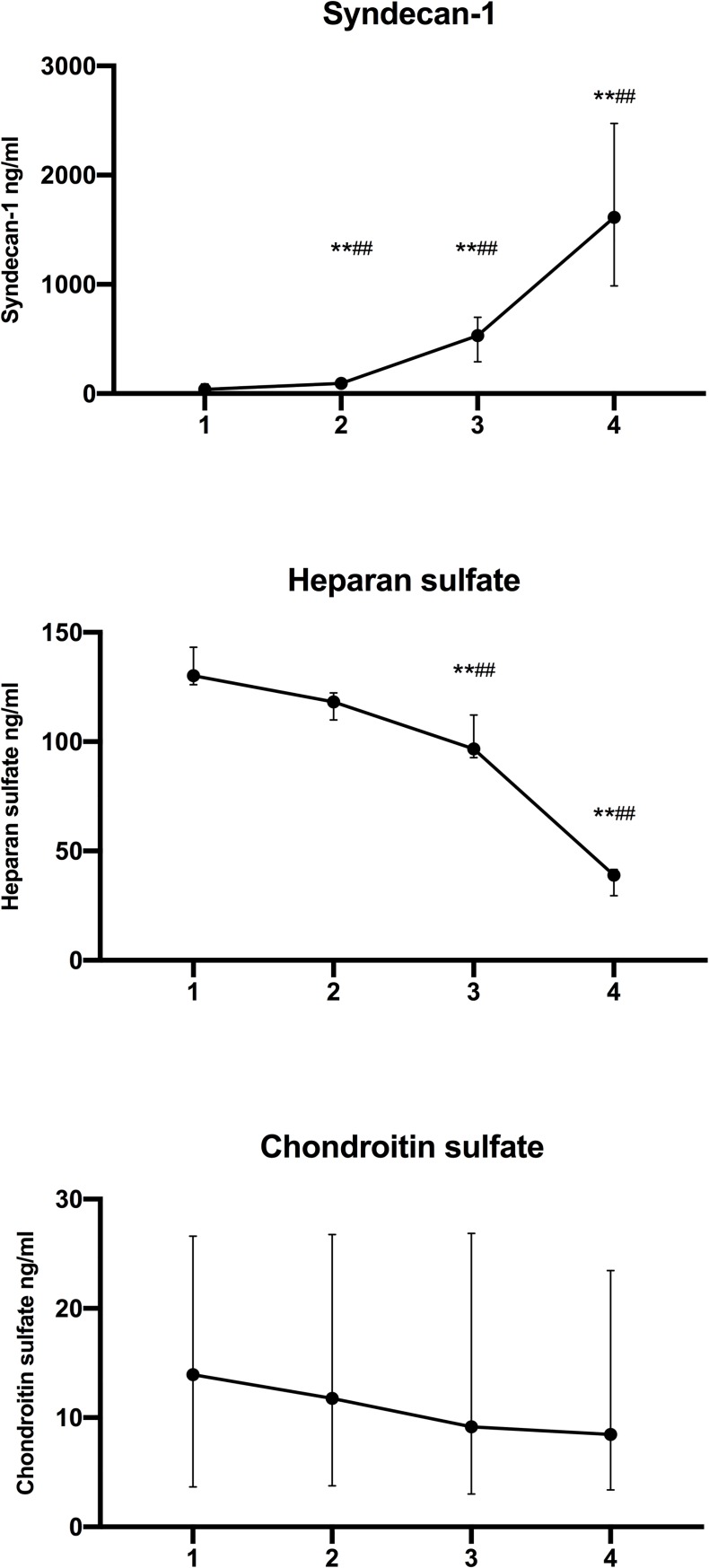
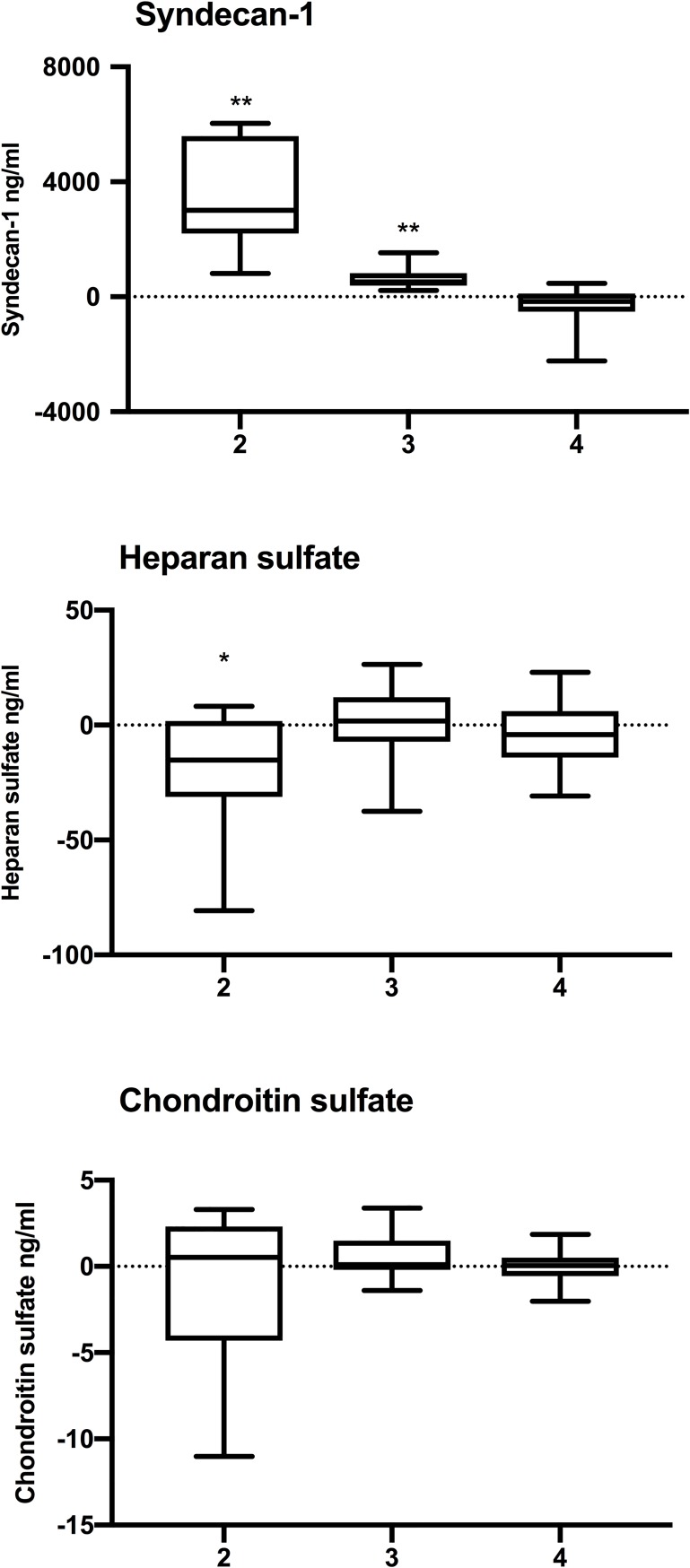
Results: During reperfusion, syndecan-1 levels were higher in graft caval effluent [3118 (934-6141) ng/ml, P = 0.005] than in portal venous blood [101 (75-121) ng/ml], indicating syndecan-1 release from the graft. Concomitantly, heparan sulfate levels were lower in graft caval effluent [96 (32-129) ng/ml, P = 0.037] than in portal venous blood [112 (98-128) ng/ml], indicating heparan sulfate uptake within the graft. Chondroitin sulfate levels were equal in portal and hepatic venous blood. After reperfusion arterial syndecan-1 levels increased 17-fold (P < 0.001) and heparan sulfate decreased to a third (P < 0.001) towards the end of surgery.
Conclusion: Syndecan-1 washout from the liver indicates extensive glycocalyx degradation within the graft during reperfusion. Surprisingly, heparan sulfate was taken up by the graft during reperfusion. Corroborating previous experimental reports, this suggests that endogenous heparan sulfate might be utilized within the graft in the repair of damaged glycocalyx.
Conflict of interest statement
The authors have declared that no competing interests exist.
Figures
References
-
- Ostrowski SR, Berg RMG, Windeløv NA, Meyer MAS, Plovsing RR, Møller K, et al. Coagulopathy, catecholamines, and biomarkers of endothelial damage in experimental human endotoxemia and in patients with severe sepsis: A prospective study. J Crit Care. 2013;28: 586–596. 10.1016/j.jcrc.2013.04.010 - DOI - PubMed
-
- Johansson PI, Stensballe J, Rasmussen LS, Ostrowski SR. A High Admission Syndecan-1 Level, A Marker of Endothelial Glycocalyx Degradation, Is Associated With Inflammation, Protein C Depletion, Fibrinolysis, and Increased Mortality in Trauma Patients. Ann Surg. 2011;254: 194–200. 10.1097/SLA.0b013e318226113d - DOI - PubMed
Publication types
MeSH terms
Substances
LinkOut - more resources
Full Text Sources
Medical
Miscellaneous
