


Effects of lighting schedule during incubation of broiler chicken embryos on leg bone development at hatch and related physiological characteristics
- PMID: 31415653
- PMCID: PMC6695123
- DOI: 10.1371/journal.pone.0221083
Effects of lighting schedule during incubation of broiler chicken embryos on leg bone development at hatch and related physiological characteristics
Abstract
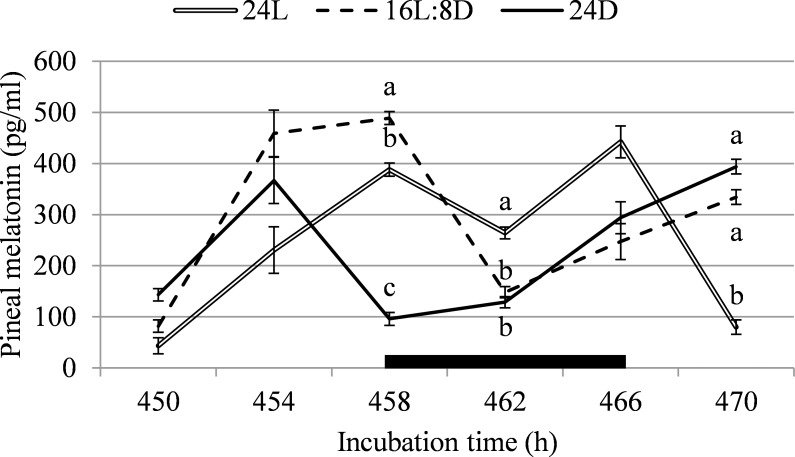
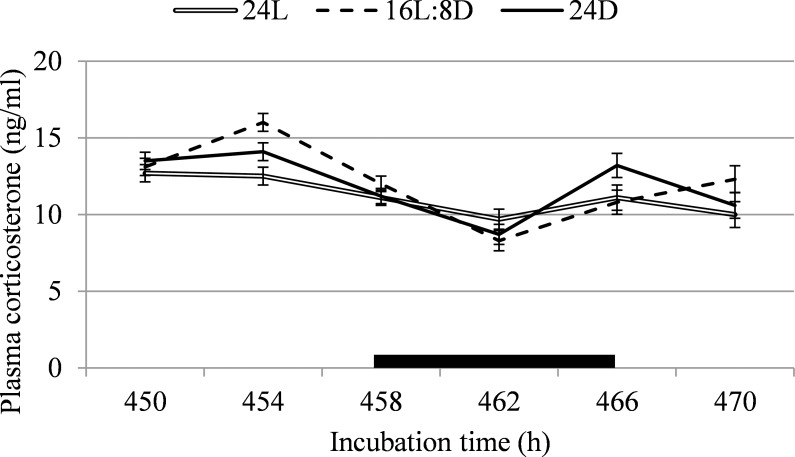
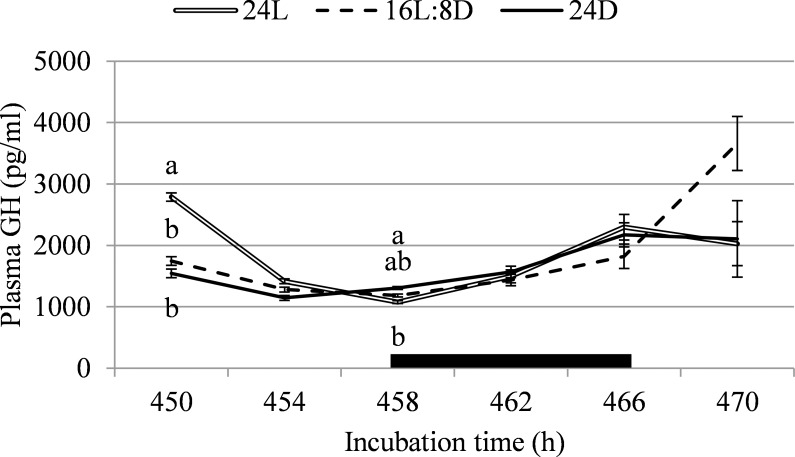
Providing a broiler chicken embryo with a lighting schedule during incubation may stimulate leg bone development. Bone development may be stimulated through melatonin, a hormone released in darkness that stimulates bone development, or increased activity in embryos exposed to a light-dark rhythm. Aim was to investigate lighting conditions during incubation and leg bone development in broiler embryos, and to reveal the involved mechanisms. Embryos were incubated under continuous cool white 500 lux LED light (24L), continuous darkness (24D), or 16h of light, followed by 8h of darkness (16L:8D) from the start of incubation until hatching. Embryonic bone development largely takes place through cartilage formation (of which collagen is an important component) and ossification. Expression of genes involved in cartilage formation (col1α2, col2α1, and col10α1) and ossification (spp1, sparc, bglap, and alpl) in the tibia on embryonic day (ED)13, ED17, and at hatching were measured through qPCR. Femur and tibia dimensions were determined at hatch. Plasma growth hormone and corticosterone and pineal melatonin concentrations were determined every 4h between ED18.75 and ED19.5. Embryonic heart rate was measured twice daily from ED12 till ED19 as a reflection of activity. No difference between lighting treatments on gene expression was found. 24D resulted in higher femur length and higher femur and tibia weight, width, and depth at hatch than 16L:8D. 24D furthermore resulted in higher femur length and width and tibia depth than 24L. Embryonic heart rate was higher for 24D and 16L:8D in both its light and dark period than for 24L, suggesting that 24L embryos may have been less active. Melatonin and growth hormone showed different release patterns between treatments, but the biological significance was hard to interpret. To conclude, 24D resulted in larger leg bones at hatch than light during incubation, but the underlying pathways were not clear from present data.
Conflict of interest statement
Authors Carla W. van der Pol, Inge A. M. van Roovert-Reijrink, and Margaretha H. van Eijk-Priester are employed by HatchTech B.V. This does not alter the authors' adherence to PLOS ONE policies on sharing data and materials. No consultancy, marketed products, patents, or products in development related to the materials discussed in this manuscript exist at the time of writing.
Figures
References
-
- Huth JC, Archer GS. Effects of LED lighting during incubation on layer and broiler hatchability, chick quality, stress susceptibility and post-hatch growth. Poult Sci. 2015; pev298. - PubMed
-
- Archer GS, Jeffrey D, Tucker Z. Effect of the combination of white and red LED lighting during incubation on layer, broiler, and Pekin duck hatchability. Poul Sci. 2017;96(8): 2670–2675. - PubMed
-
- Van der Pol CW, van Roovert-Reijrink IAM, Maatjens CM, Gussekloo SWS, Kranenbarg S, Wijnen J, et al. Light-dark rhythms during incubation of broiler chicken embryos and their effects on embryonic and post hatch leg bone development. PLoS ONE 2019. January 25 10.1371/journal.pone.0210886 - DOI - PMC - PubMed
-
- Augat P, Schorlemmer S. The role of cortical bone and its microstructure in bone strength. Age Ageing 2006;35(suppl 2): ii27–ii31. - PubMed
-
- Milgrom C, Gildadi M, Simkin A, Rand N, Kedem R, Kashtan H, et al. The area moment of inertia of the tibia: a risk factor for stress fractures. J Biochem. 1989;22: 1243–1248. - PubMed
MeSH terms
Substances
LinkOut - more resources
Full Text Sources
Research Materials
Miscellaneous
