


Use of Antibiotics and Risk of Cancer: A Systematic Review and Meta-Analysis of Observational Studies
- PMID: 31416208
- PMCID: PMC6721461
- DOI: 10.3390/cancers11081174
Use of Antibiotics and Risk of Cancer: A Systematic Review and Meta-Analysis of Observational Studies
Abstract
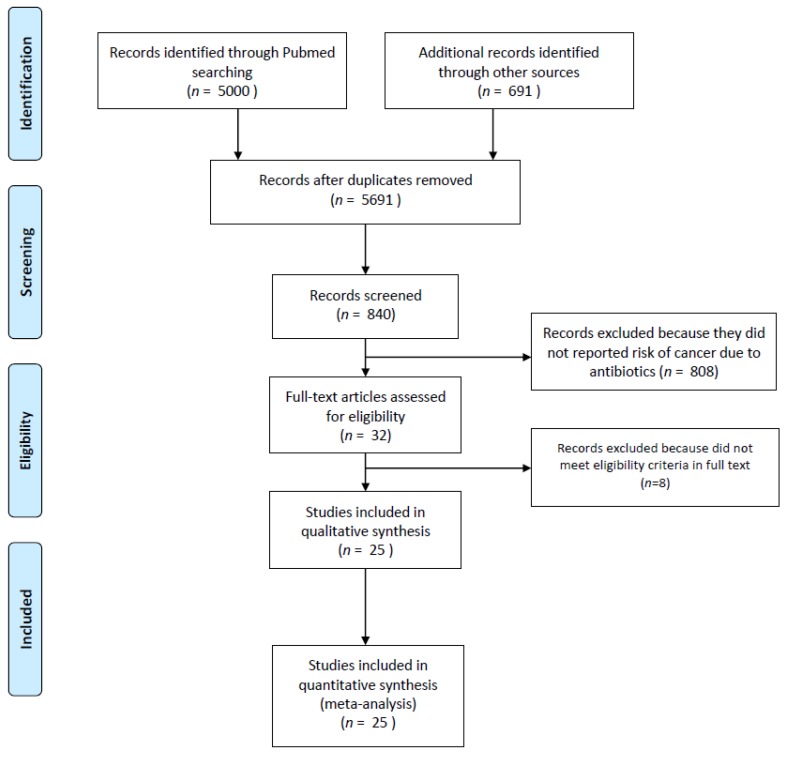
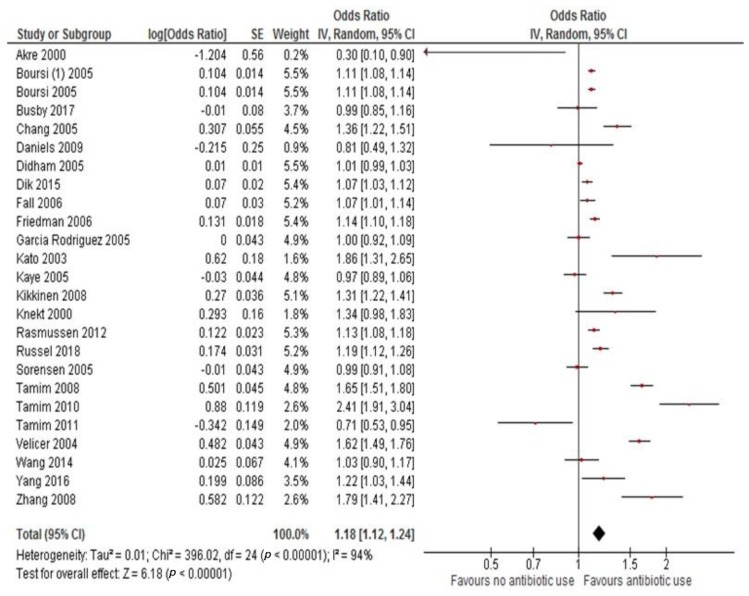
The association between antibiotic use and risk of cancer development is unclear, and clinical trials are lacking. We performed a systematic review and meta-analysis of observational studies to assess the association between antibiotic use and risk of cancer. PubMed, the Cochrane Library and EMBASE were searched from inception to 24 February 2019 for studies reporting antibiotic use and subsequent risk of cancer. We included observational studies of adult subjects with previous exposure to antibiotics and available information on incident cancer diagnoses. For each of the eligible studies, data were collected by three reviewers. Risk of cancer was pooled to provide an adjusted odds ratio (OR) with a 95% confidence interval (CI). The primary outcome was the risk of developing cancer in ever versus non-antibiotic users. Cancer risk's association with antibiotic intake was evaluated among 7,947,270 participants (n = 25 studies). Overall, antibiotic use was an independent risk factor for cancer occurrence (OR 1.18, 95%CI 1.12-1.24, p < 0.001). The risk was especially increased for lung cancer (OR 1.29, 95%CI 1.03-1.61, p = 0.02), lymphomas (OR 1.31, 95%CI 1.13-1.51, p < 0.001), pancreatic cancer (OR 1.28, 95%CI 1.04-1.57, p = 0.019), renal cell carcinoma (OR 1.28, 95%CI 1.1-1.5, p = 0.001), and multiple myeloma (OR 1.36, 95%CI 1.18-1.56, p < 0.001). There is moderate evidence that excessive or prolonged use of antibiotics during a person's life is associated with slight increased risk of various cancers. The message is potentially important for public health policies because minimizing improper antibiotic use within a program of antibiotic stewardship could also reduce cancer incidence.
Keywords: antibiotics; cancer; meta-analysis; risk factor.
Conflict of interest statement
The authors declare no conflicts of interest.
Figures
References
LinkOut - more resources
Full Text Sources
