


Tandem Mass Tag Labeling Facilitates Reversed-Phase Liquid Chromatography-Mass Spectrometry Analysis of Hydrophilic Phosphopeptides
- PMID: 31418558
- PMCID: PMC7197904
- DOI: 10.1021/acs.analchem.9b01814
Tandem Mass Tag Labeling Facilitates Reversed-Phase Liquid Chromatography-Mass Spectrometry Analysis of Hydrophilic Phosphopeptides
Abstract
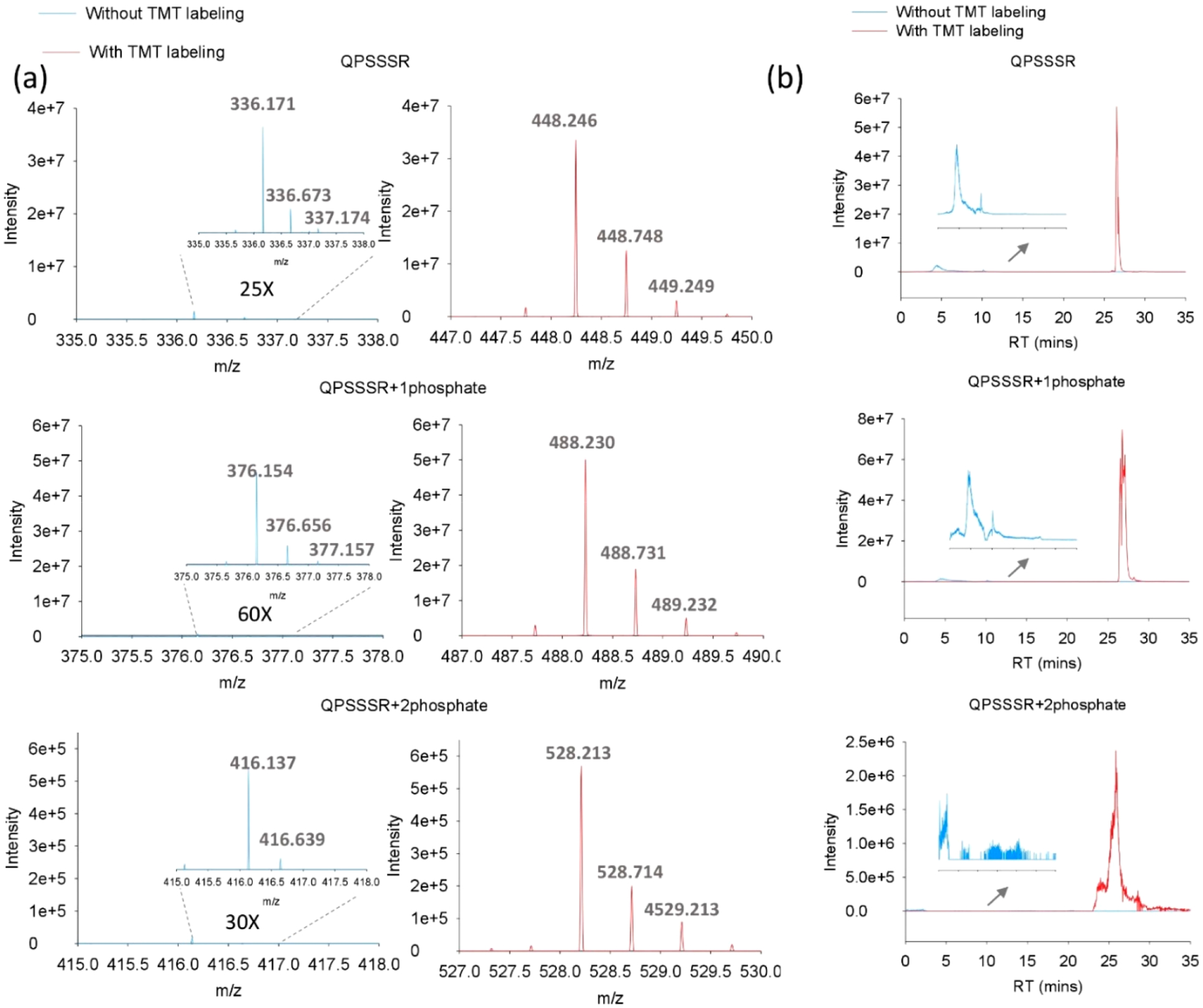
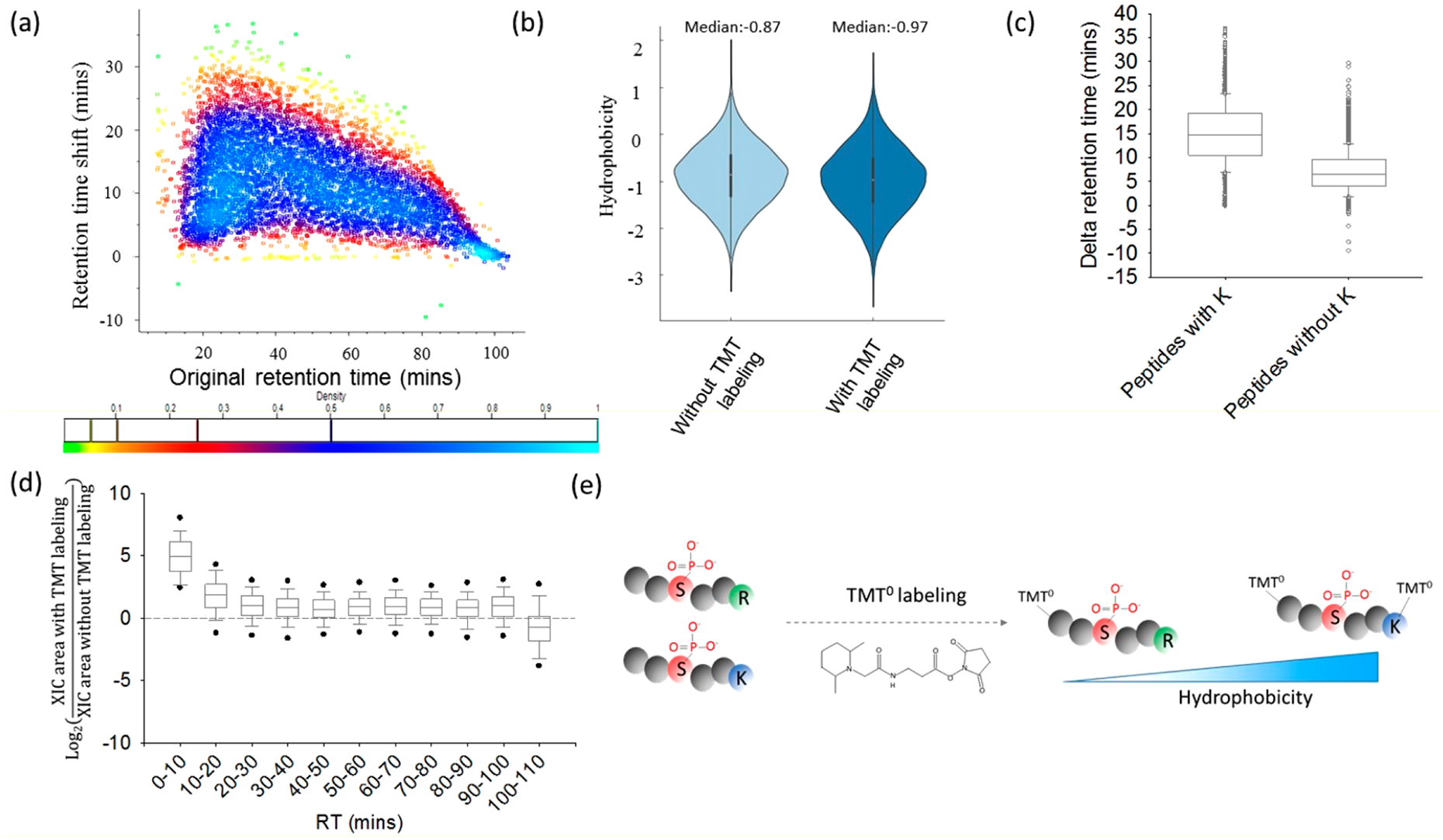
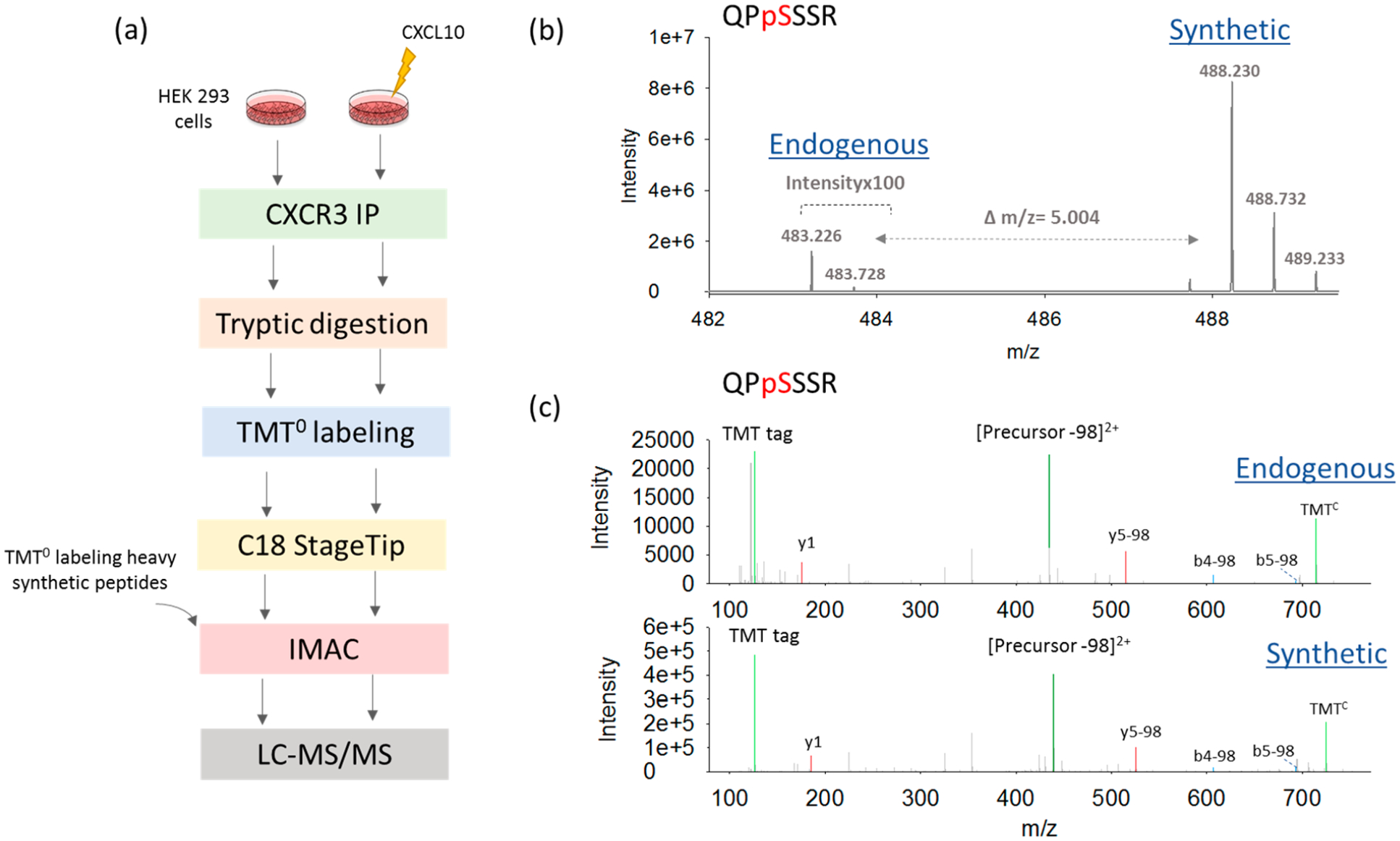
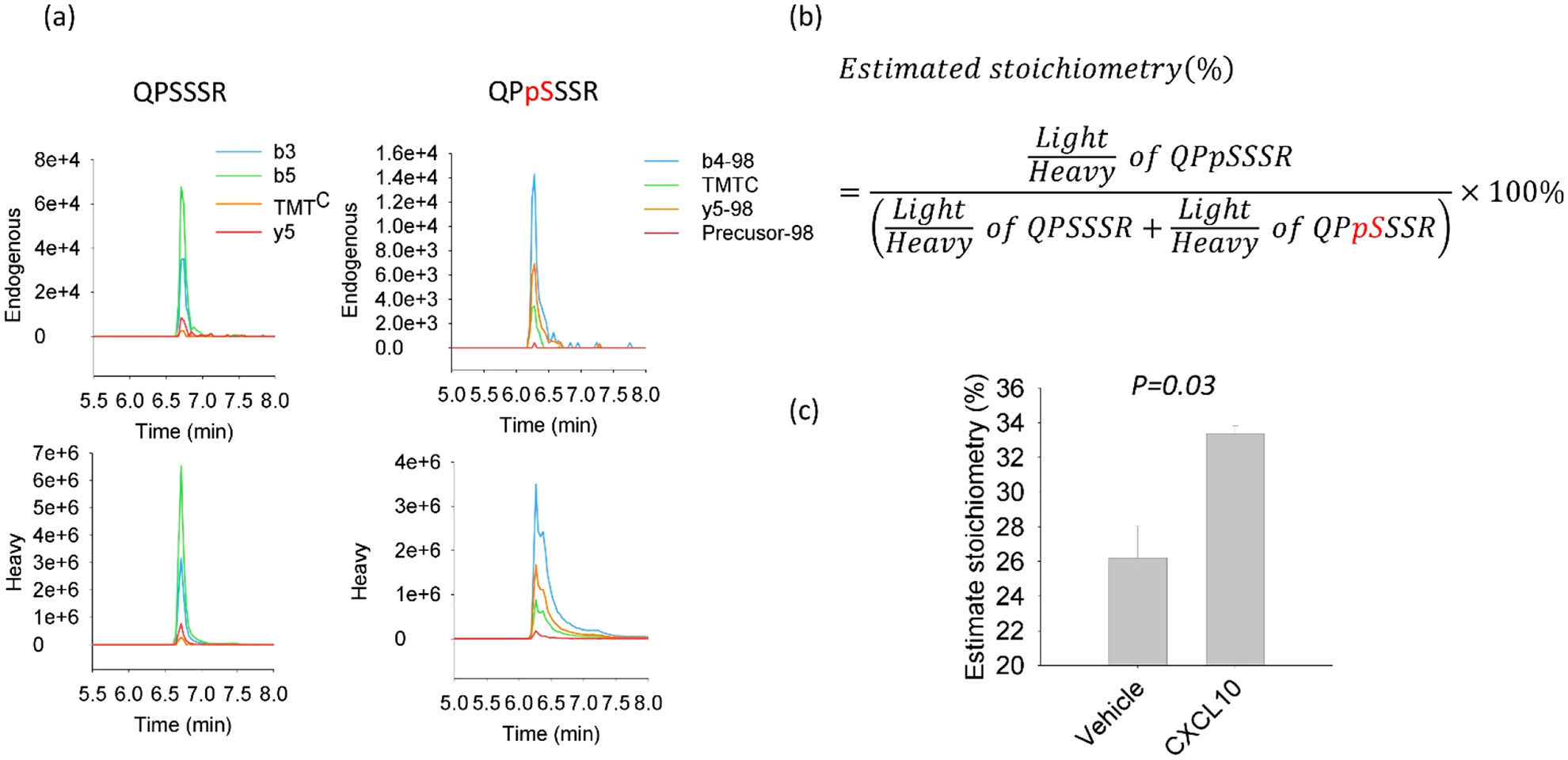
Protein phosphorylation is a critical post-translational modification (PTM). Despite recent technological advances in reversed-phase liquid chromatography (RPLC)-mass spectrometry (MS)-based proteomics, comprehensive phosphoproteomic coverage in complex biological systems remains challenging, especially for hydrophilic phosphopeptides with enriched regions of serines, threonines, and tyrosines that often orchestrate critical biological functions. To address this issue, we developed a simple, easily implemented method to introduce a commonly used tandem mass tag (TMT) to increase peptide hydrophobicity, effectively enhancing RPLC-MS analysis of hydrophilic peptides. Different from conventional TMT labeling, this method capitalizes on using a nonprimary amine buffer and TMT labeling occurring before C18-based solid phase extraction. Through phosphoproteomic analyses of MCF7 cells, we have demonstrated that this method can greatly increase the number of identified hydrophilic phosphopeptides and improve MS detection signals. We applied this method to study the peptide QPSSSR, a very hydrophilic tryptic peptide located on the C-terminus of the G protein-coupled receptor (GPCR) CXCR3. Identification of QPSSSR has never been reported, and we were unable to detect it by traditional methods. We validated our TMT labeling strategy by comparative RPLC-MS analyses of both a hydrophilic QPSSSR peptide library as well as common phosphopeptides. We further confirmed the utility of this method by quantifying QPSSSR phosphorylation abundances in HEK 293 cells under different treatment conditions predicted to alter QPSSSR phosphorylation. We anticipate that this simple TMT labeling method can be broadly used not only for decoding GPCR phosphoproteome but also for effective RPLC-MS analysis of other highly hydrophilic analytes.
Conflict of interest statement
The authors declare no competing financial interest.
Figures
References
-
- Humphrey SJ; Azimifar SB; Mann M Nat. Biotechnol 2015, 33, 990–995. - PubMed
-
- Wakabayashi M; Kyono Y; Sugiyama N; Ishihama Y Anal. Chem 2015, 87, 10213–10221. - PubMed
-
- Mertins P; Tang LC; Krug K; Clark DJ; Gritsenko MA; Chen L; Clauser KR; Clauss TR; Shah P; Gillette MA; Petyuk VA; Thomas SN; Mani DR; Mundt F; Moore RJ; Hu Y; Zhao R; Schnaubelt M; Keshishian H; Monroe ME; Zhang Z; Udeshi ND; Mani D; Davies SR; Townsend RR; Chan DW; Smith RD; Zhang H; Liu T; Carr SA Nat. Protoc 2018, 13, 1632–1661. - PMC - PubMed
Publication types
MeSH terms
Substances
Grants and funding
LinkOut - more resources
Full Text Sources
Miscellaneous
