


Toward a Synthetic Yeast Endosymbiont with a Minimal Genome
- PMID: 31419116
- PMCID: PMC6999831
- DOI: 10.1021/jacs.9b08290
Toward a Synthetic Yeast Endosymbiont with a Minimal Genome
Abstract
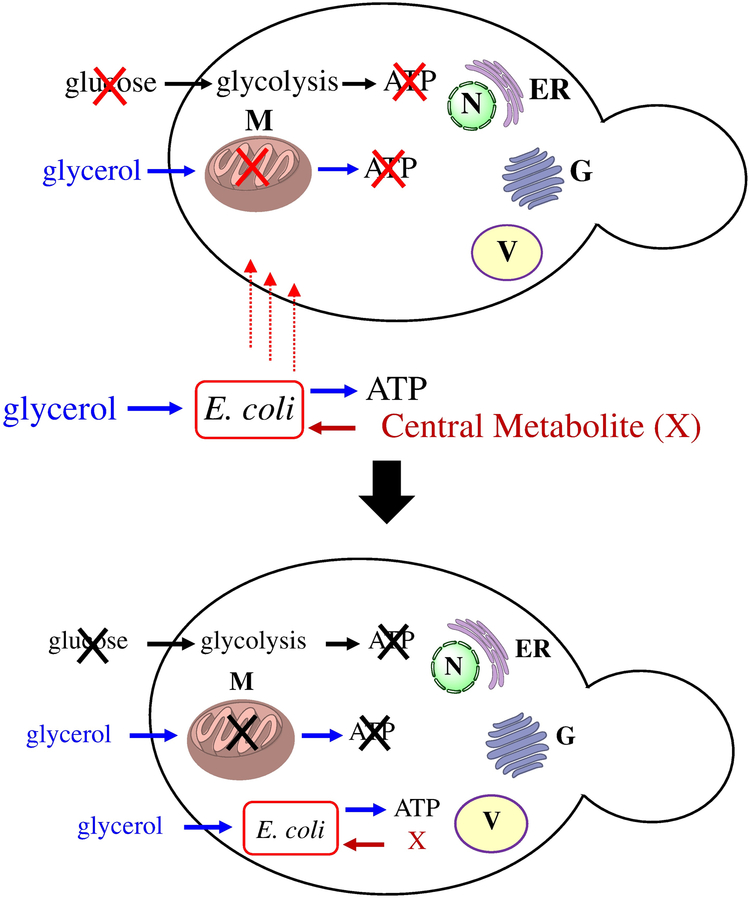
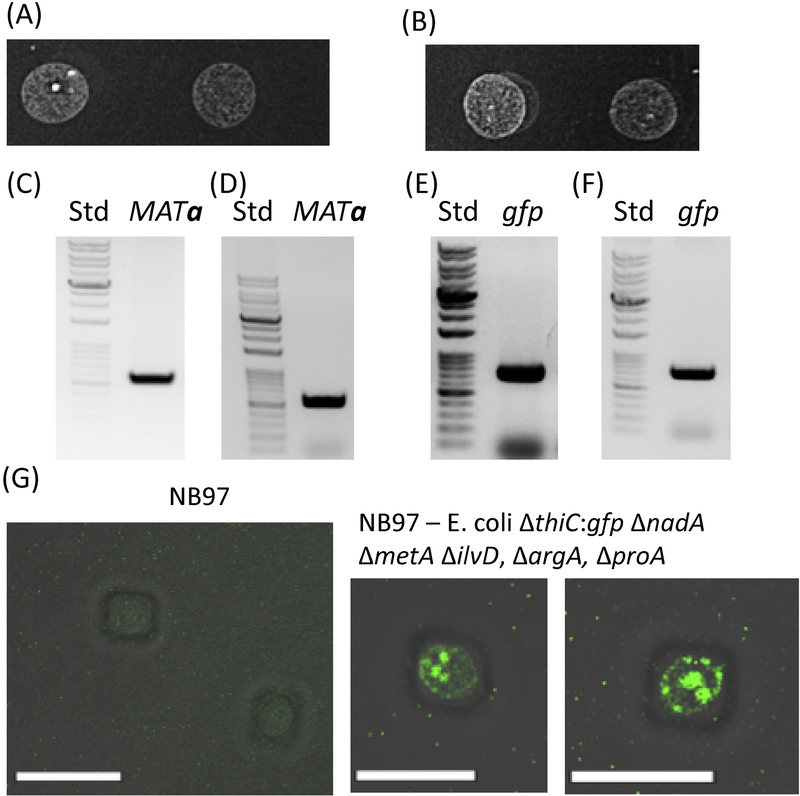
Based on the endosymbiotic theory, one of the key events that occurred during mitochondrial evolution was an extensive loss of nonessential genes from the protomitochondrial endosymbiont genome and transfer of some of the essential endosymbiont genes to the host nucleus. We have developed an approach to recapitulate various aspects of endosymbiont genome minimization using a synthetic system consisting of Escherichia coli endosymbionts within host yeast cells. As a first step, we identified a number of E. coli auxotrophs of central metabolites that can form viable endosymbionts within yeast cells. These studies provide a platform to identify nonessential biosynthetic pathways that can be deleted in the E. coli endosymbionts to investigate the evolutionary adaptations in the host and endosymbiont during the evolution of mitochondria.
Figures
References
-
- Margulis L, Origin of eukaryotic cells: Evidence and research implications for a theory of the origin and evolution of microbial, plant and animal cells on the precambrian Earth. Yale University Press: 1970.
-
- Kutschera U; Niklas KJ, The modern theory of biological evolution: an expanded synthesis. Naturwissenschaften 2004, 91 (6), 255–276. - PubMed
Publication types
MeSH terms
Grants and funding
LinkOut - more resources
Full Text Sources
Molecular Biology Databases
Research Materials
