


QTL mapping of flowering time and biomass yield in tetraploid alfalfa (Medicago sativa L.)
- PMID: 31419945
- PMCID: PMC6697951
- DOI: 10.1186/s12870-019-1946-0
QTL mapping of flowering time and biomass yield in tetraploid alfalfa (Medicago sativa L.)
Erratum in
-
Correction to: QTL mapping of flowering time and biomass yield in tetraploid alfalfa (Medicago sativa L.).BMC Plant Biol. 2019 Oct 28;19(1):452. doi: 10.1186/s12870-019-2020-7. BMC Plant Biol. 2019. PMID: 31660861 Free PMC article.
Abstract
Background: The genetic and genomic basis of flowering time and biomass yield in alfalfa (Medicago sativa L.) remains poorly understood mainly due to the autopolyploid nature of the species and the lack of adequate genomic resources. We constructed linkage maps using genotyping-by-sequencing (GBS) based single dose allele (SDA) SNP and mapped alfalfa timing of flowering (TOF), spring yield (SY), and cumulative summer biomass (CSB) in a pseudo-testcross F1 population derived from a fall dormant (3010) and a non-dormant (CW 1010) cultivars. We analyzed the quantitative trait loci (QTL) to identify conserved genomic regions and detected molecular markers and potential candidate genes associated with the traits to improve alfalfa and provide genomic resources for the future studies.
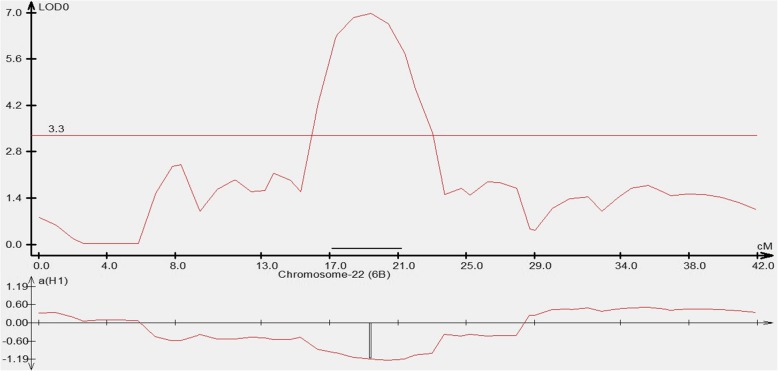
Results: This study showed that both fall dormant and non-dormant alfalfa cultivars harbored QTL for early and late flowering, suggesting that flowering time in alfalfa is not an indicator of its fall dormancy (FD) levels. A weak phenotypic correlation between the flowering time and fall dormancy (FD) in F1 and checks also corroborated that alfalfa FD and TOF are not the predictors of one another. The relationship between flowering time and alfalfa biomass yield was not strong, but the non-dormant had relatively more SY than dormant. Therefore, selecting superior alfalfa cultivars that are non-dormant, winter-hardy, and early flowering would allow for an early spring harvest with enhanced biomass. In this study, we found 25 QTL for TOF, 17 for SY and six QTL for CSB. Three TOF related QTL were stable and four TOF QTL were detected in the corresponding genomic locations of the flowering QTL of M. truncatula, an indication of possible evolutionarily conserved regions. The potential candidate genes for the SNP sequences of QTL regions were identified for all three traits and these genes would be potential targets for further molecular studies.
Conclusions: This research showed that variation in alfalfa flowering time after spring green up has no association with dormancy levels. Here we reported QTL, markers, and potential candidate genes associated with spring flowering time and biomass yield of alfalfa, which constitute valuable genomic resources for improving these traits via marker-assisted selection (MAS).
Keywords: Alfalfa; Biomass; Flowering QTL; GBS; Medicago truncatula; Single dose allele.
Conflict of interest statement
The authors declare that they have no competing interests.
Figures

References
MeSH terms
Grants and funding
LinkOut - more resources
Full Text Sources
