


Indoor ozone/human chemistry and ventilation strategies
- PMID: 31420890
- PMCID: PMC6856811
- DOI: 10.1111/ina.12594
Indoor ozone/human chemistry and ventilation strategies
Abstract
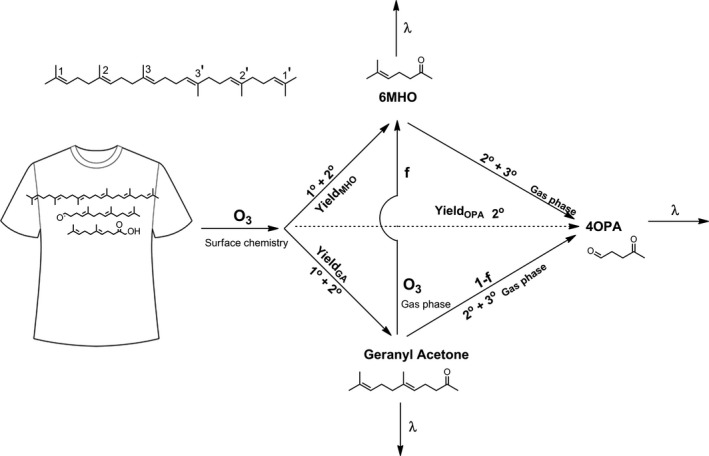
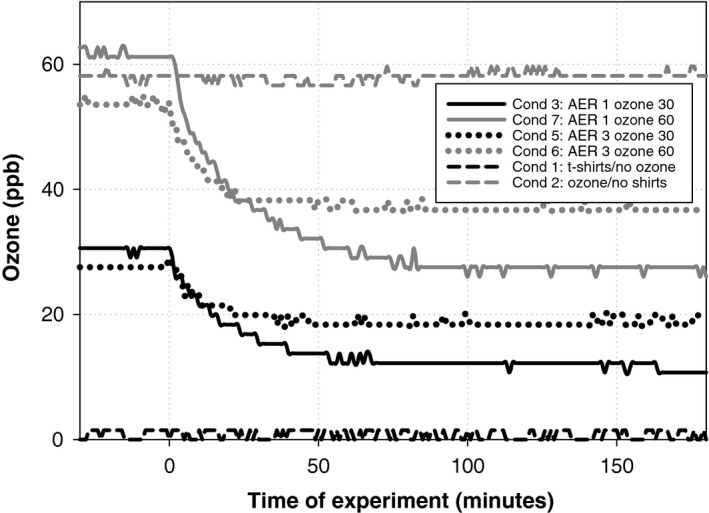
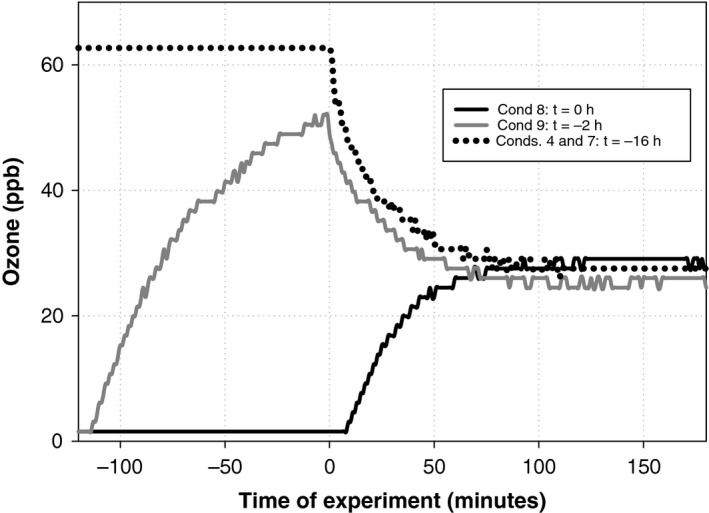
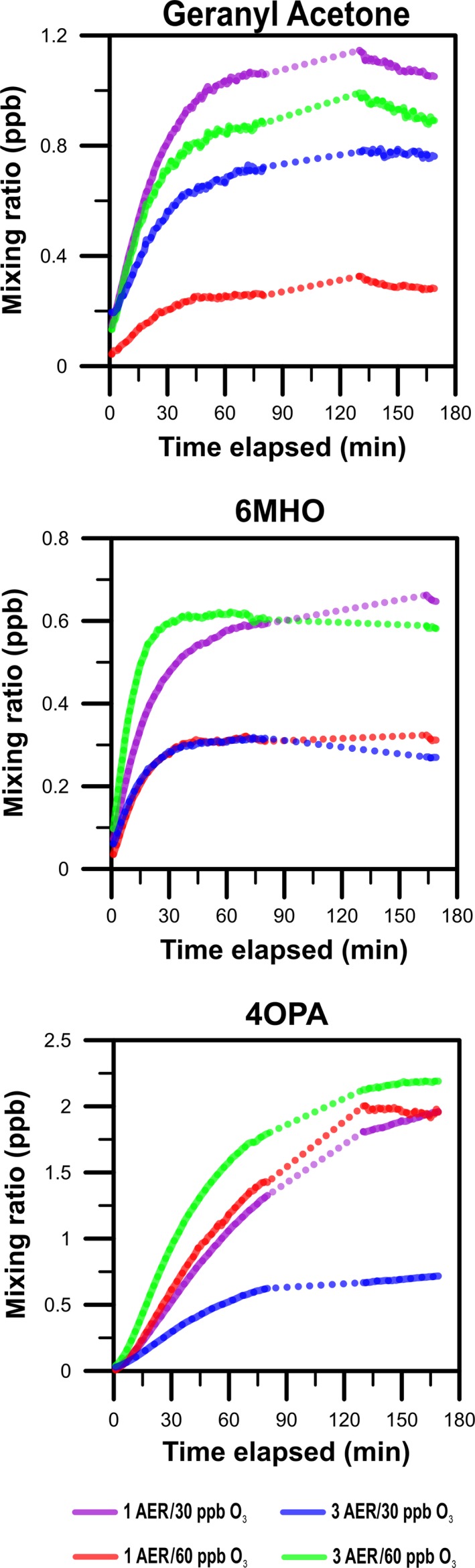
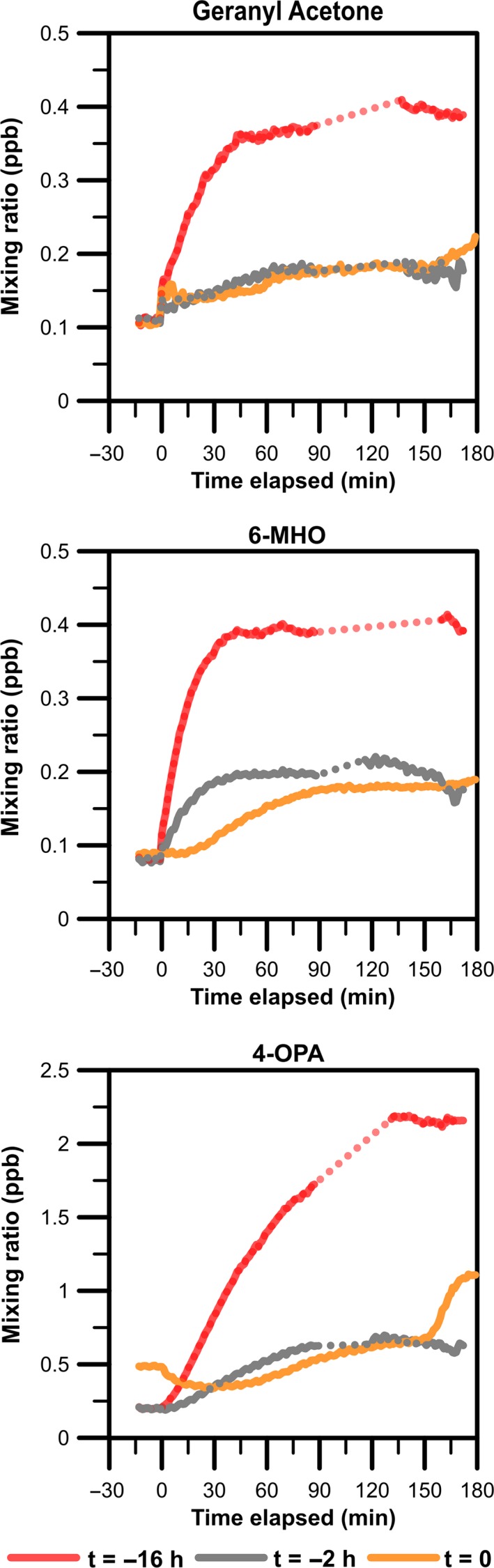
This study aimed to better understand and quantify the influence of ventilation strategies on occupant-related indoor air chemistry. The oxidation of human skin oil constituents was studied in a continuously ventilated climate chamber at two air exchange rates (1 h-1 and 3 h-1 ) and two initial ozone mixing ratios (30 and 60 ppb). Additional measurements were performed to investigate the effect of intermittent ventilation ("off" followed by "on"). Soiled t-shirts were used to simulate the presence of occupants. A time-of-flight-chemical ionization mass spectrometer (ToF-CIMS) in positive mode using protonated water clusters was used to measure the oxygenated reaction products geranyl acetone, 6-methyl-5-hepten-2-one (6-MHO) and 4-oxopentanal (4-OPA). The measurement data were used in a series of mass balance models accounting for formation and removal processes. Reactions of ozone with squalene occurring on the surface of the t-shirts are mass transport limited; ventilation rate has only a small effect on this surface chemistry. Ozone-squalene reactions on the t-shirts produced gas-phase geranyl acetone, which was subsequently removed almost equally by ventilation and further reaction with ozone. About 70% of gas-phase 6-MHO was produced in surface reactions on the t-shirts, the remainder in secondary gas-phase reactions of ozone with geranyl acetone. 6-MHO was primarily removed by ventilation, while further reaction with ozone was responsible for about a third of its removal. 4-OPA was formed primarily on the surfaces of the shirts (~60%); gas-phase reactions of ozone with geranyl acetone and 6-MHO accounted for ~30% and ~10%, respectively. 4-OPA was removed entirely by ventilation. The results from the intermittent ventilation scenarios showed delayed formation of the reaction products and lower product concentrations compared to continuous ventilation.
Keywords: ToF-CIMS; air exchange rate; indoor environment; oxygenated volatile organic compounds; ozone; squalene.
© 2019 The Authors. Indoor Air published by John Wiley & Sons Ltd.
Figures
References
-
- Weschler CJ, Shields HC. Potential reactions among indoor pollutants. Atmos Environ. 1997;31:3487‐3495.
-
- Weschler CJ. Chemistry in indoor environments: 20 years of research. Indoor Air. 2011;21:205‐218. - PubMed
-
- Weschler CJ, Carslaw N. Indoor chemistry. Environ Sci Technol. 2018;52:2419‐2428. - PubMed
-
- Tang X, Misztal P, Nazaroff WW, Goldstein AH. Volatile organic compound emissions from humans indoors. Environ Sci Technol. 2016;50:12686‐12694. - PubMed
Publication types
MeSH terms
Substances
Grants and funding
LinkOut - more resources
Full Text Sources
Medical
