. 2019 Aug 19;15(8):e1007877.
doi: 10.1371/journal.pgen.1007877. eCollection 2019 Aug.

Separate Polycomb Response Elements control chromatin state and activation of the vestigial gene

Affiliations

Separate Polycomb Response Elements control chromatin state and activation of the vestigial gene

Kami Ahmad et al. PLoS Genet. .

Abstract

Patterned expression of many developmental genes is specified by transcription factor gene expression, but is thought to be refined by chromatin-mediated repression. Regulatory DNA sequences called Polycomb Response Elements (PREs) are required to repress some developmental target genes, and are widespread in genomes, suggesting that they broadly affect developmental programs. While PREs in transgenes can nucleate trimethylation on lysine 27 of the histone H3 tail (H3K27me3), none have been demonstrated to be necessary at endogenous chromatin domains. This failure is thought to be due to the fact that most endogenous H3K27me3 domains contain many PREs, and individual PREs may be redundant. In contrast to these ideas, we show here that PREs near the wing selector gene vestigial have distinctive roles at their endogenous locus, even though both PREs are repressors in transgenes. First, a PRE near the promoter is required for vestigial activation and not for repression. Second, only the distal PRE contributes to H3K27me3, but even removal of both PREs does not eliminate H3K27me3 across the vestigial domain. Thus, endogenous chromatin domains appear to be intrinsically marked by H3K27me3, and PREs appear required to enhance this chromatin modification to high levels at inactive genes.


Conflict of interest statement

The authors have declared that no competing interests exist.

Figures
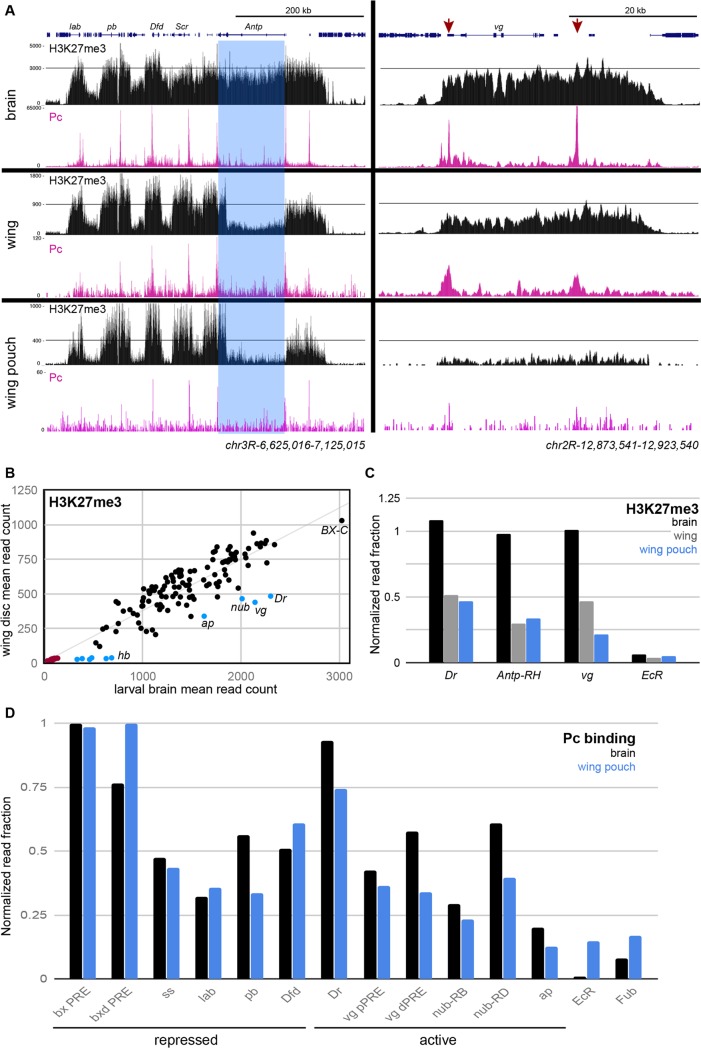
Fig 1
Fig 1. CUT&RUN profiling of Polycomb silenced domains in larval brains and wing imaginal discs.
(A) Chromatin landscapes of the 425 kb ANTP-Complex (left) and for the 32 kb vg domain (right) in dissected larval brains, in dissected wing imaginal discs, and in FACS-isolated wing disc pouch cells. Landscapes for H3K27me3 (black) and Polycomb (magenta) are shown. The Antp gene is highlighted in blue; this gene is silent and packaged with high levels of H3K27me3 in brain samples and transcribed and packaged with low levels of H3K27me3 in wing imaginal discs. The two PREs in the vg domain are indicated (red arrows). (B) H3K27-trimethylation of domains in larval brains and wing discs. The average read count in similar domains (black) and in domains that are reduced in wing discs (blue) are plotted. Randomly-selected regions outside of domains (red) indicate the genomic background in each sample. (C) Read counts for H3K27me3 CUT&RUN across three genes silenced in larval brains and expressed in wing discs. The EcR is not included in an H3K27me3 domain in either tissue, and is a control for the genomic background in each sample. Mean read counts in each domain were normalized by dividing by the mean read counts at the gsb gene, which is silenced in all tissues. (D) Mean read counts for Polycomb CUT&RUN at selected repressed peaks in brain and wing pouch cells and at active genes defined by loss of H3K27me3 domains. The EcR promoter and the Fub insulator element are not bound by Polycomb, and are controls for the genomic background in each sample.
Fig 2
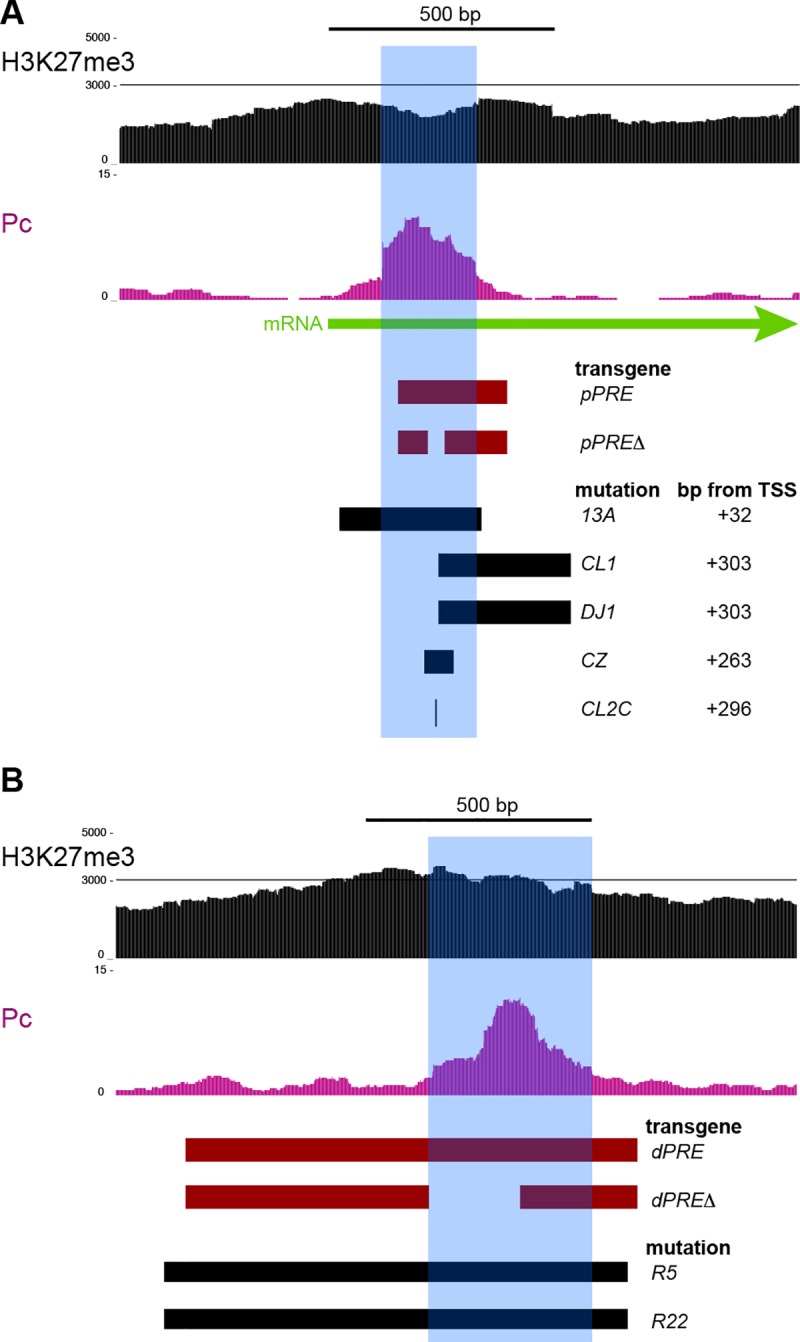
Fig 2. Transgenes and mutations of the two PREs in the vestigial domain.
H3K27me3 and Polycomb features of the two PREs (blue shading). Segments included in transgene constructs (red), and removed by mutation of the endogenous locus (black) are indicated. (A) The pPRE Polycomb-bound site is located from +300 –+400 bp downstream of the transcriptional start site (TSS). The distance of the left end of each deletion from the TSS at the endogenous locus is listed. The vgCL2C allele is a C->T substitution within the major Polycomb-bound site (chr2R:12,884497 dm6). (B) A segment around the distal PRE (dPRE) with one Polycomb-bound site. Two engineered deletions (the vgR5 and vgR22 alleles) remove the site.
Fig 3
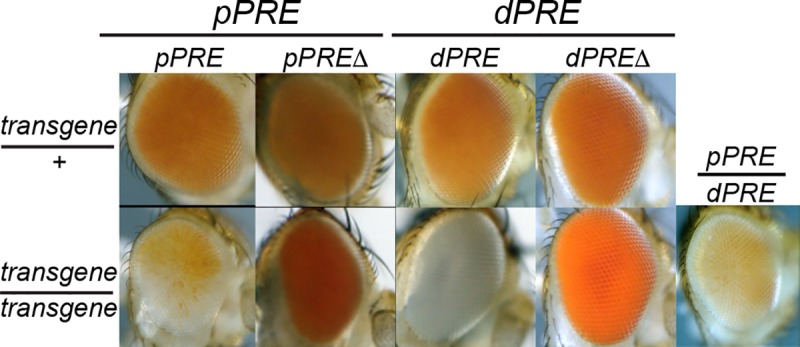
Fig 3. The vestigial PREs mediate silencing of reporter genes.
Position-Sensitive silencing (PSS) in the adult eyes of animals carrying PRE fragments next to a mini-w+ reporter. Fragments from the vg pPRE and dPRE are indicated in Fig 2, and inserted in the same phiC31 landing site. Reduced mini-w+ expression in animals homozygous for an insertion indicates silencing mediated by a PRE-containing fragment.
Fig 4
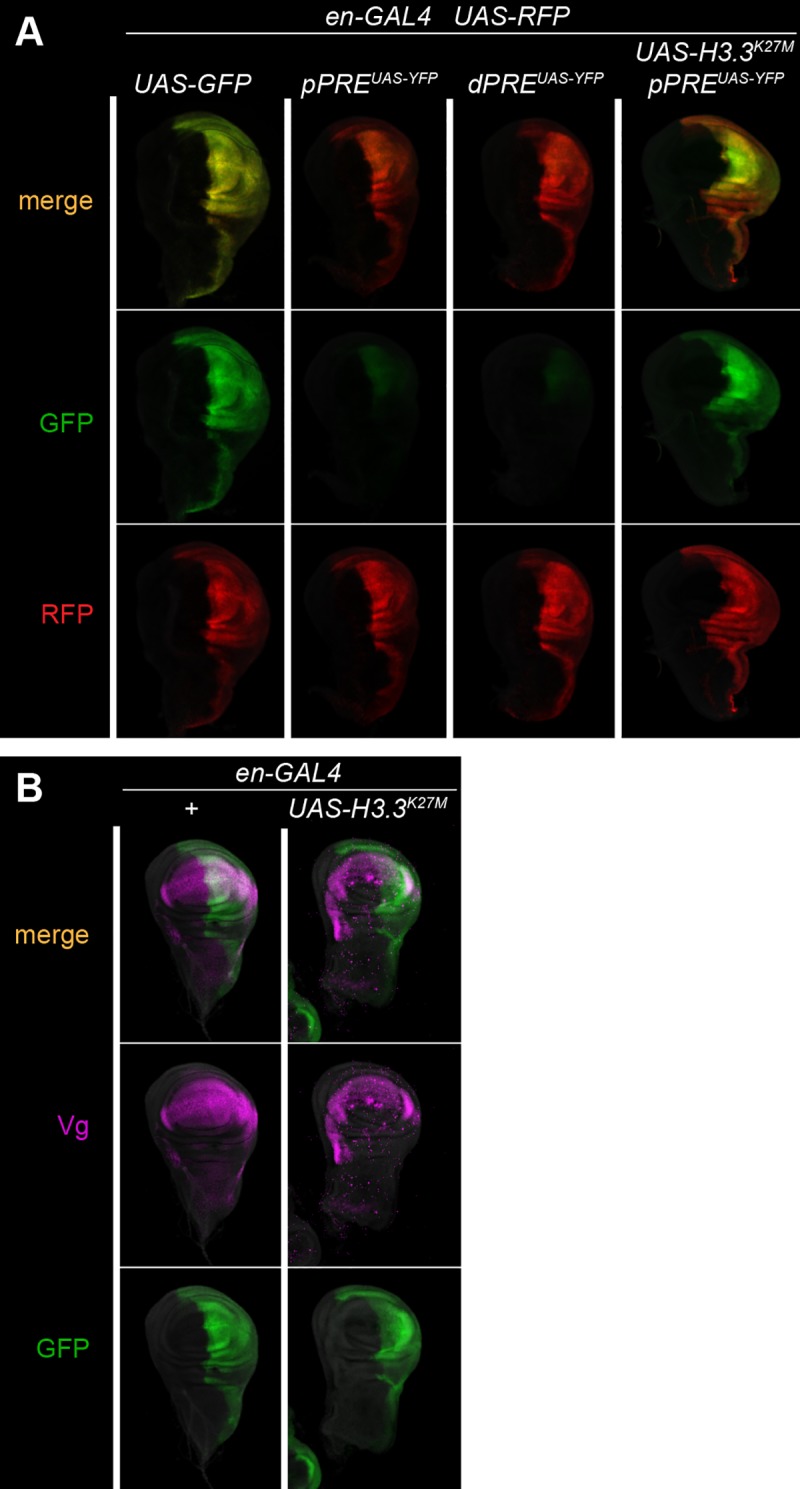
Fig 4. The vestigial domain mediate silencing of reporter genes.
(A) Fluorescent protein expression in wing imaginal discs. Each animal carries the en-GAL4 driver, and a UAS-RFP control reporter (red). Expression of UAS-GFP and UAS-YFP is in green. Control insertions outside of Polycomb-regulated domains shows high expression of GFP where en-GAL4 is expressed. UAS-YFP insertions near the vg pPRE or dPRE show strong silencing, except in the wing pouch where vg is normally expressed. Silencing is eliminated by expression of a mutant H3.3K27M histone in the posterior half of the wing disc. (B) The vg gene is not derepressed by the mutant H3.3K27M histone. Expression of GAL4 was visualized with UAS-GFP (green), and the Vg protein by antibody staining (magenta).
Fig 5
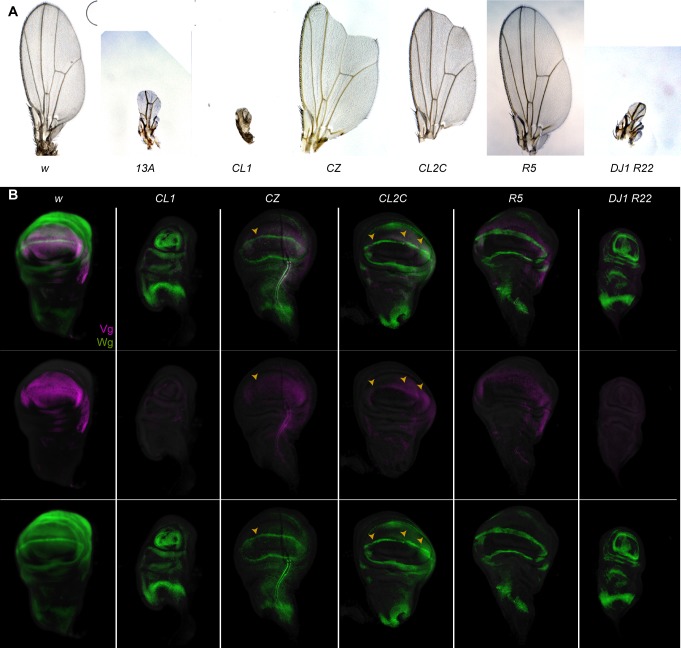
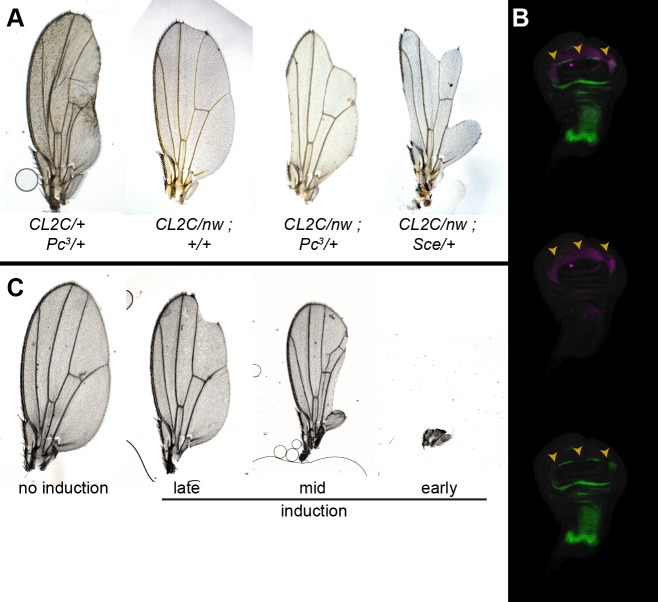
Fig 5. The pPRE and Polycomb are required for vestigial activation.
(A) Wings from adults with the indicated genotypes. New alleles were heterozygous with the vgnw null allele to show expression of each allele. (B) Wing imaginal discs stained with anti-Vg (magenta) and anti-Wg (green) antisera. Wing discs from control GFP-marked larvae and mutant were dissected, stained, and imaged together for quantitative measurements of antibody staining. In wildtype, a ring of Wg circles the wing pouch, and a stripe of Wg across the wing pouch marks the future adult wing blade margin (gaps indicated by a yellow arrowhead). Vg protein is produced throughout the wing pouch. In vgCL1/vgnw animals no Vg protein is detected, the wing pouch is greatly reduced, and the future wing margin is missing. In vgCZ/vgnw animals expression of Vg is reduced, and gaps are apparent in the wing margin Wg stripe, anticipating the wing margin notches in adults of this genotype. Both Vg and Wg expression patterns appear normal in the dPRE deletion vgR5. Finally, the double PRE deletion vgDJ1 R22 resembles the single pPRE deletion, with loss of Vg expression and of the margin stripe of Wg.
Fig 6
Fig 6. The pPRE is required in active cells.
(A) Wings from adults with the indicated genotypes. The pPRE substitution mutation vgCL2C is a recessive mutation, but reduction of Polycomb results in bowed and crumpled wings. Polycomb or Sce mutations enhance the wing defects of vgCL2C/vgnw animals. (B) Wing imaginal discs from CL2C/nw; Pc3/+ larvae stained with anti-Vg (magenta) and anti-Wg (green) antisera. Gaps in the Vg and Wg patterns at the future wing margin are indicated by a yellow arrowhead. (C) Wing morphologies after FLP induction during embryonic and larval development. Most wings show no defects in morphology. Occasional adults that experienced FLP induction during development show notches in the wing margin (induced in late larvae), deletion of portions of the wing (induced in early larvae), or complete loss of the wing (induced in embryos).
Fig 7
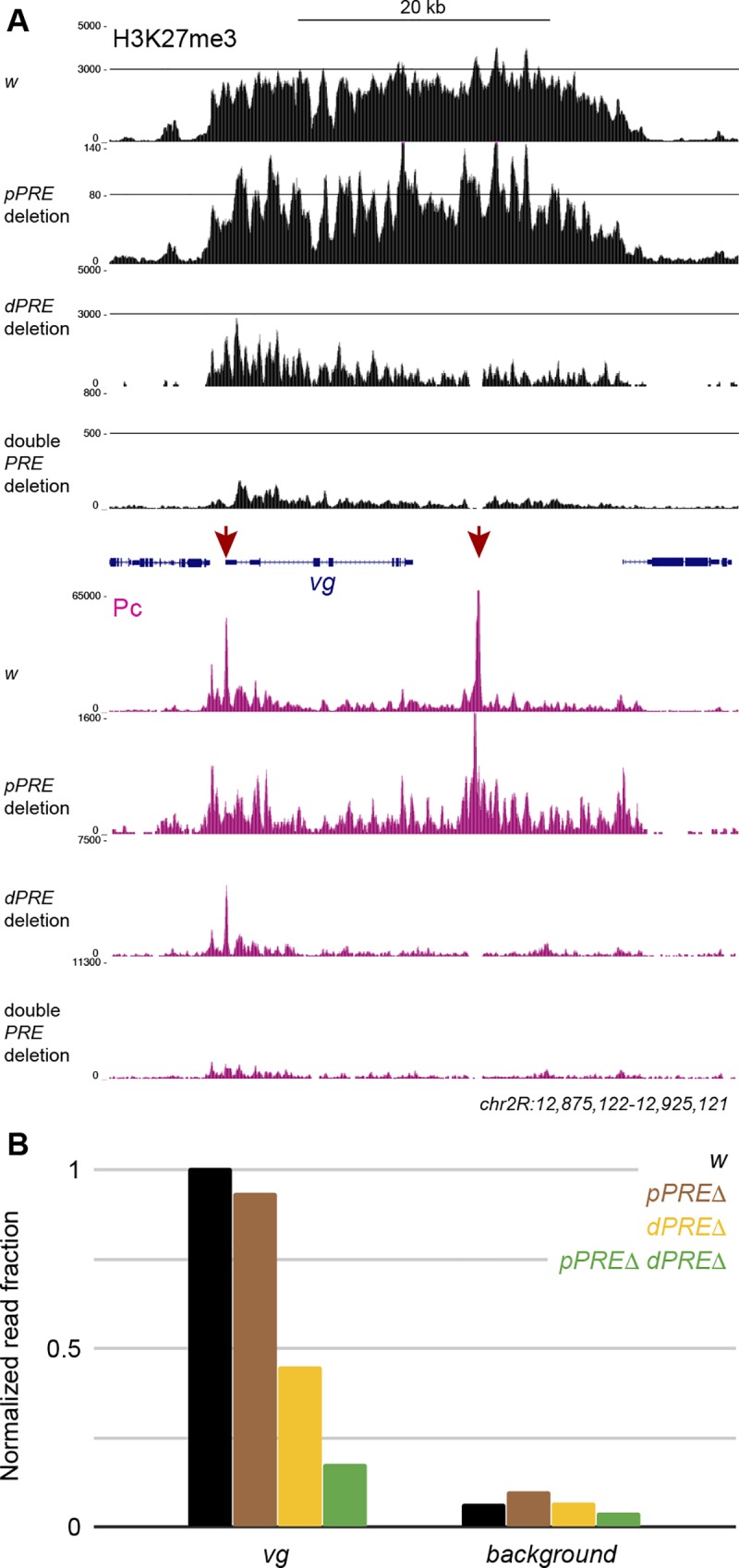
Fig 7. Histone methylation of the vestigial domain is reduced in PRE mutants.
(A) Larval brains from wildtype animals and from PRE mutants profiled for H3K27me3 (black) and Polycomb (magenta). The two PREs of the vg domain are indicated (red). The display range is set to the maximum signal in the ANTP-C domain from the same samples to show quantitative changes in profiling. (B) Normalized mean read counts across the vg domain in larval brains. A randomly chosen region outside of annotated domains is used as the genomic background in each sample. Mean read counts in each region were normalized by dividing by the mean read counts at the gsb gene, which is silenced in larval brains.

References

    1. Schuettengruber B, Cavalli G. (2009). Recruitment of polycomb group complexes and their role in the dynamic regulation of cell fate choice. Development 136(21):3531–42. 10.1242/dev.033902 . - DOI - PubMed
    1. Boettiger AN, Bintu B, Moffitt JR, Wang S, Beliveau BJ, Fudenberg G, Imakaev M, Mirny LA, Wu CT, Zhuang X. (2016). Super-resolution imaging reveals distinct chromatin folding for different epigenetic states. Nature 529(7586):418–22. PMCID: PMC4905822. 10.1038/nature16496 - DOI - PMC - PubMed
    1. Breiling A, O'Neill LP, D'Eliseo D, Turner BM, Orlando V. (2004). Epigenome changes in active and inactive polycomb-group-controlled regions. EMBO Rep. 5(10):976–82. PMCID: PMC1299157. 10.1038/sj.embor.7400260 - DOI - PMC - PubMed
    1. Müller J, Kassis JA. (2006). Polycomb response elements and targeting of Polycomb group proteins in Drosophila. Curr Opin Genet Dev. 16(5):476–84. 10.1016/j.gde.2006.08.005 . - DOI - PubMed
    1. Schuettengruber B, Cavalli G. (2013). Polycomb domain formation depends on short and long distance regulatory cues. PLoS One 8(2):e56531 PMCID: PMC3577894 10.1371/journal.pone.0056531 - DOI - PMC - PubMed

Publication types

LinkOut - more resources