. 2020 Jan;41(1):73-81.
doi: 10.1038/s41401-019-0279-8. Epub 2019 Aug 19.

Rebalancing of the gut flora and microbial metabolism is responsible for the anti-arthritis effect of kaempferol

Affiliations

Rebalancing of the gut flora and microbial metabolism is responsible for the anti-arthritis effect of kaempferol

Li-Xiang Aa et al. Acta Pharmacol Sin. 2020 Jan.

Abstract

Kaempferol is a natural flavonol that possesses various pharmacological activities, including anti-arthritis effects, yet the underlying mechanisms remain controversial. To evaluate the anti-arthritis efficacy and the underlying mechanisms of kaempferol, collagen-induced arthritis (CIA) mice were treated with kaempferol intragastrically (200 mg · kg-1 · d-1) and intraperitoneally (20 mg · kg-1 · d-1). Pharmacodynamic and pharmacokinetic studies showed that the oral administration of kaempferol produced distinct anti-arthritis effects in model mice with arthritis in terms of the spleen index, arthritis index, paw thickness, and inflammatory factors; the bioavailability (1.5%, relative to that of the intraperitoneal injection) and circulatory exposure of kaempferol (Cmax = 0.23 ± 0.06 ng/mL) and its primary metabolite kaempferol-3-O-glucuronide (Cmax = 233.29 ± 89.64 ng/mL) were rather low. In contrast, the intraperitoneal injection of kaempferol caused marginal anti-arthritis effects, although it achieved a much higher in vivo exposure. The much higher kaempferol content in the gut implicated a potential mechanism involved in the gut. Analysis of 16S ribosomal RNA revealed that CIA caused imbalance of 14 types of bacteria at the family level, whereas kaempferol largely rebalanced the intestinal microbiota in CIA mice. A metabolomics study showed that kaempferol treatment significantly reversed the perturbation of metabolites involved in energy production and the tryptophan, fatty acid and secondary bile acid metabolisms in the gut contents of the CIA mice. In conclusion, we demonstrate for the first time that the high level of kaempferol in the gut regulates the intestinal flora and microbiotic metabolism, which are potentially responsible for the anti-arthritis activities of kaempferol.

Keywords: anti-arthritis effects; collagen-induced arthritis; intestinal microbiota; kaempferol; metabolomics; pharmacokinetics.


Figures
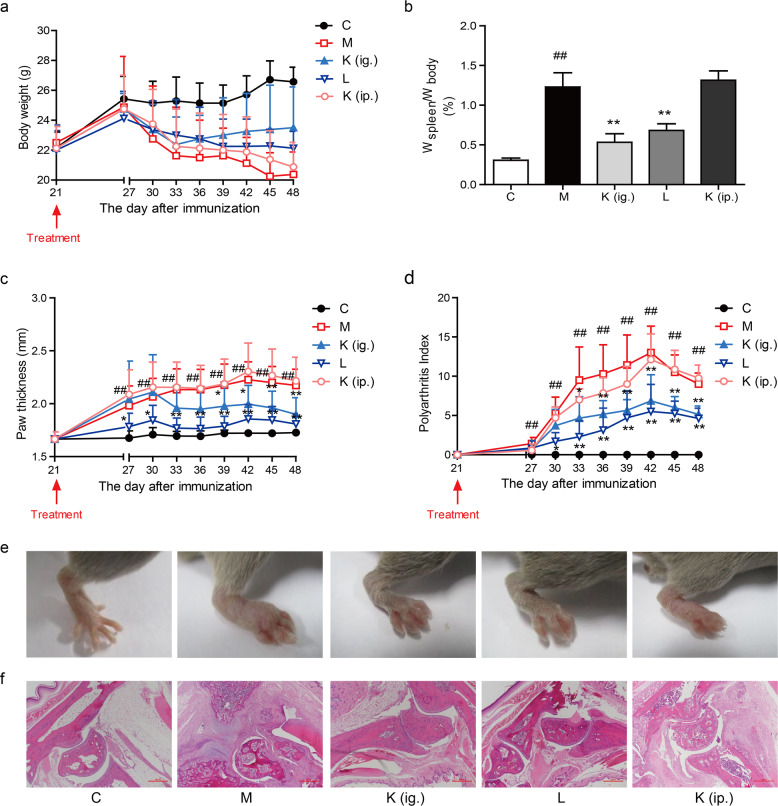
Fig. 1
Fig. 1
Oral treatment with kaempferol prevents arthritis in CIA mice. a Changes in the body weights of the mice; b The spleen index was calculated as the ratio of the spleen weight to the mouse body weight; d Polyarthritis index; c, e Paw swelling; f Histological examination of ankle joint sections (H&E staining). Mean ± SD, n = 6. C: control, M: model, K (ig.): oral administration of kaempferol, K (ip.): intraperitoneal injection of kaempferol, L: leflunomide. ##P < 0.01 vs. C; *P < 0.05, **P < 0.01 vs. M
Fig. 2
Fig. 2
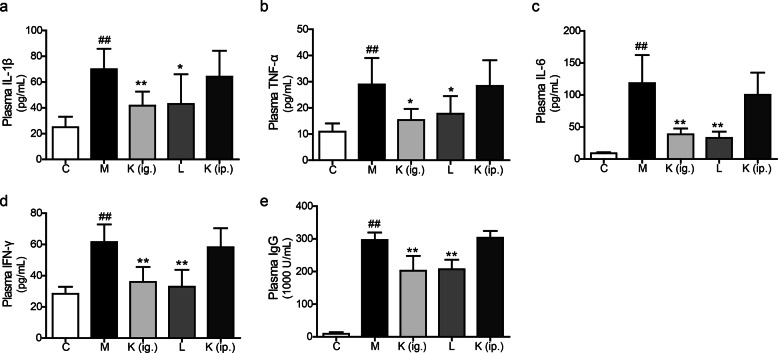
Kaempferol decreases inflammatory cytokine and pathogenic antibody secretion in CIA mice. The levels of proinflammatory cytokines a IL-1β, b TNF-α, c IL-6, and d IFN-γ and e anti-CII antibodies. Mean ± SD, n = 6. C: control, M: model, K (ig.): oral administration of kaempferol, K (ip.): intraperitoneal injection of kaempferol, L: leflunomide. ##P < 0.01 vs. C; *P < 0.05, **P < 0.01 vs. M
Fig. 3
Fig. 3
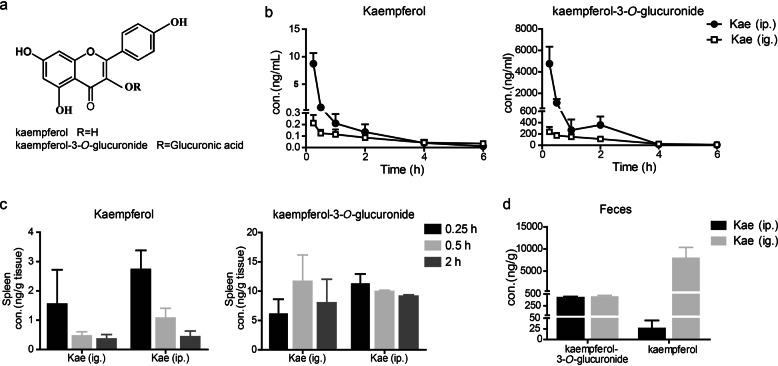
Pharmacokinetic profile of kaempferol and kaempferol-3-O-glucuronide after the oral administration (200 mg/kg) or intraperitoneal injection (20 mg/kg) of kaempferol. a The chemical structure of kaempferol and kaempferol-3-O-glucuronide. b Mean plasma concentration–time profile of kaempferol and kaempferol-3-O-glucuronide, n = 8. c Splenic distribution profiles of kaempferol and kaempferol-3-O-glucuronide, n = 6. d The concentration of kaempferol and kaempferol-3-O-glucuronide in feces collected in 24 h. Mean ± SD, n = 6. K (ig.): oral administration of kaempferol, K (ip.): intraperitoneal injection of kaempferol
Fig. 4
Fig. 4
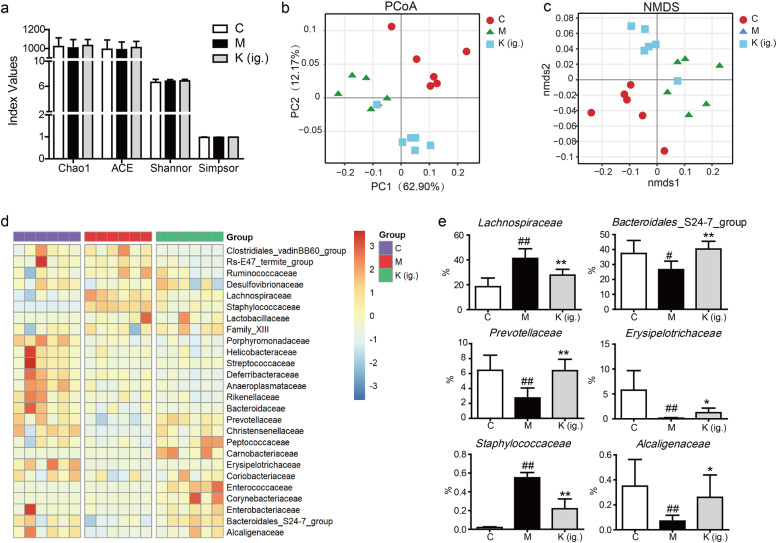
Kaempferol treatment modulates intestinal microbial composition in CIA mice. a α-Diversity assessed by Chao, Shannon, Simpson, and ACE indices in the control, model and kaempferol groups. b, c A plot of unconstrained principal coordinate analysis and nonmetric multidimensional scaling based on weighted UniFrac distances. d The microbial communities at the family level. e The representative microbial community was altered at the family level in the kaempferol treatment group compared with that of the CIA treatment group. Mean ± SD, n = 6. C: control, M: model, K (ig.): oral administration of kaempferol. #P < 0.05, ##P < 0.01 vs. C; *P < 0.05, **P < 0.01 vs. M
Fig. 5
Fig. 5
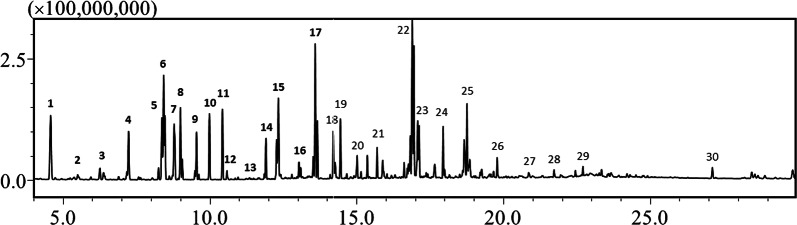
Typical GC/MS chromatogram of the extracted molecules in feces. Typical compounds are identified and numbered as follows: 1. Lactate; 2. Oxalic acid; 3. 2-Aminobutyric acid; 4. L-Norvaline; 5. L-Alanine; 6. Phosphoric acid; 7. L-Isoleucine; 8. Glycine; 9. Uracil; 10. Serine; 11. L-Threonine; 12. Thymine; 13. Homoserine; 14. Malic acid; 15. L-Aspartic acid; 16. 2-ketoglutaric acid; 17. L-Glutamic acid; 18. Ribose; 19. Arabinose; 20. Fucose; 21. Hypoxanthine; 22. Glucose; 23. Mannose; 24. Xanthine; 25. Myo-Inositol; 26. L-Tryptophan; 27. Arachidonic acid; 28. Uridine; 29. Inosine; and 30. Cholesterol
Fig. 6
Fig. 6
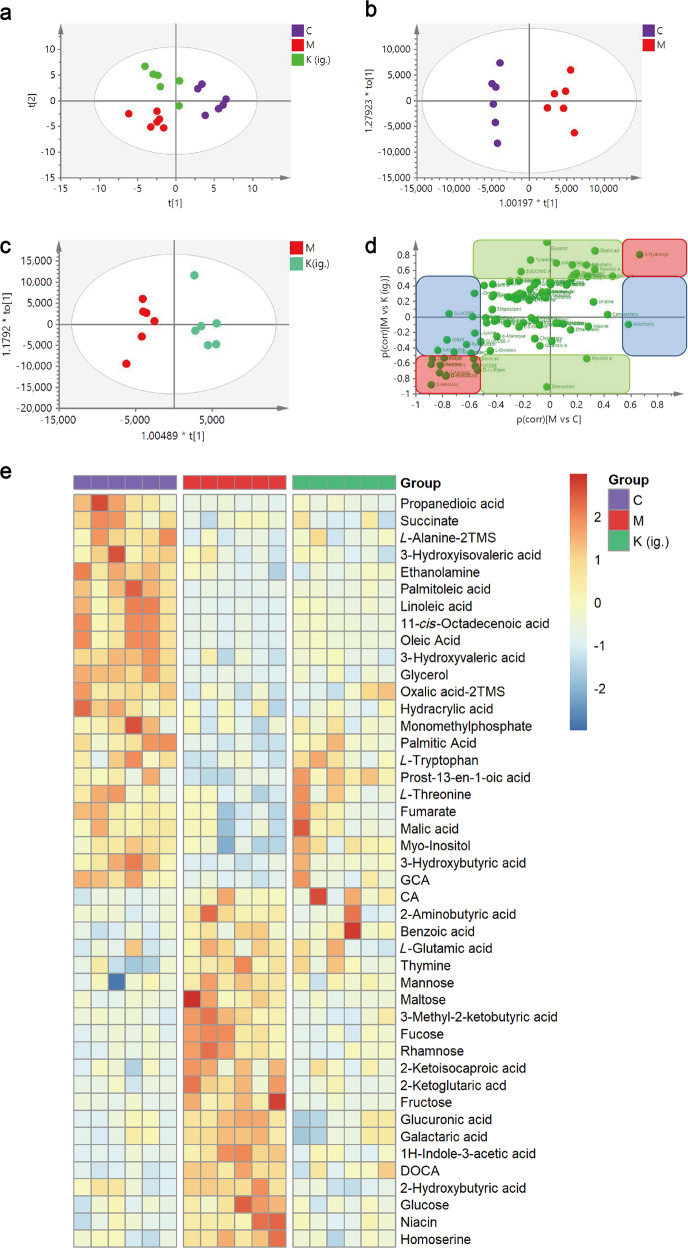
Kaempferol treatment modulates the metabolites in fecal samples of CIA mice. Metabolic patterns of the three groups of mice based on the multivariate statistical analysis of the GC/MS data. a The score plots of the three groups and their PLS-DA models for fecal data; b CIA vs. normal groups and their OPLS-DA models for fecal data; c kaempferol treatment vs. CIA treatment and the OPLS-DA for fecal data; d SUS plot of fecal samples correlating the OPLS-DA models of CIA versus the control (x-axis) and CIA versus kaempferol treatment (y-axis). Accordingly, the variables in the lower left corners and higher right corners are the compounds whose levels were reversed after kaempferol treatment of CIA mice (red box). However, metabolites located along the axes were specifically altered in the model group (blue boxes) and the normal group (green boxes). e Heatmap visualizing the intensities of differential metabolites in the fecal samples (n = 6). C: control, M: model, K (ig.): oral administration of kaempferol
Fig. 7
Fig. 7
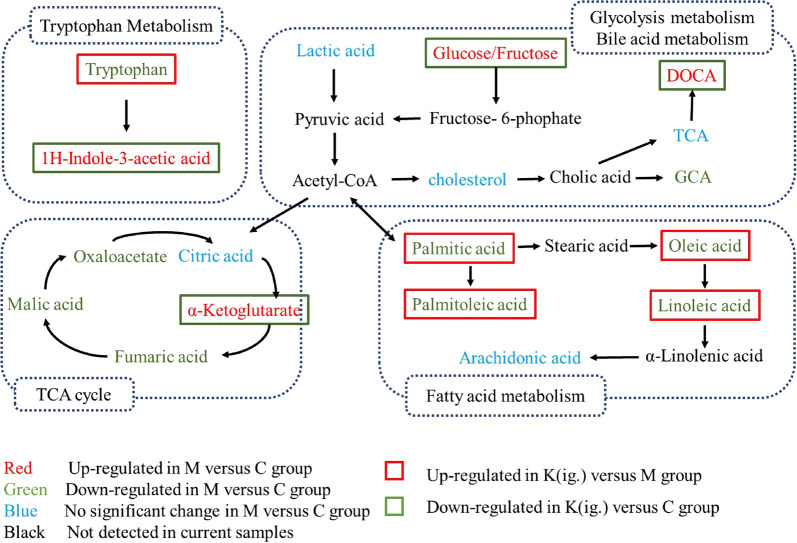
Typical metabolites and associated pathways modulated by kaempferol treatment

References

    1. Scott DL, Wolfe F, Huizinga TW. Rheumatoid arthritis. Lancet. 2010;376:1094–1108. doi: 10.1016/S0140-6736(10)60826-4. - DOI - PubMed
    1. Smolen JS, Aletaha D, McInnes IB. Rheumatoid arthritis. Lancet. 2016;388:2023–38. doi: 10.1016/S0140-6736(16)30173-8. - DOI - PubMed
    1. Jin J, Chang Y, Wei W. Clinical application and evaluation of anti-TNF-alpha agents for the treatment of rheumatoid arthritis. Acta Pharmacol Sin. 2010;31:1133–40. doi: 10.1038/aps.2010.134. - DOI - PMC - PubMed
    1. Shi W, Wang YM, Li SL, Yan M, Li D, Chen BY, et al. Risk factors of adverse drug reaction from non-steroidal anti-inflammatory drugs in Shanghai patients with arthropathy. Acta Pharmacol Sin. 2004;25:357–65. - PubMed
    1. He D. Y., Dai S. M. Anti-inflammatory and immunomodulatory effects of Paeonia lactiflora Pall., a traditional Chinese herbal medicine. Front Pharmacol. 2011;2:10. - PMC - PubMed

MeSH terms