


Developing an integrated intervention to address intimate partner violence and psychological distress in Congolese refugee women in Tanzania
- PMID: 31428190
- PMCID: PMC6697920
- DOI: 10.1186/s13031-019-0222-0
Developing an integrated intervention to address intimate partner violence and psychological distress in Congolese refugee women in Tanzania
Abstract
Background: Multi-sectoral, integrated interventions have long been recommended for addressing mental health and its social determinants (e.g., gender-based violence) in settings of ongoing adversity. We developed an integrated health and protection intervention to reduce psychological distress and intimate partner violence (IPV), and tested its delivery by lay facilitators in a low-resource refugee setting.
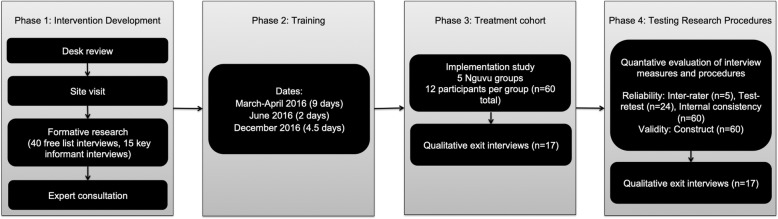
Methods: Formative research to develop the intervention consisted of a structured desk review, consultation with experts and local stakeholders (refugee incentive workers, representatives of humanitarian agencies, and clinical experts), and qualitative interviews (40 free list interviews with refugees, 15 key informant interviews). Given existing efforts by humanitarian agencies to prevent gender-based violence in this particular refugee camp, including with (potential) perpetrators, we focused on a complementary effort to develop an integrated intervention with potential to reduce IPV and associated mental health impacts with female IPV survivors. We enrolled Congolese refugee women with elevated psychological distress and past-year histories of IPV (n = 60) who received the intervention delivered by trained and supervised lay refugee facilitators. Relevance, feasibility and acceptability of the intervention were evaluated through quantitative and qualitative interviews with participants. We assessed instrument test-retest reliability (n = 24), inter-rater reliability (n = 5 interviews), internal consistency, and construct validity (n = 60).
Results: We designed an 8-session intervention, termed Nguvu ('strength'), incorporating brief Cognitive Processing Therapy (focused on helping clients obtaining skills to overcome negative thoughts and self-perceptions and gain control over the impact these have on their lives) and Advocacy Counseling (focused on increasing autonomy, empowerment and strengthening linkages to community supports). On average, participants attended two-thirds of the sessions. In qualitative interviews, participants recommended adaptations to specific intervention components and provided recommendations regarding coordination, retention, safety concerns and intervention participation incentives. Analysis of the performance of outcome instruments overall revealed acceptable reliability and validity.
Conclusions: We found it feasible to develop and implement an integrated, multi-sectoral mental health and IPV intervention in a refugee camp setting. Implementation challenges were identified and may be informative for future implementation and evaluation of multi-sectoral strategies for populations facing ongoing adversity.
Trial registration: ISRCTN65771265, June 27, 2016.
Keywords: Advocacy; Cognitive processing therapy; Democratic Republic of the Congo; Empowerment; Intimate partner violence; Mental health; Psychological distress; Refugees; Tanzania.
Conflict of interest statement
Competing interestsThe authors declare that they have no competing interests.
Figures
References
-
- Rees S, Tol W, Mohsin M, Tay AK, Tam N, dos Reis N, et al. A high-risk group of pregnant women with elevated levels of conflict-related trauma, intimate partner violence, symptoms of depression and other forms of mental distress in post-conflict Timor-Leste. Transl Psychiatry. 2016;6:e725. doi: 10.1038/tp.2015.212. - DOI - PMC - PubMed
Grants and funding
LinkOut - more resources
Full Text Sources
Medical
Miscellaneous
