


Transcriptome-wide association study of multiple myeloma identifies candidate susceptibility genes
- PMID: 31429796
- PMCID: PMC6700979
- DOI: 10.1186/s40246-019-0231-5
Transcriptome-wide association study of multiple myeloma identifies candidate susceptibility genes
Abstract
Background: While genome-wide association studies (GWAS) of multiple myeloma (MM) have identified variants at 23 regions influencing risk, the genes underlying these associations are largely unknown. To identify candidate causal genes at these regions and search for novel risk regions, we performed a multi-tissue transcriptome-wide association study (TWAS).
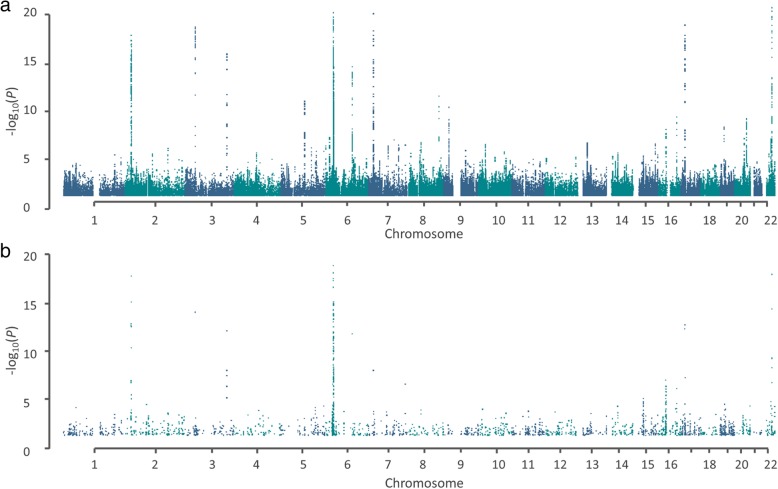
Results: GWAS data on 7319 MM cases and 234,385 controls was integrated with Genotype-Tissue Expression Project (GTEx) data assayed in 48 tissues (sample sizes, N = 80-491), including lymphocyte cell lines and whole blood, to predict gene expression. We identified 108 genes at 13 independent regions associated with MM risk, all of which were in 1 Mb of known MM GWAS risk variants. Of these, 94 genes, located in eight regions, had not previously been considered as a candidate gene for that locus.
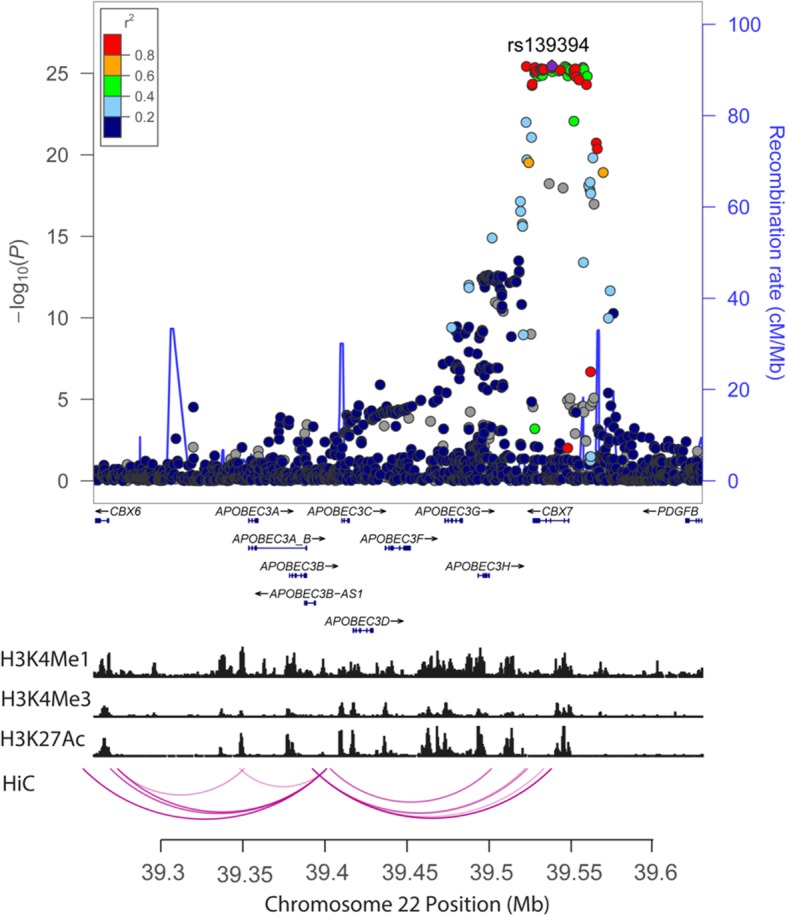
Conclusions: Our findings highlight the value of leveraging expression data from multiple tissues to identify candidate genes responsible for GWAS associations which provide insight into MM tumorigenesis. Among the genes identified, a number have plausible roles in MM biology, notably APOBEC3C, APOBEC3H, APOBEC3D, APOBEC3F, APOBEC3G, or have been previously implicated in other malignancies. The genes identified in this TWAS can be explored for follow-up and validation to further understand their role in MM biology.
Keywords: Gene expression; Genome-wide association study; Multiple myeloma; Transcriptome-wide association study.
Conflict of interest statement
The authors declare that they have no competing interests.
Figures
References
-
- Altieri A, Chen B, Bermejo JL, Castro F, Hemminki K. Familial risks and temporal incidence trends of multiple myeloma. Eur J Cancer (Oxford, England: 1990) 2006;42(11):1661–1670. - PubMed
-
- Sud A, Kinnersley B, Houlston RS. Genome-wide association studies of cancer: current insights and future perspectives. Nat Rev Cancer. 2017;17(11):692–704. - PubMed
Publication types
MeSH terms
Substances
Grants and funding
LinkOut - more resources
Full Text Sources
Medical
Miscellaneous
