


Natural History and Evolution of Anti-Interferon-γ Autoantibody-Associated Immunodeficiency Syndrome in Thailand and the United States
- PMID: 31429907
- PMCID: PMC7312243
- DOI: 10.1093/cid/ciz786
Natural History and Evolution of Anti-Interferon-γ Autoantibody-Associated Immunodeficiency Syndrome in Thailand and the United States
Abstract
Background: The natural history of anti-interferon-γ (IFN-γ) autoantibody-associated immunodeficiency syndrome is not well understood.
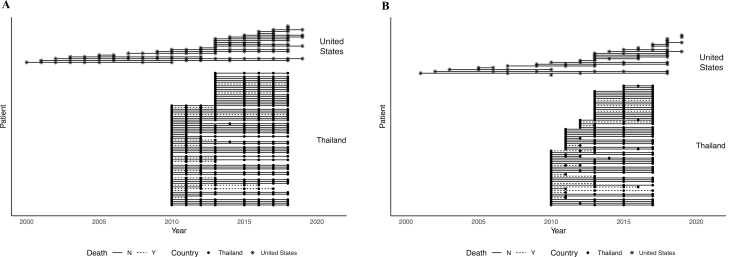
Methods: Data of 74 patients with anti-IFN-γ autoantibodies at Srinagarind Hospital, Thailand, were collected annually (median follow-up duration, 7.5 years). Annual data for 19 patients and initial data for 4 patients with anti-IFN-γ autoantibodies at the US National Institutes of Health were collected (median follow-up duration, 4.5 years). Anti-IFN-γ autoantibody levels were measured in plasma samples.
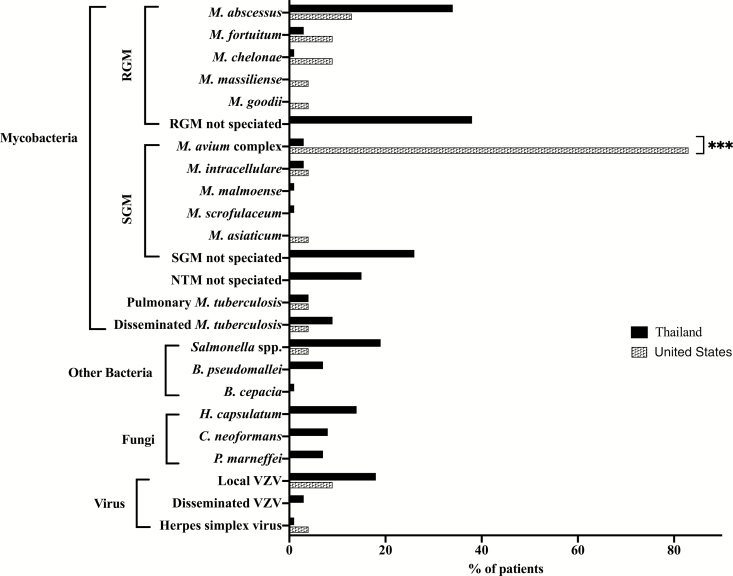
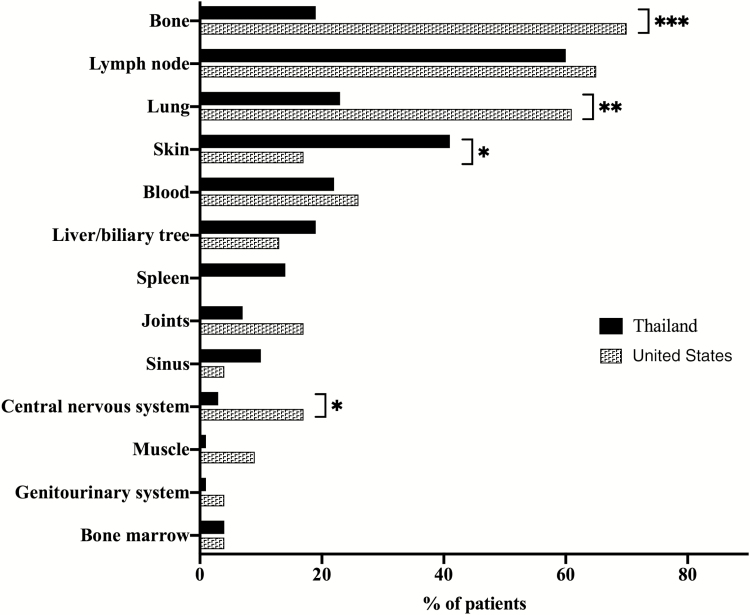
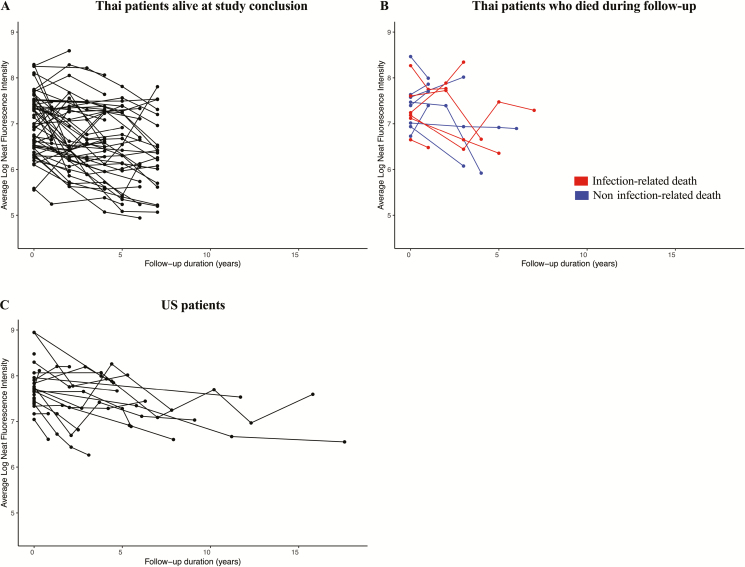
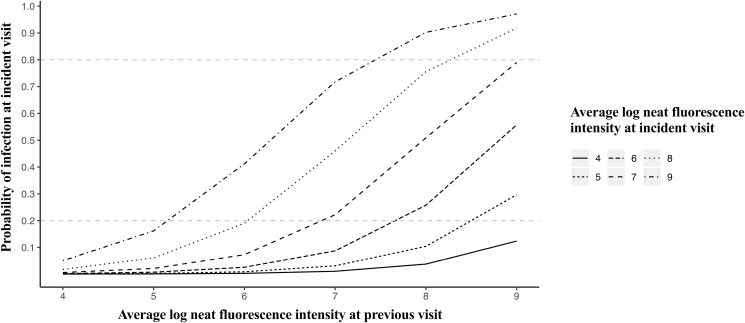
Results: Ninety-one percent of US patients were of Southeast Asian descent; there was a stronger female predominance (91%) in US than Thai (64%) patients. Mycobacterium abscessus (34%) and Mycobacterium avium complex (83%) were the most common nontuberculous mycobacteria in Thailand and the United States, respectively. Skin infections were more common in Thailand (P = .001), whereas bone (P < .0001), lung (P = .002), and central nervous system (P = .03) infections were more common in the United States. Twenty-four percent of Thai patients died, most from infections. None of the 19 US patients with follow-up data died. Anti-IFN-γ autoantibody levels decreased over time in Thailand (P < .001) and the United States (P = .017), with either cyclophosphamide (P = .01) or rituximab therapy (P = .001).
Conclusions: Patients with anti-IFN-γ autoantibodies in Thailand and the United States had distinct demographic and clinical features. While titers generally decreased with time, anti-IFN-γ autoantibody disease had a chronic clinical course with persistent infections and death. Close long-term surveillance for new infections is recommended.
Keywords: adult-onset immunodeficiency; anti-interferon-γ autoantibodies; anticytokine autoantibodies; disseminated nontuberculous mycobacterial infection; opportunistic infection.
Published by Oxford University Press for the Infectious Diseases Society of America 2019.
Figures

Comment in
-
When to Test for Anti-Interferon-γ Autoantibody?Clin Infect Dis. 2020 Oct 23;71(7):e199. doi: 10.1093/cid/ciaa129. Clin Infect Dis. 2020. PMID: 32052830 No abstract available.
References
-
- Al-Muhsen S, Casanova JL. The genetic heterogeneity of Mendelian susceptibility to mycobacterial diseases. J Allergy Clin Immunol 2008; 122:1043–51; quiz 1052–3. - PubMed
-
- Wu UI, Holland SM. Host susceptibility to non-tuberculous mycobacterial infections. Lancet Infect Dis 2015; 15:968–80. - PubMed
-
- Browne SK, Holland SM. Anticytokine autoantibodies in infectious diseases: pathogenesis and mechanisms. Lancet Infect Dis 2010; 10:875–85. - PubMed
-
- Chetchotisakd P, Mootsikapun P, Anunnatsiri S, et al. Disseminated infection due to rapidly growing mycobacteria in immunocompetent hosts presenting with chronic lymphadenopathy: a previously unrecognized clinical entity. Clin Infect Dis 2000; 30:29–34. - PubMed
Publication types
MeSH terms
Substances
LinkOut - more resources
Full Text Sources
Medical
