


Determinants of postnatal care utilization in Tigray, Northern Ethiopia: A community based cross-sectional study
- PMID: 31430356
- PMCID: PMC6701787
- DOI: 10.1371/journal.pone.0221161
Determinants of postnatal care utilization in Tigray, Northern Ethiopia: A community based cross-sectional study
Abstract
Introduction: Globally, 289,000 women die from complications related to pregnancy, childbirth, or the postnatal period every year. Two-thirds of all maternal deaths occur during the first six weeks following birth and more than two thirds of newborn deaths occur during the first week of life, These statistics underscore the importance of postnatal care, an often neglected service according to the World Health Organization (WHO). The purpose of this study was to assess the factors associated with postnatal service utilization in the Tigray region of Ethiopia.
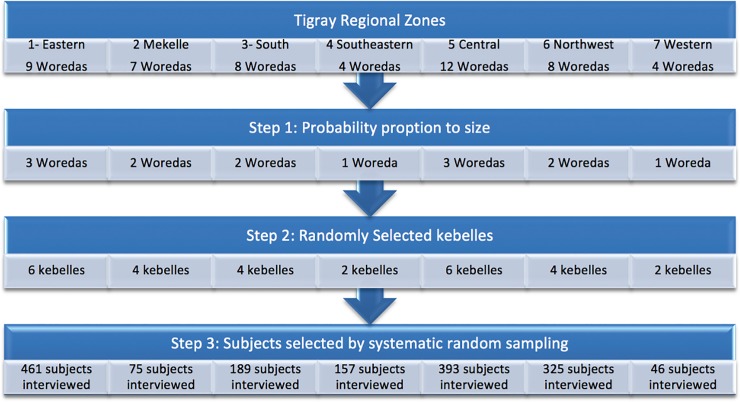
Methods: The study was a community-based, cross-sectional study. A multi-stage sampling method was used to select study districts randomly from the entire region. A total of 1,690 participants were selected using systematic random sampling. Participants were 18-49 years old, had given birth within the last six months, and were residents of the district for at least six months. Using SPSS version 20 means, frequencies, and percentages were calculated for the sub-group of participants who did attend postnatal care. Barriers to non-attendance of postatal care were analyzed using descriptive statistics. Bivariate analysis was undertaken to assess the association between demographic, obstetric, and knowledge regarding PNC and attendance at antenatal care. Variables with a P value, <0.05 were included in the multivariate logistic regression analysis to identify the determinant factors of postnatal care utilization.
Result: Of the women surveyed, 132 (8%) obtained postnatal care. Women who did not receive postnatal care reported lack of awareness of the services (n = 1110, 73.3%). Most mothers who received postnatal care reported that they were aware of the service prior to the birth of their child (n = 101, 76.5%). Women were more likely to receive postnatal services if they lived in an urban area (odds ratio 1.96, 95% confidence interval 1.07, 3.59), had greater than a secondary education (OR 3.60, 95% CI 1.32,9.83), delivered by cesarean section (OR 2.88 95% CI 1.32,6.29), had four or more antenatal visits (OR 4.84, 95% CI 1.57,14.9), or had a planned pregnancy (OR 6.47, 95% CI 2.04,20.5).
Conclusion: Postnatal care service utilization is very low in Tigray region. Interventions targeted at increasing women's awareness of the importance of postnatal services and improving accessibility, particularly in rural areas, is needed.
Conflict of interest statement
The authors have declared that no competing interests exist.
Figures
References
-
- Trends in maternal mortality: 1990 to 2013 Estimates by WHO, UNICEF, UNFPA, The World Bank and the United Nations Population Division. Geneva: World Health Organization; 2014.
-
- Trends in maternal mortality: 1990 to 2010 WHO, UNICEF, UNFPA and The World Bank Estimates. Geneva: World Health Organization; 2012.
-
- Sines E, Syed U, Wall S, Worley H. "Postnatal care: A critical opportunity to save mothers and newborns. 2007." Population Reference Bureau, Washington DC Google Scholar 2015.
Publication types
MeSH terms
LinkOut - more resources
Full Text Sources
Medical
