Block Copolymer Nanoparticles Prepared via Polymerization-Induced Self-Assembly Provide Excellent Boundary Lubrication Performance for Next-Generation Ultralow-Viscosity Automotive Engine Oils
- PMID: 31430432
- PMCID: PMC7007003
- DOI: 10.1021/acsami.9b12472
Block Copolymer Nanoparticles Prepared via Polymerization-Induced Self-Assembly Provide Excellent Boundary Lubrication Performance for Next-Generation Ultralow-Viscosity Automotive Engine Oils
Abstract
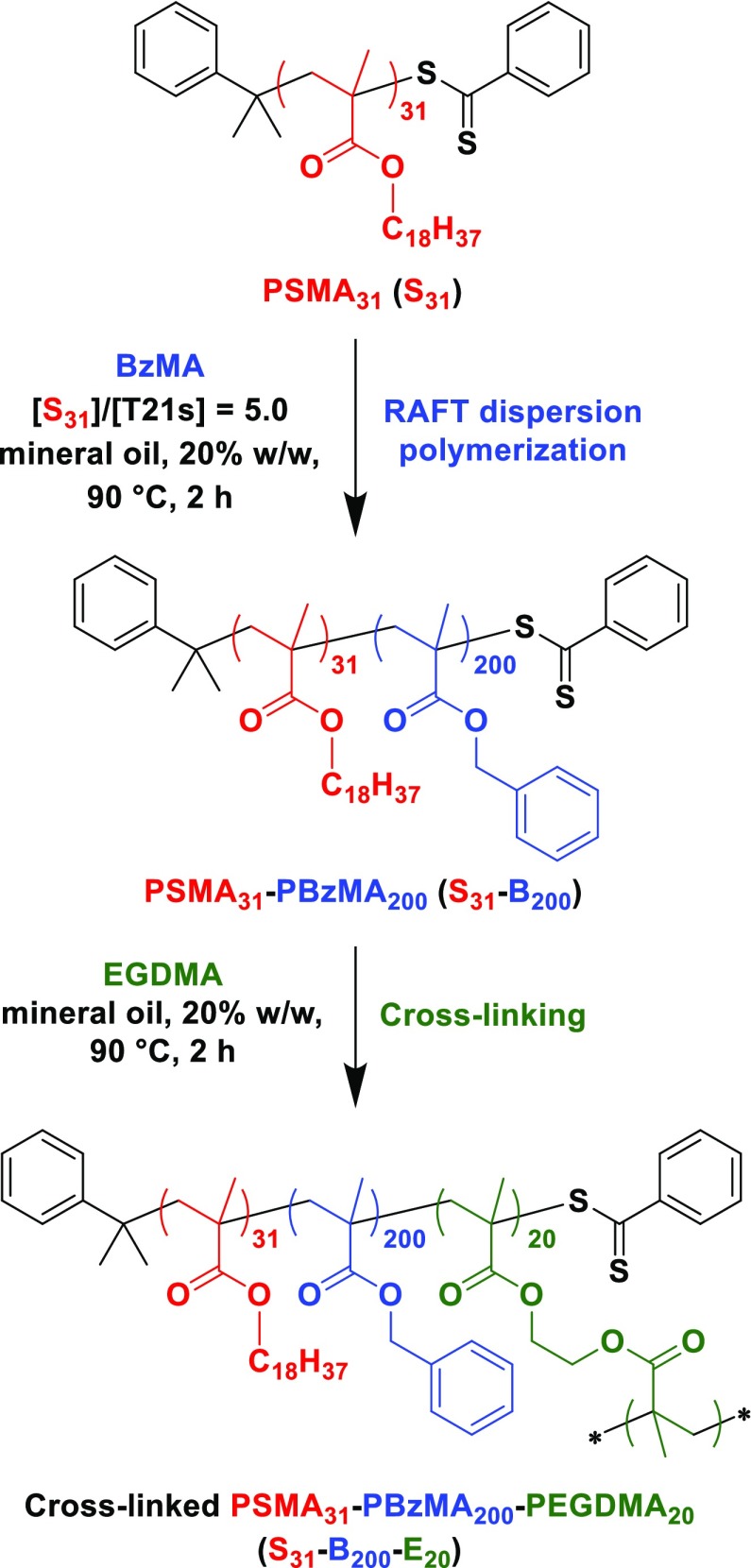
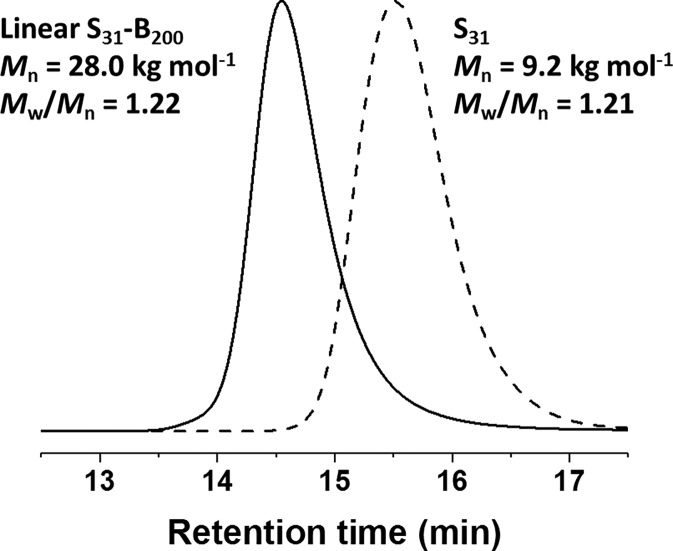
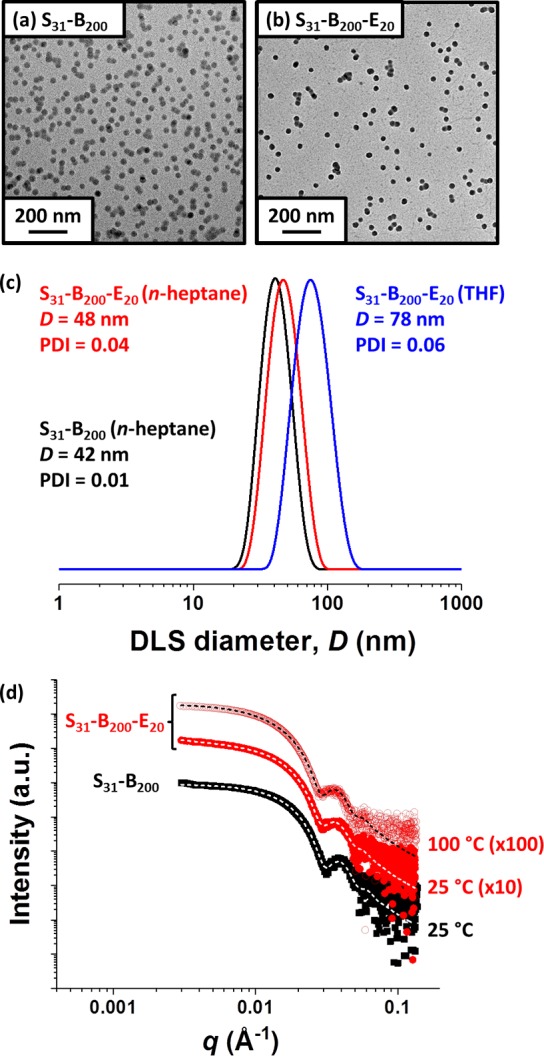
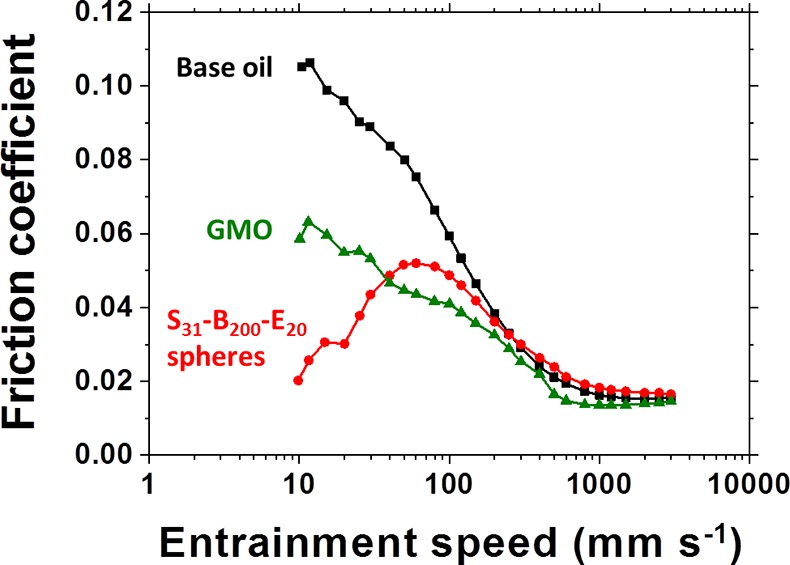
Core cross-linked poly(stearyl methacrylate)-poly(benzyl methacrylate)-poly(ethylene glycol dimethacrylate) [S31-B200-E20] triblock copolymer nanoparticles were synthesized directly in an industrial mineral oil via polymerization-induced self-assembly (PISA). Gel permeation chromatography analysis of the S31-B200 diblock copolymer precursor chains indicated a well-controlled reversible addition-fragmentation chain transfer dispersion polymerization, while transmission electron microscopy, dynamic light-scattering (DLS), and small-angle X-ray scattering studies indicated the formation of well-defined spheres. Moreover, DLS studies performed in THF, which is a common solvent for the S and B blocks, confirmed successful covalent stabilization because well-defined solvent-swollen spheres were obtained under such conditions. Tribology experiments using a mini-traction machine (MTM) indicated that 0.50% w/w dispersions of S31-B200-E20 spheres dramatically reduce the friction coefficient of base oil within the boundary lubrication regime. Given their efficient and straightforward PISA synthesis at high solids, such nanoparticles offer new opportunities for the formulation of next-generation ultralow-viscosity automotive engine oils.
Keywords: block copolymer nanoparticles; boundary lubrication; polymerization-induced self-assembly; reversible addition-fragmentation chain transfer polymerization; tribology.
Conflict of interest statement
The authors declare no competing financial interest.
Figures
References
-
- Covitch M. J.; Brown M.; May C.; Selby T.; Goldmints I.; George D. Extending SAE J300 to Viscosity Grades below SAE 20. SAE International Journal of Fuels and Lubricants 2010, 3, 1030–1040. 10.4271/2010-01-2286. - DOI
-
- Fink J. K.Chapter 3—Thickeners. In Hydraulic Fracturing Chemicals and Fluids Technology; Gulf Professional Publishing: Houston, TX, 2013; pp 35–57.
-
- Zheng R.; Liu G.; Devlin M.; Hux K.; Jao T.-C. Friction reduction of lubricant base oil by micelles and crosslinked micelles of block copolymers. Tribol. Trans. 2009, 53, 97–107. 10.1080/10402000903226390. - DOI
-
- Holmberg K.; Andersson P.; Erdemir A. Global energy consumption due to friction in passenger cars. Tribol. Int. 2012, 47, 221–234. 10.1016/j.triboint.2011.11.022. - DOI
-
- Ali M. K. A.; Xianjun H. Improving the tribological behavior of internal combustion engines via the addition of nanoparticles to engine oils. Nanotechnol. Rev. 2015, 4, 347–358. 10.1515/ntrev-2015-0031. - DOI
LinkOut - more resources
Full Text Sources
Other Literature Sources