Meta-Analysis
. 2019 Oct 1;4(10):1007-1018.
doi: 10.1001/jamacardio.2019.2952.

Assessment of Prognostic Value of Left Ventricular Global Longitudinal Strain for Early Prediction of Chemotherapy-Induced Cardiotoxicity: A Systematic Review and Meta-analysis

Affiliations
Meta-Analysis

Assessment of Prognostic Value of Left Ventricular Global Longitudinal Strain for Early Prediction of Chemotherapy-Induced Cardiotoxicity: A Systematic Review and Meta-analysis

Evangelos K Oikonomou et al. JAMA Cardiol. .

Abstract

Importance: Echocardiographic left ventricular global longitudinal strain (GLS) detects early subclinical ventricular dysfunction and can be used in patients receiving potentially cardiotoxic chemotherapy. A meta-analysis of the prognostic value of GLS for cancer therapy-related cardiac dysfunction (CTRCD) has not been performed, to our knowledge.

Objective: To explore the prognostic value of GLS for the prediction of CTRCD.

Data sources: Systematic search of the MEDLINE, Embase, Scopus, and the Cochrane Library databases from database inception to June 1, 2018.

Study selection: Cohort studies assessing the prognostic or discriminatory performance of GLS before or during chemotherapy for subsequent CTRCD.

Data extraction and synthesis: Random-effects meta-analysis and hierarchical summary receiver operating characteristic curves (HSROCs) were used to summarize the prognostic and discriminatory performance of different GLS indices. Publication bias was assessed using the Egger test, and meta-regression was performed to assess sources of heterogeneity.

Main outcomes and measures: The primary outcome was CTRCD, defined as a clinically significant change in left ventricular ejection fraction with or without new-onset heart failure symptoms.

Results: Analysis included 21 studies comprising 1782 patients with cancer, including breast cancer, hematologic malignancies, or sarcomas, treated with anthracyclines with or without trastuzumab. The incidence of CTRCD ranged from 9.3% to 43.8% over a mean follow-up of 4.2 to 23.0 months (pooled incidence, 21.0%). For active treatment absolute GLS (9 studies), the high-risk cutoff values ranged from -21.0% to -13.8%, with worse GLS associated with a higher CTRCD risk (odds ratio, 12.27; 95% CI, 7.73-19.47; area under the HSROC, 0.86; 95% CI, 0.83-0.89). For relative changes vs a baseline value (9 studies), cutoff values ranged from 2.3% to 15.9%, with a greater decrease linked to a 16-fold higher risk of CTRCD (odds ratio, 15.82; 95% CI, 5.84-42.85; area under the HSROC, 0.86; 95% CI, 0.83-0.89). Both indices showed significant publication bias. Meta-regression identified differences in sample size and CTRCD definition but not GLS cutoff value as significant sources of interstudy heterogeneity.

Conclusions and relevance: In this meta-analysis, measurement of GLS after initiation of potentially cardiotoxic chemotherapy with anthracyclines with or without trastuzumab had good prognostic performance for subsequent CTRCD. However, risk of bias in the original studies, publication bias, and limited data on the incremental value of GLS and its optimal cutoff values highlight the need for larger prospective multicenter studies.


Conflict of interest statement

Conflict of Interest Disclosures: None reported.

Figures

Figure 1.
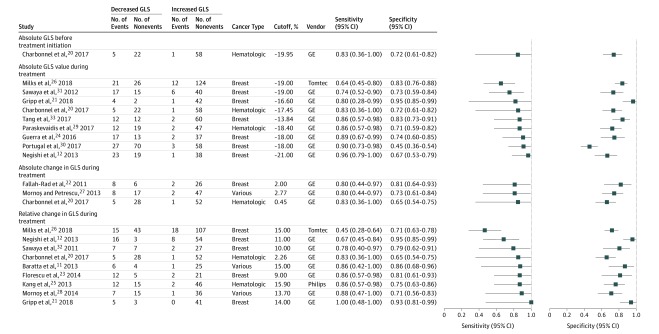
Figure 1.. Sensitivity and Specificity for Cancer Therapy–Related Cardiac Dysfunction Using Different Left Ventricular Global Longitudinal Strain (GLS) Indices and Reported Cutoff Values
GE indicates GE EchoPAC software (General Electric); Philips, QLAB (Philips Medical System); and Tomtec, 2D Cardiac Performance Analysis (TomTec Imaging Systems).
Figure 2.
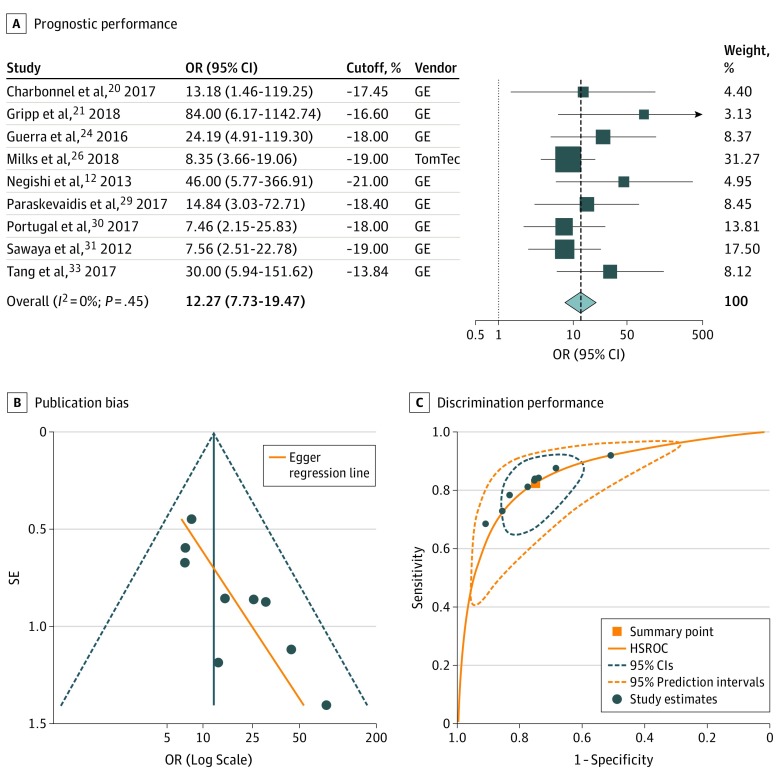
Figure 2.. Prognostic and Discriminatory Performance of Absolute Left Ventricular Global Longitudinal Strain (GLS) Measured After Initiation of Cardiotoxic Chemotherapy for Cancer Therapy–Related Cardiac Dysfunction
A, Forest plot representing the odds ratios (ORs) for each reported cutoff value in each study as well as the overall summary ORs. Weights are taken from random-effects analysis. The estimated 95% prediction intervals for the overall summary OR are 7.03 to 21.42. GE indicates GE EchoPAC software (General Electric); and TomTec, 2D Cardiac Performance Analysis (TomTec Imaging Systems). B, Funnel plot with Egger regression line for assessment of publication bias (P = .006). C, The orange square represents the summary operating point of the curve, a hypothetical point that summarizes the discriminatory value of all reported cutoff values (sensitivity, 0.82; 95% CI, 0.72-0.89; specificity, 0.75; 95% CI, 0.65-0.83; positive likelihood ratio, 3.27; 95% CI, 2.40-4.45; negative likelihood ratio, 0.24; 95% CI, 0.15-0.37). The area under the hierarchical summary receiver operating characteristic curve (HSROC) was 0.86 (95% CI, 0.83-0.89).
Figure 3.
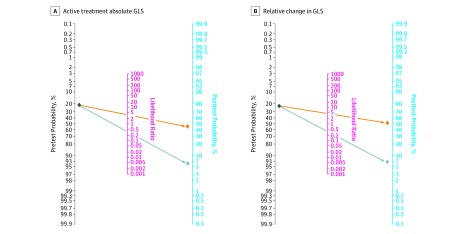
Figure 3.. Posttest Probability of Cancer Therapy–Related Cardiac Dysfunction
A, Fagan nomogram for calculation of posttest probabilities based on low (orange) or high (gray) absolute global longitudinal strain (GLS) measurements during chemotherapy treatment. The unconditional negative predictive value was 0.92 (95% CI, 0.84-0.99), and the unconditional positive predictive value was 0.52 (95% CI, 0.45-0.60). The positive likelihood ratio was 3.27, and the negative likelihood ratio was 0.24. B, Fagan nomogram for calculation of posttest probabilities based on a significant (orange) or nonsignificant (gray) relative change in GLS after initiation of chemotherapy. The calculation of positive and negative predictive values is based on an expected probability of cardiotoxicity between 9.3% and 43.8%. The Fagan nomogram is based on a pretest probability of 21.0%, which is the pooled cardiotoxicity estimate in our study. A positive or negative test is defined based on the summary points calculated from hierarchical summary receiver operating characteristic curves. The unconditional negative predictive value was 0.91 (95% CI, 0.83-0.98), and the unconditional positive predictive value was 0.57 (95% CI, 0.49-0.65). The positive likelihood ratio was 4.05, and the negative likelihood ratio was 0.27.
Figure 4.
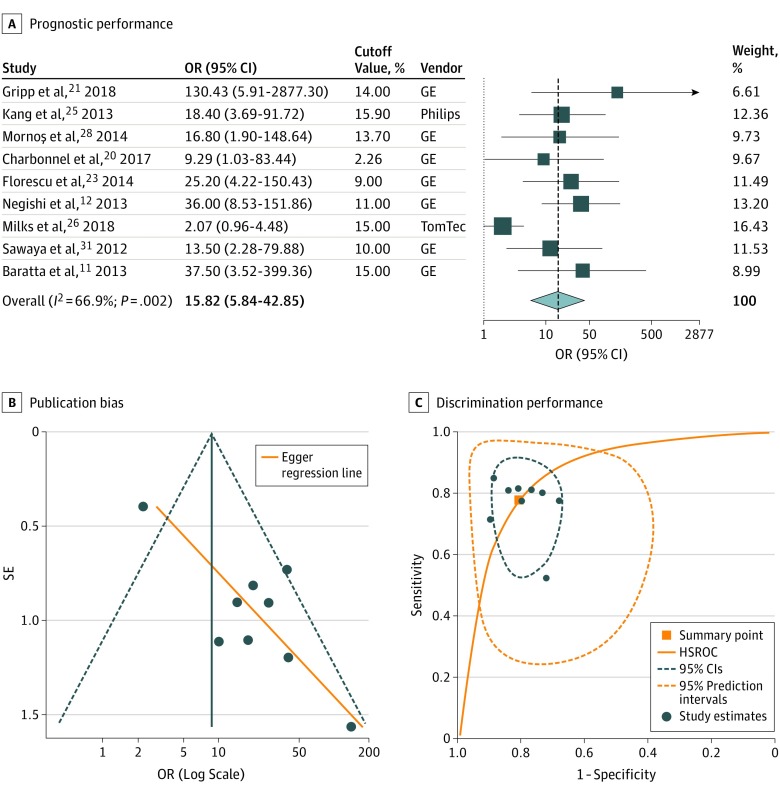
Figure 4.. Prognostic and Discriminatory Performance of Relative Change in GLS Compared With a Baseline Value for Cancer Therapy–Related Cardiac Dysfunction
A, Forest plot representing the odds ratios (ORs) for each reported cutoff value in each study as well as the overall summary ORs. Weights are taken from random-effects analysis. The estimated 95% prediction intervals for the overall summary OR are 0.74 to 338.11. GE indicates GE EchoPAC software (General Electric); Philips, QLAB (Philips Medical System); and Tomtec, 2D Cardiac Performance Analysis (TomTec Imaging Systems). B, Funnel plot with Egger regression line for assessment of publication bias (P = .003). C, The orange square represents the summary operating point of the curve, a hypothetical point that summarizes the discriminatory value of all cutoff values (sensitivity, 0.78; 95% CI, 0.63-0.88; specificity, 0.81; 95% CI, 0.72-0.87; positive likelihood ratio, 4.05; 95% CI, 2.65-6.21; negative likelihood ratio, 0.27; 95% CI, 0.15-0.49). The area under the hierarchical summary receiver operating characteristic curve (HSROC) was 0.86 (95% CI, 0.83-0.89).

References

    1. Siegel RL, Miller KD, Jemal A. Cancer statistics, 2017. CA Cancer J Clin. 2017;67(1):7-30. doi:10.3322/caac.21387 - DOI - PubMed
    1. Abdel-Qadir H, Austin PC, Lee DS, et al. . A population-based study of cardiovascular mortality following early-stage breast cancer. JAMA Cardiol. 2017;2(1):88-93. doi:10.1001/jamacardio.2016.3841 - DOI - PubMed
    1. Chen J, Long JB, Hurria A, Owusu C, Steingart RM, Gross CP. Incidence of heart failure or cardiomyopathy after adjuvant trastuzumab therapy for breast cancer. J Am Coll Cardiol. 2012;60(24):2504-2512. doi:10.1016/j.jacc.2012.07.068 - DOI - PubMed
    1. Seidman A, Hudis C, Pierri MK, et al. . Cardiac dysfunction in the trastuzumab clinical trials experience. J Clin Oncol. 2002;20(5):1215-1221. doi:10.1200/JCO.2002.20.5.1215 - DOI - PubMed
    1. Plana JC, Galderisi M, Barac A, et al. . Expert consensus for multimodality imaging evaluation of adult patients during and after cancer therapy: a report from the American Society of Echocardiography and the European Association of Cardiovascular Imaging. J Am Soc Echocardiogr. 2014;27(9):911-939. doi:10.1016/j.echo.2014.07.012 - DOI - PubMed

Publication types

MeSH terms

Substances