


Systematic Review and Meta-Analysis of Prevalence of Coeliac Disease in Women with Infertility
- PMID: 31434238
- PMCID: PMC6723639
- DOI: 10.3390/nu11081950
Systematic Review and Meta-Analysis of Prevalence of Coeliac Disease in Women with Infertility
Abstract
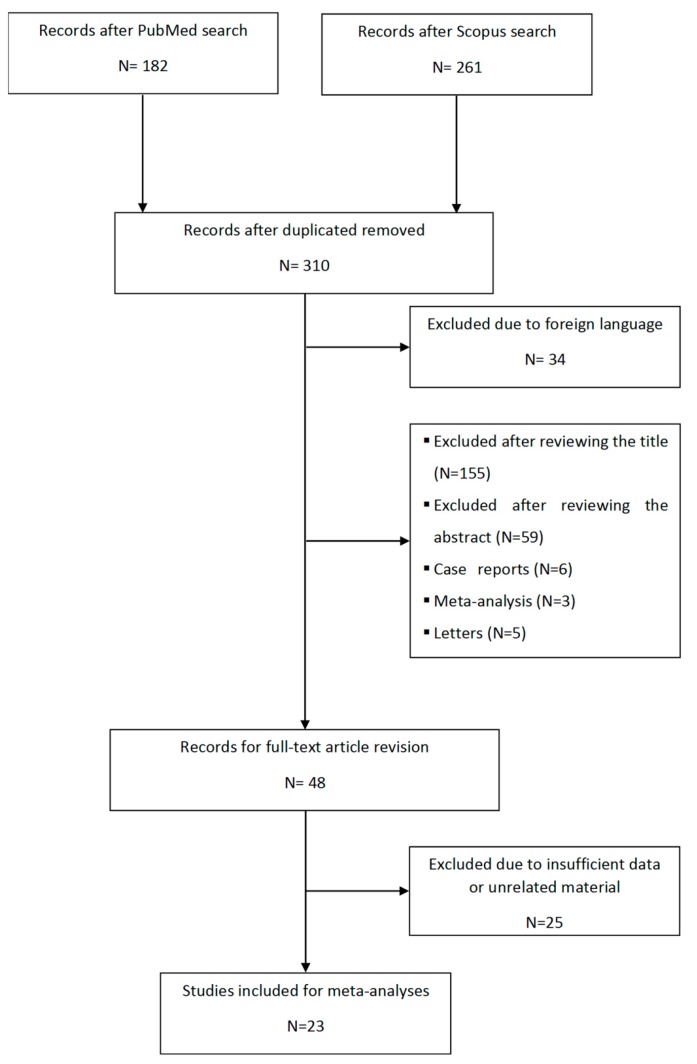
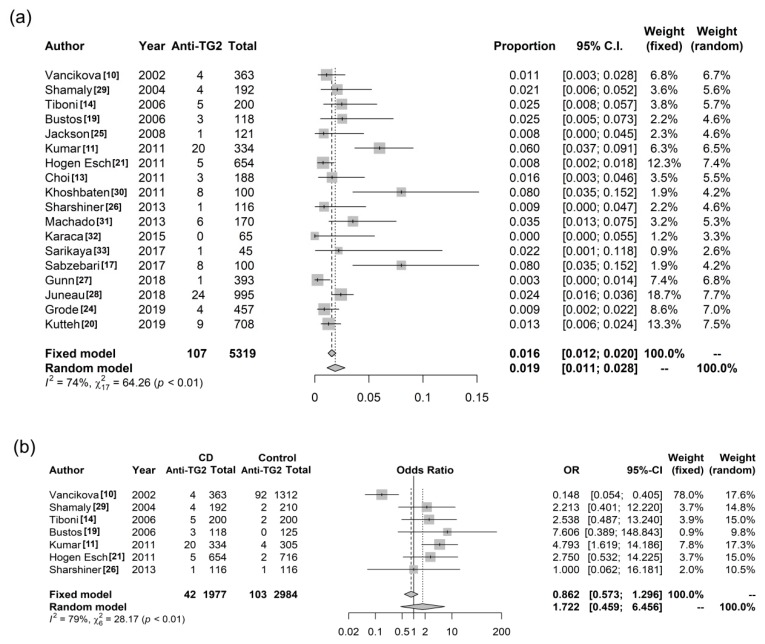
We aimed to estimate the seroprevalence and the prevalence of coeliac disease (CD) in women with reproductive problems. A systematic review of English published articles until June 2019 was performed in PubMed and Scopus using the terms: (infertility and (coeliac disease OR gluten) OR (miscarriage and (coeliac disease OR gluten) OR (abortion and (coeliac disease OR gluten). All articles showing numerical data of anti-transglutaminase type 2 or anti-endomisium antibodies, or intestinal biopsy information were included. The study group comprised women with overall infertility, unexplained infertility, or recurrent spontaneous abortions. Two authors independently performed data extraction using a predefined data sheet. The initial search yielded 310 articles, and 23 were selected for data extraction. After meta-analysis, the pooled seroprevalence was very similar for overall and unexplained infertility, with a pooled proportion of around 1.3%-1.6%. This implies three times higher odds of having CD in infertility when compared to controls. The pooled prevalence could not be accurately calculated due to the small sample sizes. Further studies with increased sample sizes are necessary before giving specific recommendations for CD screening in women with reproductive problems, but current data seem to support a higher risk of CD in these women.
Keywords: coeliac disease; infertility; recurrent abortion; reproductive disorders.
Conflict of interest statement
The authors declare no conflict of interest. The funders had no role in the design of the study; in the collection, analyses, or interpretation of data; in the writing of the manuscript, or in the decision to publish the results.
Figures
References
Publication types
MeSH terms
Substances
LinkOut - more resources
Full Text Sources
Medical
