


A systematic review of the impact of antifungal stewardship interventions in the United States
- PMID: 31434563
- PMCID: PMC6702721
- DOI: 10.1186/s12941-019-0323-z
A systematic review of the impact of antifungal stewardship interventions in the United States
Abstract
Background: Antimicrobial resistance is a widely recognized public health threat, and stewardship interventions to combat this problem are well described. Less is known about antifungal stewardship (AFS) initiatives and their influence within the United States. The purpose of this study was to evaluate evidence on the impact of AFS interventions on clinical and performance measures.
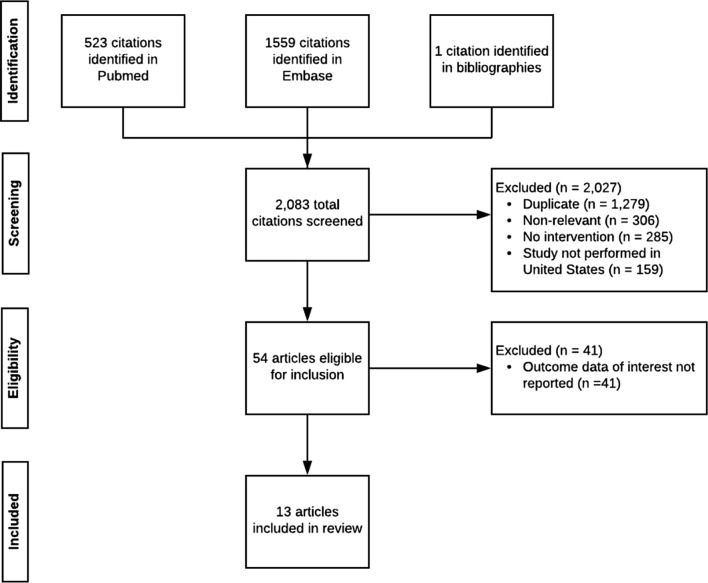
Methods: A systematic review of English language studies identified in the PubMed and EMBASE databases was performed through November 2017. The review was conducted in accordance with PRISMA. Search terms included antifungal stewardship, antimicrobial stewardship, Candida, candidemia, candiduria, and invasive fungal disease. Eligible studies were those that described an AFS program or intervention occurring in the US and evaluated clinical or performance measures.
Results: Fifty-four articles were identified and 13 were included. Five studies evaluated AFS interventions and reported clinical outcomes (mortality and length of stay) and performance measures (appropriate antifungal choice and time to therapy). The remaining eight studies evaluated general stewardship interventions and reported data on antifungal consumption. All studies were single center, quasi-experimental with varying interventions across studies. AFS programs had no impact on mortality (3 of 3 studies), with an overall rate of 27% in the intervention group and 23% in the non-intervention group. Length of stay (5 of 5) was also similar between groups (range, 9-25 vs. 11-22). Time to antifungal therapy improved in 2 of 5 studies, and appropriate choice of antifungal increased in 2 of 2 studies. Antifungal consumption was significantly blunted or reduced following stewardship initiation (8 of 8), although a direct comparison between studies was not possible due to a lack of common units.
Conclusion: The available evidence suggests that AFS interventions can improve performance measures and decrease antifungal consumption. Although this review did not detect improvements in clinical outcomes, significant adverse outcomes were not reported.
Keywords: Antifungal agents; Antifungal stewardship; Antimicrobial stewardship; Invasive fungal disease.
Conflict of interest statement
The authors declare that they have no competing interests.
Figures
References
-
- Centers for Disease Control and Prevention. Antibiotic/antimicrobial resistance. https://www.cdc.gov/drugresistance/index.html. Accessed Apr 23 2019.
-
- Centers for Disease Control and Prevention. Antibiotic resistance threats in the United States, 2013. https://www.cdc.gov/drugresistance/threat-report-2013/pdf/ar-threats-201.... Accessed Apr 28 2019.
-
- Bishop J, Parry MF, Hall T. Decreasing Clostridium difficile infections in surgery: impact of a practice bundle incorporating a resident rounding protocol. Conn Med. 2013;77(2):69–75. - PubMed
-
- Valiquette L, Cossette B, Garant MP, Diab H, Pepin J. Impact of a reduction in the use of high-risk antibiotics on the course of an epidemic of Clostridium difficile-associated disease caused by the hypervirulent NAP1/027 strain. Clin Infect Dis. 2007;45(Suppl 2):S112–S121. - PubMed
Publication types
MeSH terms
Substances
Grants and funding
LinkOut - more resources
Full Text Sources
