


Sex Differences in Long-Term Survival After Major Cardiac Surgery: A Population-Based Cohort Study
- PMID: 31438770
- PMCID: PMC6755832
- DOI: 10.1161/JAHA.119.013260
Sex Differences in Long-Term Survival After Major Cardiac Surgery: A Population-Based Cohort Study
Abstract
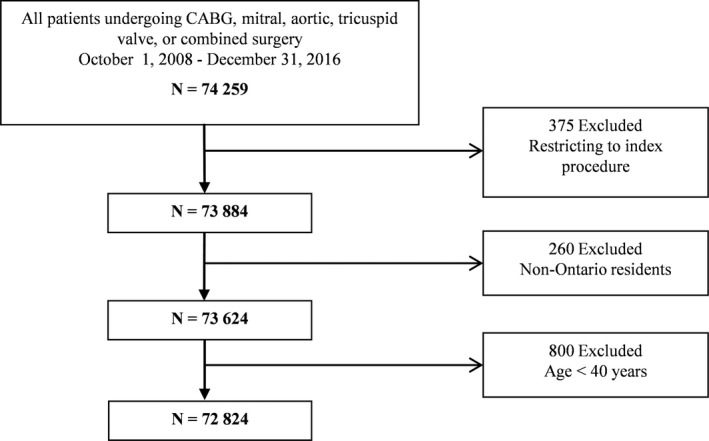
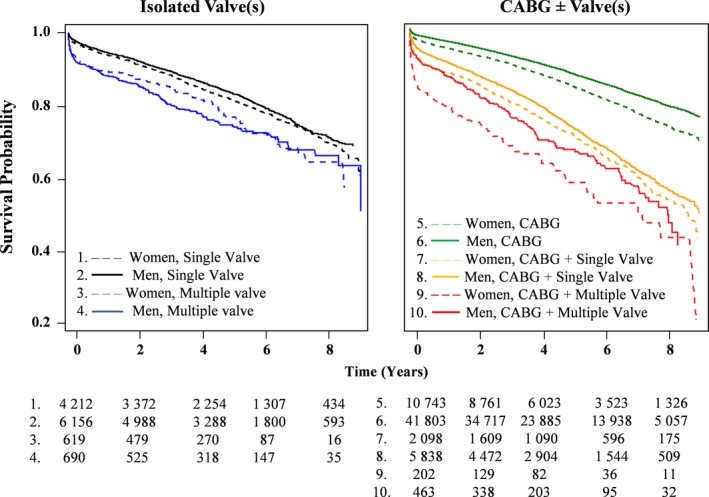
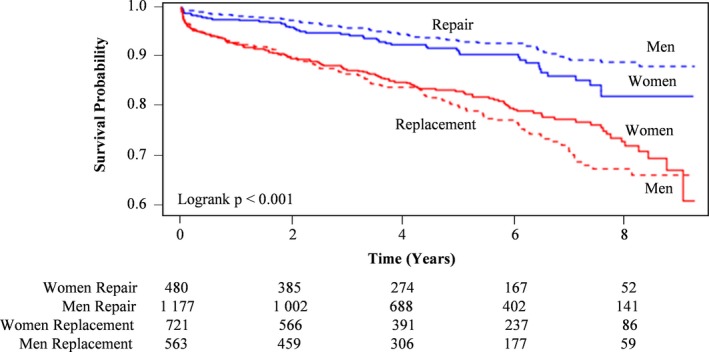
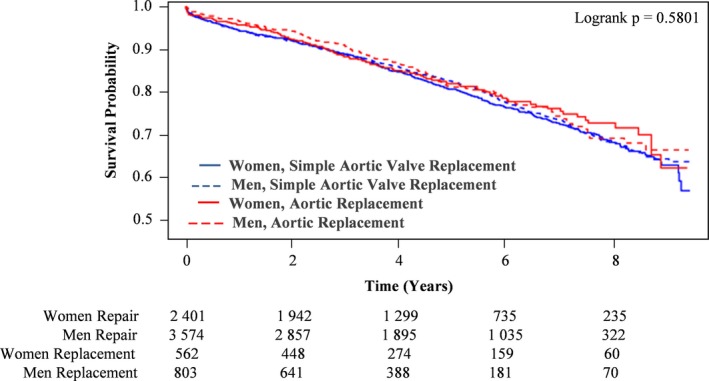
Background Little attention has been paid to the importance of sex in the long-term prognosis of patients undergoing cardiac surgery. Methods and Results We conducted a retrospective cohort study of Ontario residents, aged ≥40 years, who underwent coronary artery bypass grafting (CABG) and/or aortic, mitral, or tricuspid valve surgery between October 1, 2008, and December 31, 2016. The primary outcome was all-cause mortality. The mortality rate in each surgical group was calculated using the Kaplan-Meier method. The risk of death was assessed using multivariable Cox proportional hazard models. Sex-specific mortality risk factors were identified using multiplicative interaction terms. A total of 72 824 patients were included in the study (25% women). The median follow-up period was 5 (interquartile range, 3-7) years. The long-term age-standardized mortality rate was lowest in patients who underwent isolated CABG and highest among those who underwent combined CABG/multiple valve surgery. Women had significantly higher age-standardized mortality rate than men after CABG and combined CABG/mitral valve surgery. Men had lower rates of long-term mortality than women after isolated mitral valve repair, whereas women had lower rates of long-term mortality than men after isolated mitral valve replacement. We observed a statistically significant association between female sex and long-term mortality after adjustment for key risk factors. Conclusions Female sex was associated with long-term mortality after cardiac surgery. Perioperative optimization and long-term follow-up should be tailored to younger women with a history of myocardial infarction and percutaneous coronary intervention and older men with a history of chronic obstructive pulmonary disease and depression.
Keywords: cardiac surgery; coronary revascularization; mortality; sex differences; valve repair; valve replacement.
Figures

References
-
- Kang H, Chung M. Images in clinical medicine: peripheral artery disease. N Engl J Med. 2007;357:e19. - PubMed
-
- Favaloro R. Critical analysis of coronary artery bypass graft surgery: a 30‐year journey. J Am Coll Cardiol. 1998;31:1B–63B. - PubMed
-
- Karim M, Reid C, Huq M, Brilleman S, Cochrane A, Tran L, Billah B. Predicting long‐term survival after coronary artery bypass graft surgery. Interact Cardiovasc Thorac Surg. 2018;26:257–263. - PubMed
-
- Blasberg J, Schwartz G, Balaram S. The role of gender in coronary surgery. Eur J Cardiothorac Surg. 2011;40:715–721. - PubMed
Publication types
MeSH terms
LinkOut - more resources
Full Text Sources
Medical
