


The effect of morbid obesity (BMI ≥ 35 kg/m2) on functional outcome and complication rate following unicompartmental knee arthroplasty: a case-control study
- PMID: 31439046
- PMCID: PMC6704708
- DOI: 10.1186/s13018-019-1316-5
The effect of morbid obesity (BMI ≥ 35 kg/m2) on functional outcome and complication rate following unicompartmental knee arthroplasty: a case-control study
Abstract
Background: The aim of this study was to evaluate and compare the functional outcomes and complication rates of patients in short-term and midterm follow-up period when medial unicompartmental knee arthroplasty (UKA)-applied patients were grouped according to BMI values.
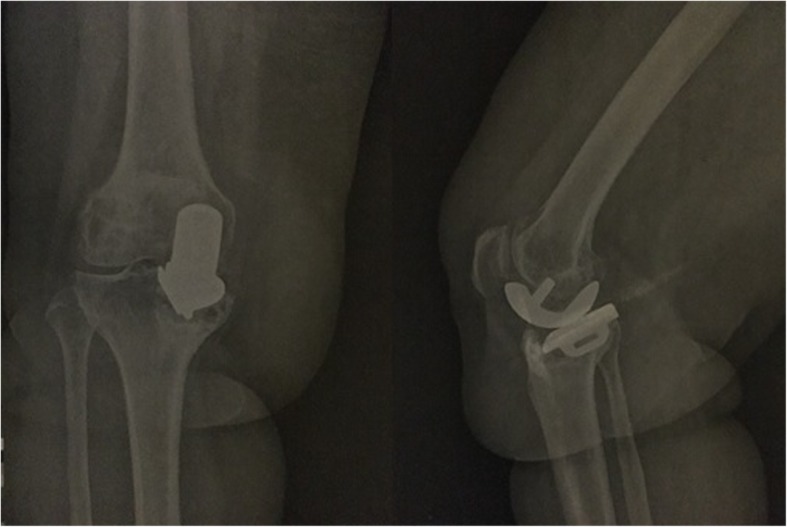
Methods: One hundred four patients (mean age 60.2 ± 7.4 (range, 49-80)) to whom medial UKA was applied between 2011 to 2016 with a minimum of 2 years follow-up were grouped as normal and overweight (less than 30 kg/m2), obese (30-34.9 kg/m2) and morbidly obese (BMI ≥ 35 kg/m2) according to their BMI. The postoperative Knee Society Scores (KSS), functional Knee Society Scores (fKSS), Oxford Knee Scores (OKS), visual analogue scale (VAS) and range of motion (ROM) results and complication rate of these groups were compared statistically. The implant positioning of the patients requiring revision was analysed according to the Oxford radiological criteria.
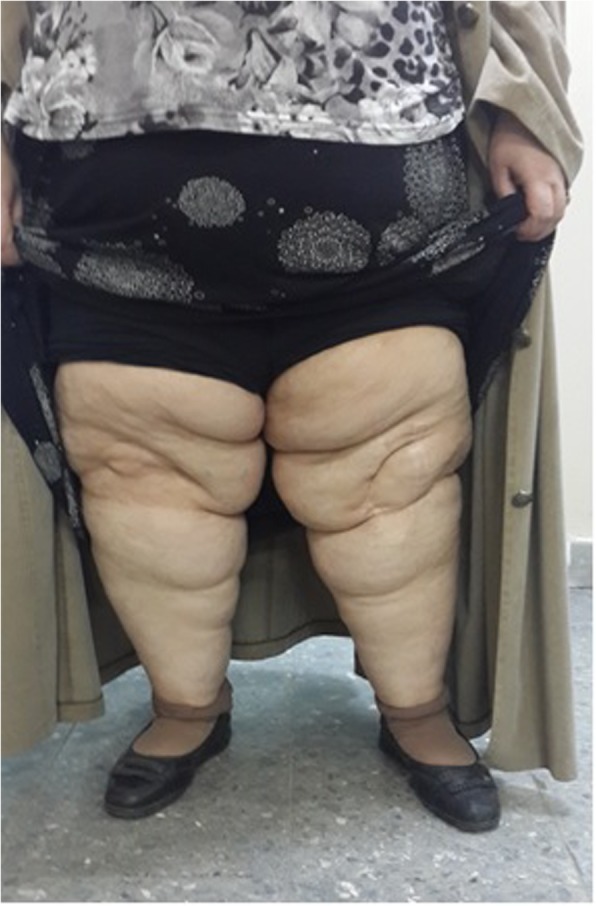
Results: The average BMI of 104 patients was 34.4 (range, 22-56.9). Twenty-six (25%) of these were normal or overweight, 40 (38.5%) were obese and 38 (36.5%) were morbidly obese. However, in these BMI groups, there was no significant difference between the preoperative VAS, postoperative VAS and VAS score changes among these three groups (p > 0.05). The postop KSS, f KSS and OKS were significantly poorer in the morbidly obese group by 75.2, 70.5 and 33.1, respectively. Furthermore, amount of ROM changes (4.2°) were significantly poorer in the morbidly obese group (p < 0.05). Complications including eminence fractures, insert dislocations, tibial component collapses and superficial infections developed in 10 patients (9.6%). Six of them (60%) were morbidly obese, and four of them (40%) were obese. Furthermore, 11 (10.6%) of the patients required revision. Eight (72.7%) of the patients were morbidly obese, and three (27.3%) of them were obese.
Conclusions: We concluded that morbid obesity is an independent risk factor for functional outcomes and implant survival after UKA. However, it is possible to obtain excellent results for obese and overweight patients with good planning and correct surgical technique. Morbid obese patients should be preoperatively informed about poor functional outcome and high complication rate. Treatment of morbid obesity before UKA surgery may be a good option.
Keywords: Knee anteromedial osteoarthritis; Obesity; Unicompartmental arthroplasty.
Conflict of interest statement
The authors declare that they have competing interests.
Figures

References
-
- Anderson JJ, Felson DT. Factors associated with osteoarthritis of the knee in the first national Health and Nutrition Examination Survey (HANES I): evidence for an association with overweight, race, and physical demands of work. Am J Epidemiol. 1988;128:179–189. doi: 10.1093/oxfordjournals.aje.a114939. - DOI - PubMed
MeSH terms
LinkOut - more resources
Full Text Sources
Medical
