


Immersive Virtual Reality as an Adjunctive Non-opioid Analgesic for Pre-dominantly Latin American Children With Large Severe Burn Wounds During Burn Wound Cleaning in the Intensive Care Unit: A Pilot Study
- PMID: 31440148
- PMCID: PMC6694842
- DOI: 10.3389/fnhum.2019.00262
Immersive Virtual Reality as an Adjunctive Non-opioid Analgesic for Pre-dominantly Latin American Children With Large Severe Burn Wounds During Burn Wound Cleaning in the Intensive Care Unit: A Pilot Study
Abstract
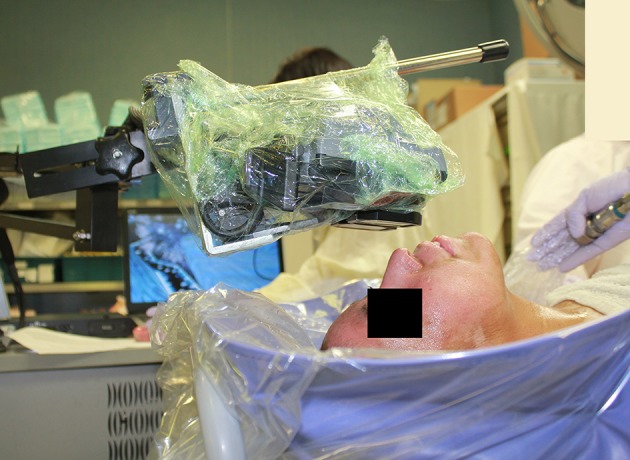
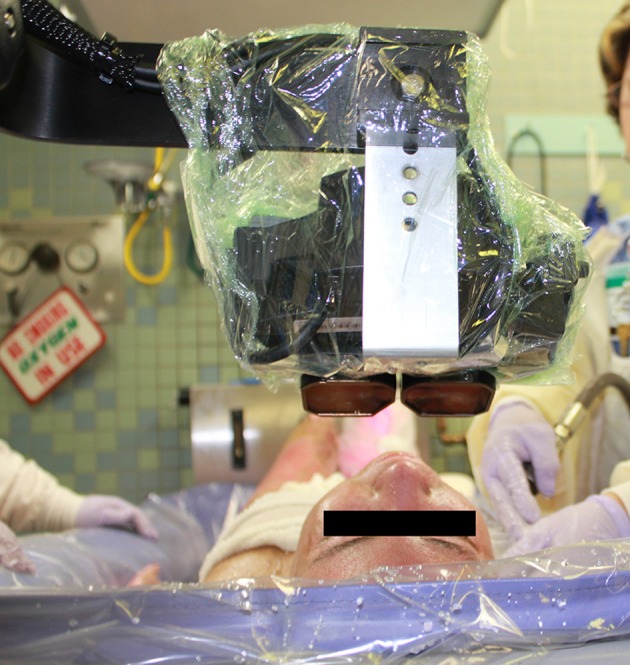
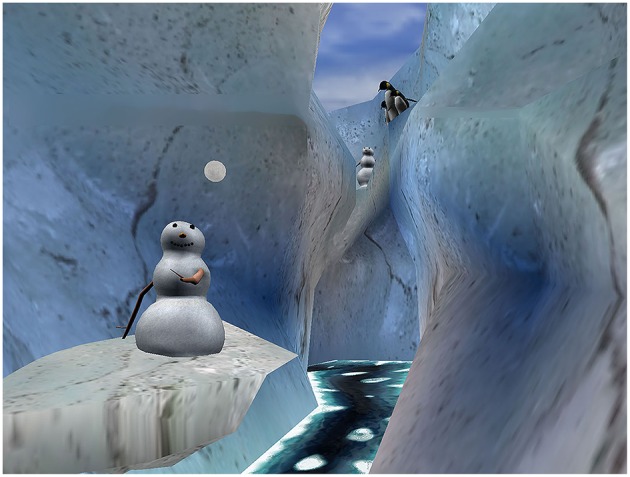
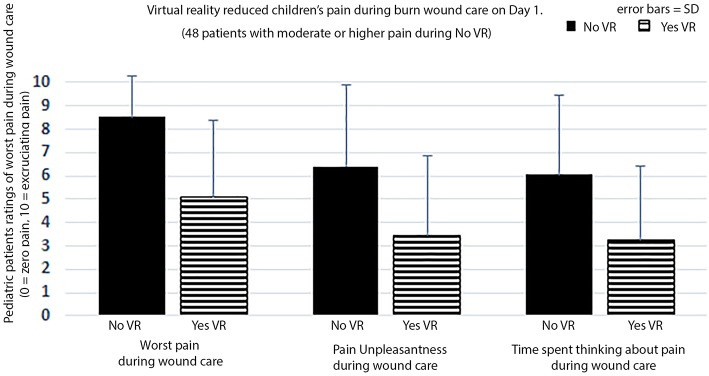
Background/Aim: Using a within-subjects, within-wound care design, this pilot study tested for the first time, whether immersive virtual reality (VR) can serve as an adjunctive non-opioid analgesic for children with large severe burn wounds during burn wound cleaning in the ICU, in a regional burn center in the United States, between 2014-2016. Methods: Participants included 48 children from 6 years old to 17 years of age with >10% TBSA burn injuries reporting moderate or higher worst pain during no VR on Day 1. Forty-four of the 48 children were from developing Latin American countries. Patients played adjunctive SnowWorld, an interactive 3D snowy canyon in virtual reality during some portions of wound care, vs. No VR during comparable portions of the same wound care session (initial treatment condition randomized). Using Graphic Rating scales, children's worst pain ratings during "No VR" (treatment as usual pain medications) vs. their worst pain during "Yes VR" was measured during at least 1 day of wound care, and was measured for up to 10 study days the patient used VR. Results: VR significantly reduced children's "worst pain" ratings during burn wound cleaning procedures in the ICU on Day 1. Worst pain during No VR = 8.52 (SD = 1.75) vs. during Yes VR = 5.10 (SD = 3.27), t (47) = 7.11, p < 0.001, SD = 3.33, CI = 2.45-4.38, Cohen's d = 1.03 (indicating large effect size). Patients continued to report the predicted pattern of lower pain and more fun during VR, during multiple sessions. Conclusion: Immersive virtual reality can help reduce the pain of children with large severe burn wounds during burn wound cleaning in the Intensive Care Unit. Additional research and development is recommended.
Keywords: analgesia; burn; critical care; developing countries; opioid; pain; pediatric burn injuries; virtual reality.
Figures
References
LinkOut - more resources
Full Text Sources
Medical
