


Functional Effects of EPS-Producing Bifidobacterium Administration on Energy Metabolic Alterations of Diet-Induced Obese Mice
- PMID: 31440225
- PMCID: PMC6693475
- DOI: 10.3389/fmicb.2019.01809
Functional Effects of EPS-Producing Bifidobacterium Administration on Energy Metabolic Alterations of Diet-Induced Obese Mice
Abstract
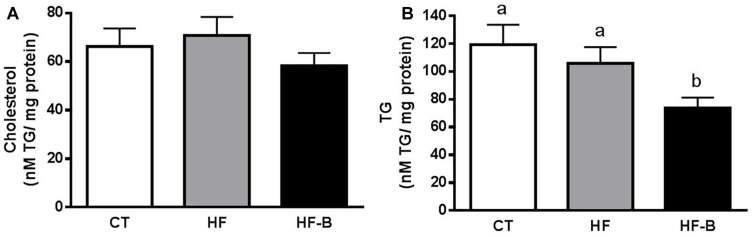
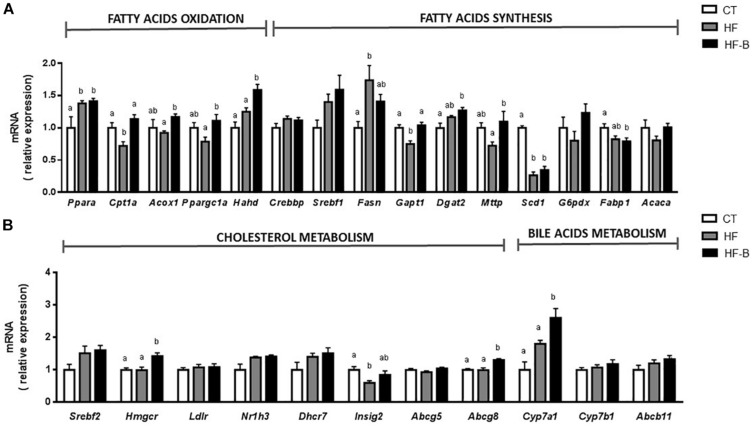
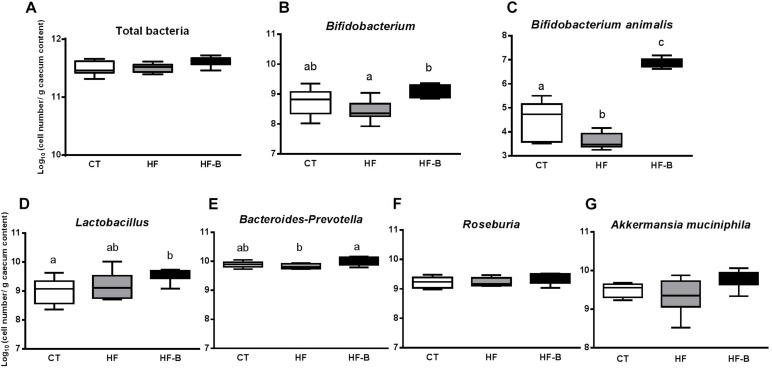
Obesity has been recognized by the World Health Organization as a global epidemic. The gut microbiota is considered as a factor involved in the regulation of numerous metabolic pathways by impacting several functions of the host. It has been suggested that probiotics can modulate host gene expression and metabolism, and thereby positively influence host adipose tissue development and obesity related-metabolic disorders. The aim of the present work was to evaluate the effect of an exopolysaccharide (EPS)-producing Bifidobacterium strain on host glucose and lipid metabolism and the gut microbial composition in a short-term diet-induced obesity (DIO) in mice. C57BL/6J male mice were randomly divided into three groups: a control group that received control standard diet, a group fed a high-fat diet (HF), and a group fed HF supplemented with Bifidobacterium animalis IPLA R1. Fasting serum insulin as well as triglycerides accumulation in the liver were significantly reduced in the group receiving B. animalis IPLA R1. The treatment with the EPS-producing B. animalis IPLA R1 tended to down-regulate the expression of host genes involved in the hepatic synthesis of fatty acids which was concomitant with an upregulation in the expression of genes related with fatty acid oxidation. B. animalis IPLA R1 not only promoted the increase of Bifidobacterium but also the levels of Bacteroides-Prevotella. Our data indicate that the EPS-producing Bifidobacterium IPLA R1 strain may have beneficial effects in metabolic disorders associated with obesity, by modulating the gut microbiota composition and promoting changes in lipids metabolism and glucose homeostasis.
Keywords: Bifidobacterium; bile acids; fatty acid oxidation; gut microbiota; liver fatty acid profile; obesity.
Figures
References
-
- Bigliardi B., Galati F. (2013). Innovation trends in the food industry: the case of functional foods. Trends Food Sci. Technol. 31 118–129. 10.1016/j.tifs.2013.03.006 - DOI
-
- Bindels L. B., Neyrinck A. M., Salazar N., Taminiau B., Druart C., Muccioli G. G., et al. (2015). Non digestible oligosaccharides modulate the gut microbiota to control the development of leukemia and associated cachexia in mice. PLoS One 10:e0131009. 10.1371/journal.pone.0131009 - DOI - PMC - PubMed
LinkOut - more resources
Full Text Sources
Research Materials
Miscellaneous
