


Residential Segregation and Racial/Ethnic Disparities in Ambient Air Pollution
- PMID: 31440306
- PMCID: PMC6706065
- DOI: 10.1007/s12552-018-9254-0
Residential Segregation and Racial/Ethnic Disparities in Ambient Air Pollution
Abstract
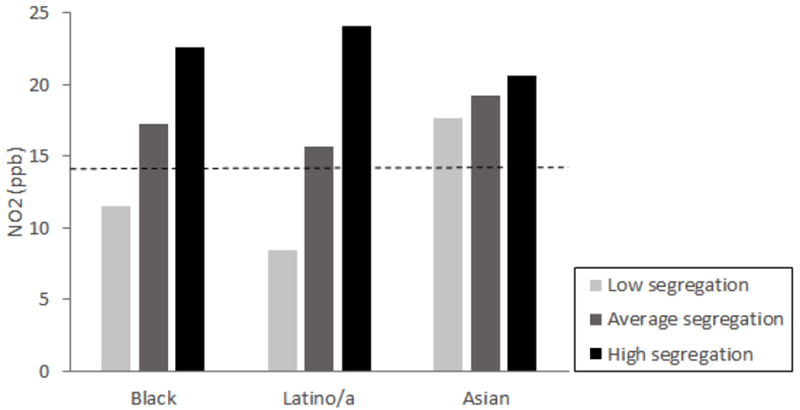
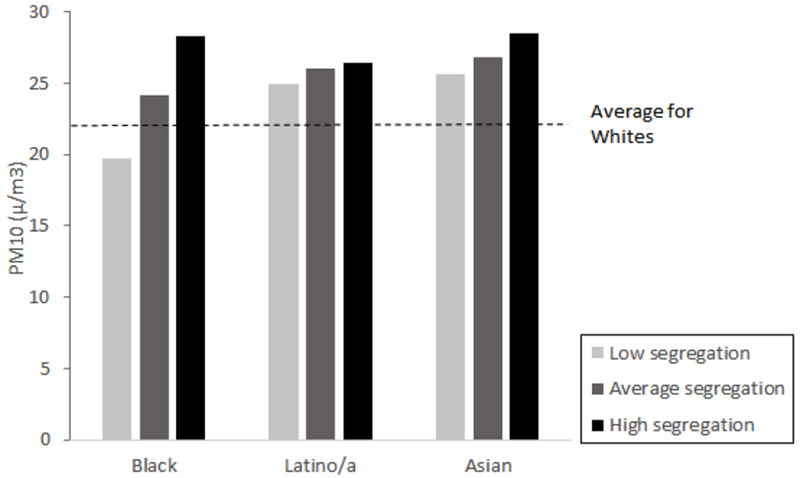
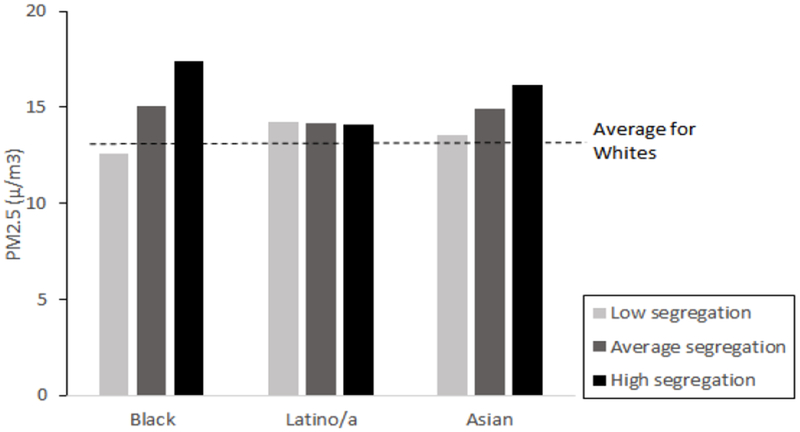
Race and ethnicity are consequential constructs when it comes to exposure to air pollution. Persistent environmental racial/ethnic inequalities call for attention to identifying the factors that maintain them. We examined associations between racial residential segregation and racial/ethnic inequalities in exposure to three types of air pollutants. Using data from the Panel Study of Income Dynamics (1990-2011), the U.S. Census (1990- 2010), and the Environmental Protection Agency, we tested the independent and joint contributions of race/ethnicity and metropolitan-level residential segregation on individual levels of exposure to air pollution nationwide. We found that racial and ethnic minorities were exposed to significantly higher levels of air pollution compared to Whites. The difference between minorities and Whites in exposure to all three types of air pollution was most pronounced in metropolitan areas with high levels of residential segregation. The environmental inequities observed in this study call for public health and policy initiatives to ameliorate the sources of racial/ethnic gaps in pollution exposure. Given the links between the physical environment and health, addressing such uneven environmental burdens may be a promising way to improve population health and decrease racial/ethnic inequalities therein.
Keywords: Air Pollution; Nitrogen Oxides; Particulate Matter; Race and Ethnicity; Residential Segregation.
Conflict of interest statement
Conflict of Interest The authors declare that they have no conflict of interest.
Figures
References
-
- Aguinis H, Gottfredson RK, & Culpepper SA (2013). Best-practice recommendations for estimating cross-level interaction effects using multilevel modeling. Journal of Management, 39, 1490–1528.
-
- Akinbami LJ, Moorman JE, Bailey C, Zahran HS, King M, Johnson CA, & Liu X (2012). Trends in asthma prevalence, health care use, and mortality in the United States, 2001–2010. NCHS Data Brief, 94, 1–8. - PubMed
-
- Ash M, Boyce JK, Chang G, & Scharber H (2013). Is environmental justice good for White folks? Industrial air toxics exposure in urban America. Social Science Quarterly, 94(3), 616–636.
-
- Ash M, & Fetter TR (2004). Who lives on the wrong side of the environmental tracks? Evidence from the EPA’s risk screening environmental indicators model. Social Science Quarterly, 85(2), 441–462.
Grants and funding
LinkOut - more resources
Full Text Sources
Miscellaneous