


Hepatoprotective effects of silymarin on CCl4-induced hepatic damage in broiler chickens model
- PMID: 31440455
- PMCID: PMC6698800
- DOI: 10.1016/j.toxrep.2019.07.011
Hepatoprotective effects of silymarin on CCl4-induced hepatic damage in broiler chickens model
Abstract
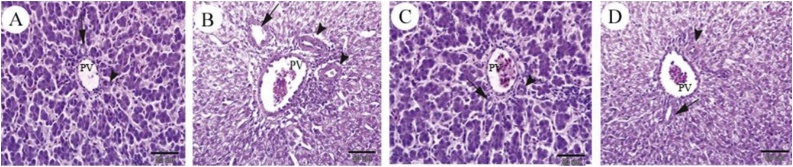
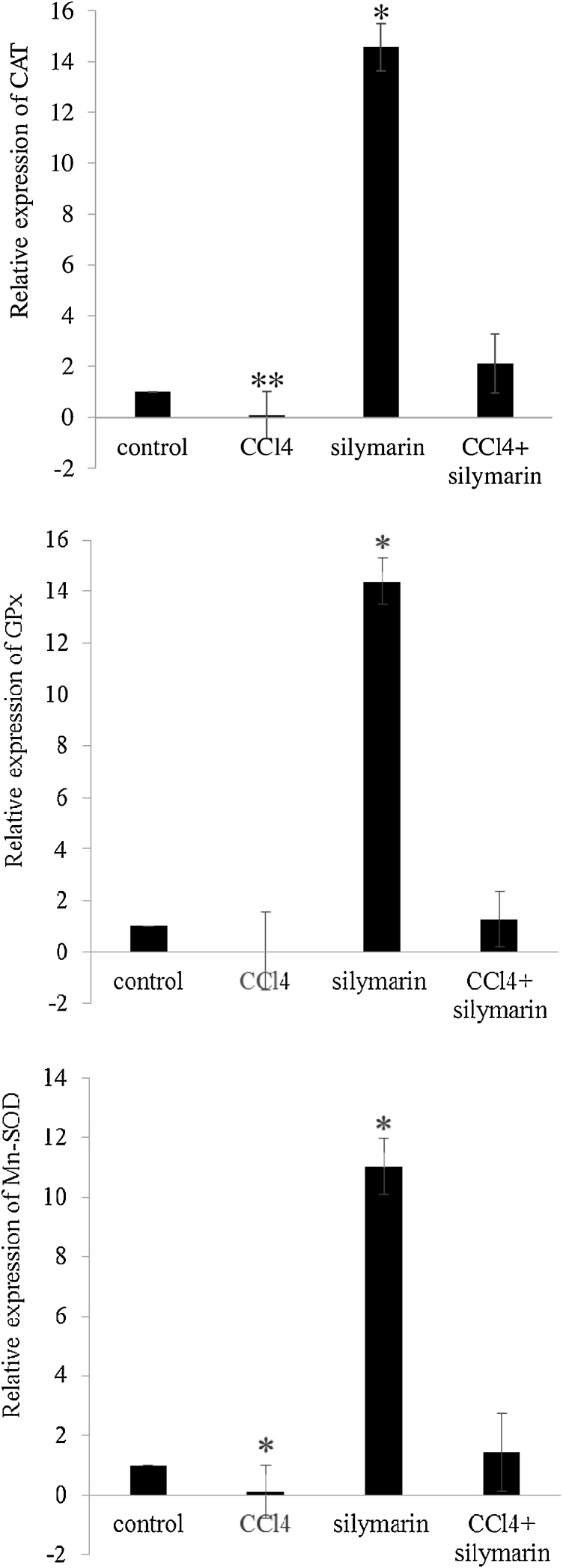
This study was conducted to investigate the hepatoprotective effects of silymarin on CCl4-induced oxidative stress in broiler chickens model. A total of 240 day-old broilers were divided into 4 equal groups (n = 60) composed of a control group (receiving 1 mL/Kg BW saline) and 3 groups treated with silymarin (receiving 100 mg/Kg BW silymarin), CCl4 (receiving 1 mL/Kg BW CCl4), and combination of silymarin + CCl4. Results indicated that silymarin has potential to mitigate the deleterious effects of CCl4 on protein and lipid metabolism. The protective activity of silymarin against CCl4-mediated lipid peroxidation was demonstrated by the lower serum content of MDA, as lipid peroxidation marker. CCl4-induced hepatotoxicity was demonstrated by the elevation of serum contents of ALP, AST, ALT, and GGT enzymes, whereas silymarin decreased serum activity of ALP and AST hepatic enzymes. The CCl4-challenged birds revealed considerable hepatic injures characterized by moderate to severe hepatocellular degeneration around the portal vein, aggregation of inflammatory cells, granulomatosis, cytolytic necrosis, periportal space fibrosis, and sinusoidal dilatation. However, liver damages were amended by the silymarin. In line with molecular study, a remarkable down-regulation was detected in the expression of CAT, GPx, and Mn-SOD hepatic genes in CCl4-challenged birds, whereas silymarin significantly up-regulated aforementioned genes. In general, current study showed that silymarin has potential to alleviate the adverse effects of oxidative stress in poultry farms.
Keywords: Broiler chickens; CCl4; Gene expression; Oxidative stress; Silymarin.
Conflict of interest statement
This research did not receive any specific grant from funding agencies in the public, commercial, or not-for-profit sectors.
Figures
References
-
- Zheng X.C., Wu Q.J., Song Z.H., Zhang H., Zhang J.F., Zhang L.L., Zhang T.Y., Wang C., Wang T. Effects of Oridonin on growth performance and oxidative stress in broilers challenged with lipopolysaccharide. Poult. Sci. 2016;95:2281–2289. - PubMed
-
- Celi P. The role of oxidative stress in small ruminants’ healthand production. R. Bras. Zootec. 2010;39:348–363.
-
- Manibusan M.K., Odin M., Eastmond D.A. Postulated carbon tetrachloride mode of action: a review. J. Environ. Sci. Health C. 2007;25:185–209. - PubMed
-
- Khan T.H., Sultana S. Antioxidant and hepatoprotective potential of Aegle marmelos Correa. against CCl4-induced oxidative stress and early tumor events. J. Enzyme Inhib. Med. Chem. 2009;24:320–327. - PubMed
-
- Srivastava A., Shivanandappa T. Hepatoprotective effect of the root extract of Decalepis hamiltonii against carbon tetrachloride-induced oxidative stress in rats. Food Chem. 2010;118:411–417.
LinkOut - more resources
Full Text Sources
Miscellaneous
