


Unraveling the molecular principles by which ceramides commit cells to death
- PMID: 31440742
- PMCID: PMC6702447
- DOI: 10.15698/cst2019.08.196
Unraveling the molecular principles by which ceramides commit cells to death
Abstract
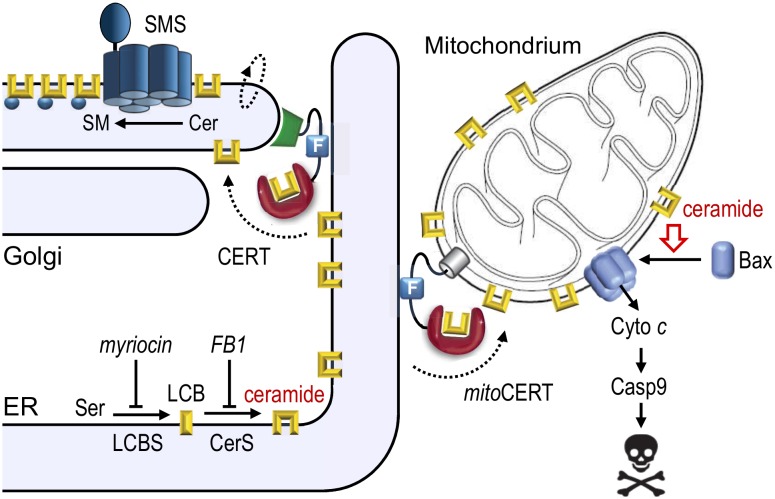
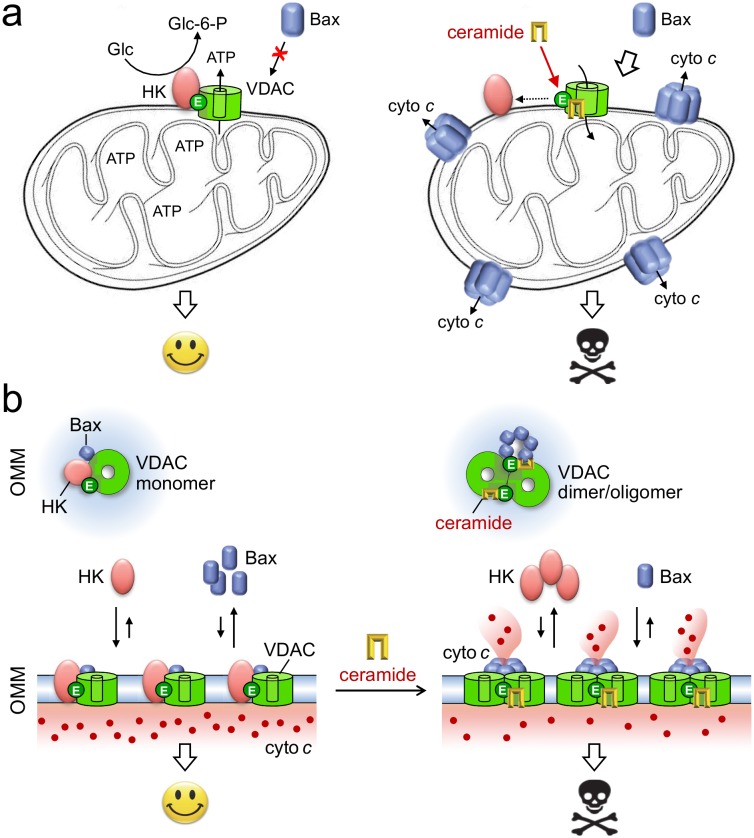
Ceramides are central intermediates of sphingolipid metabolism that can activate a variety of tumor suppressive cellular programs, including cell cycle arrest, senescence and apoptosis. Indeed, perturbations in ceramide generation and turnover are frequently linked to cancer cell survival and resistance to chemotherapy. Consequently, the potential of ceramide-based therapeutics in the treatment of cancer has become a major focus of interest. A growing body of evidence indicates that ceramides can act directly on mitochondria to trigger apoptotic cell death. However, molecular details of the underlying mechanism are scarce. In our recent study (Dadsena S et al., 2019, Nat Commun 10:1832), we used a photoactivatable ceramide probe combined with computer simulations and functional studies to identify the voltage-dependent anion channel VDAC2 as a critical effector of ceramide-induced mitochondrial apoptosis. Collectively, our findings provide a novel molecular framework for how ceramides execute their widely acclaimed anti-neoplastic activities.
Keywords: ceramide transfer protein; hexokinase; mitochondrial apoptosis; photo-activatable lipids; tumor suppressor lipid; voltage-dependent anion channel.
Conflict of interest statement
Conflict of interest: The authors declare no conflict of interest.
Figures
Comment on
-
Ceramides bind VDAC2 to trigger mitochondrial apoptosis.Nat Commun. 2019 Apr 23;10(1):1832. doi: 10.1038/s41467-019-09654-4. Nat Commun. 2019. PMID: 31015432 Free PMC article.
Publication types
LinkOut - more resources
Full Text Sources